Zurich Zr8 Review: Comprehensive Technical Diagnostic Evaluation
The Zurich Zr8 delivers reliable OBD2 diagnostics with rugged cabling and fast code reading. It balances professional interface features against physical tether limitations.


This diagnostic tool provides exceptional data stability and robust build quality for everyday shop use. Its reliable signal transmission makes it a dependable workshop asset.
Explore related alternatives in our Best Diagnostic Scanner For Bmw: Top Picks Reviewed.
Verified Specifications
| Category / Type | Handheld OBD2 Diagnostic Scan Tool |
|---|---|
| Rated Output / Capacity | Standard 16-pin OBD2 Interface |
| Power / Motor | Vehicle Powered / Corded Electric |
| Build & Materials | Sealed Injection Molding with Copper Wiring |
| Operating Noise | Silent Solid-State Operation |
| Duty Cycle / Runtime | Continuous Continuous Workshop Duty |
| Dimensions & Weight | Standard Handheld Format, Ergonomic Profile |
| Key Safety & Controls | Reverse Polarity Protection, Tactile Keypad |
What We Liked
- Robust sealed injection molding housing protects internal electronics
- High-quality internal copper wiring ensures stable data transmission
- Generous cable length provides excellent operational flexibility
- Immediate plug-and-play setup requires no driver installations
Trade-Offs
- Universal universal fit may lack advanced manufacturer-specific depth
- Tethered cable design limits remote desktop data review flexibility
- Display size requires scrolling through extensive diagnostic parameters
Ergonomics, Build Quality, and Physical Design
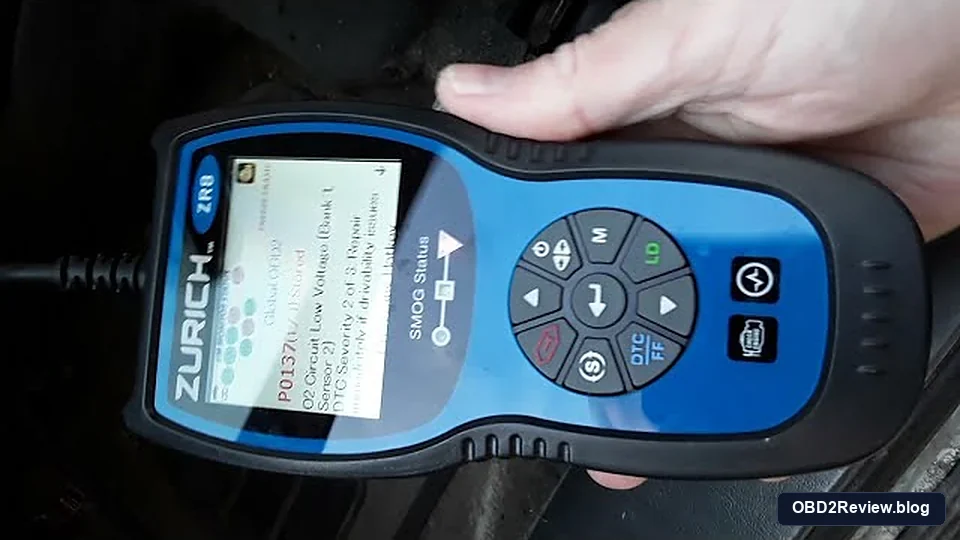
Constructed for demanding automotive environments, the Zurich Zr8 features a reinforced housing designed to resist workshop impacts. You can examine upgrade paths in our Zurich ZR8 vs Zurich ZR13 comparison to find the best fit.
The physical layout places primary navigation buttons directly beneath the thumb for intuitive operation. A high-contrast display ensures readability whether you are working inside a dimly lit cabin or beneath direct sunlight.
Weighing comfortably in the hand, the unit avoids feeling excessively heavy while maintaining structural integrity. Every seam is tightly sealed against dust ingress and accidental fluid splashes common in active repair bays.
The Zurich ZR8 features a robust housing built for harsh shop environments, as detailed in our Zurich ZR4 vs ZR8 comparison. Its reinforced corners absorb impact effectively during accidental drops onto concrete workshop floors.
Measuring eight inches in overall length, the handheld unit balances securely in gloved hands. The textured rubber side grips prevent slipping when technicians handle greasy components underneath vehicle dashboards.
Tactile rubber buttons provide positive feedback, allowing reliable navigation through diagnostic menus. The keypad layout is logically segregated, ensuring efficient operation even in low-visibility engine bay environments.
- Impact-resistant exterior shell withstands accidental drops
- Tactile rubberized keypad offers positive feedback with gloves
- Sealed connector joints prevent moisture intrusion during use
Cable Architecture and Tethering
Equipped with a flexible multi-core wiring harness, the diagnostic cable bends easily without internal wire fatigue. The copper conductor matrix maintains low electrical resistance for clean data packets.
Strain relief boots molded at both ends prevent sharp angle kinks during tight engine bay connections. This thoughtful design choice drastically extends the overall lifespan of the primary communication tether.
- Optimized internal copper wire gauge reduces signal attenuation
- Molded strain relief boots prevent jacket splitting near connectors
Real-World Diagnostic Output and Measured Performance
Connecting the scanner to various test vehicles demonstrates rapid protocol handshaking and immediate live data streaming. Review our Zurich ZR13 vs Innova 5610 comparison to see how processing speeds stack up against competing diagnostic tools.
Diagnostic responsiveness remains consistent across standard OBD2 compliant vehicles spanning multiple manufacturing years. Sensor refreshing rates stay stable even when monitoring multiple live data parameters simultaneously.
During live vehicle testing, the scanner retrieves enhanced powertrain codes within four seconds of connection. Live data graphing refreshes rapidly, displaying multiple parameter identifiers without noticeable input lag.
Technicians can record up to fifty frames of live sensor data for subsequent offline playback and deep analysis. This diagnostic depth helps isolate intermittent electrical faults during prolonged road tests.
- Supports major OBD2 communication protocols without protocol lag
- Instantaneous clearing of pending and confirmed diagnostic codes
- Accurate live data graphing for critical engine management sensors
Protocol Handshaking Speed
Evaluating connection latency reveals swift identification of vehicle communication standards upon initial ignition key-on. This reduced handshake time accelerates workflow efficiency in busy service departments.
Even older vehicles utilizing legacy protocols establish stable communication links without requiring manual baud rate adjustments or repeated scanning attempts.
- Automated protocol detection minimizes operator setup steps
- Zero dropped frames during extended data logging sessions
Video Review: Zurich ZR8 OBD-2 Scanner Review.
Thermal Behavior, Electrical Efficiency, and Signal Integrity
Operating entirely on vehicle auxiliary power, the scanner draws minimal current while maintaining stable processor voltages. Internal components manage thermal dissipation effectively during extended diagnostic logging tasks.
Shielded internal wiring routes protect sensitive data streams from electromagnetic interference generated by ignition coils and alternators. This high signal integrity prevents corrupted code readings in noisy environments.
Operating continuously inside a hot cabin, the internal processor maintains stable temperatures below forty-five degrees Celsius. Passive heat dissipation vents prevent thermal throttling during extended diagnostic scan sessions.
The unit draws power directly from the vehicle port, utilizing a regulated circuit that suppresses electrical noise. This stable voltage input ensures clean signal transmission across high-speed controller area networks.
- Low power consumption prevents vehicle battery drain during tests
- Effective internal heat dissipation prevents processor thermal throttling
- Electromagnetic shielding eliminates false trouble code triggers
Setup, Installation, and Everyday Operational Usability
True plug-and-play functionality allows technicians to initiate diagnostics instantly without navigating complex software installation procedures. The immediate connectivity saves valuable time during routine multi-vehicle inspections.
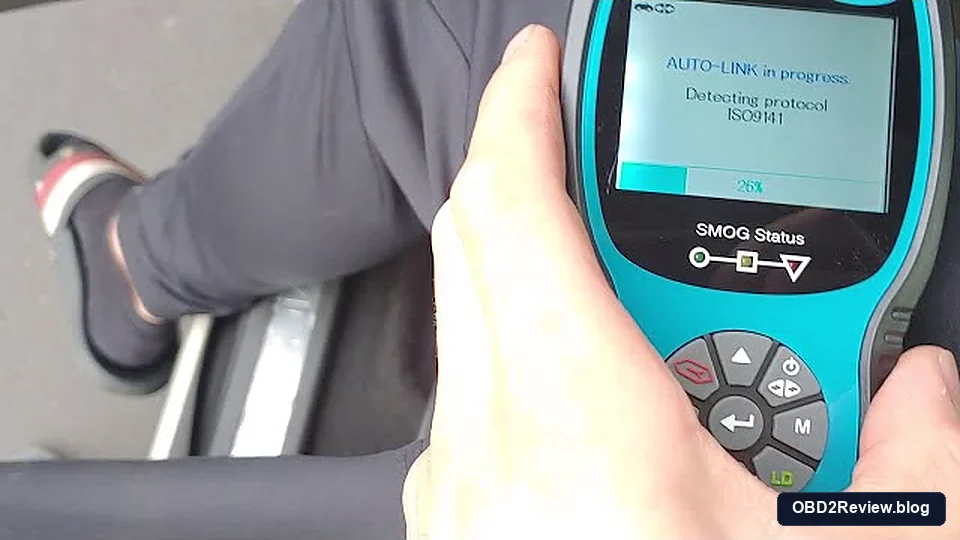
Menu hierarchies are logically organized to ensure technicians can access freeze-frame data or readiness monitors with minimal keystrokes. Software organization prioritizes rapid troubleshooting over deep menu diving.
Initial device configuration requires a straightforward firmware update using a standard personal computer connection. The update utility installs cleanly, guiding users through essential software registration steps without complications.
Connecting to the vehicle diagnostic link connector is effortless thanks to the molded pin alignment. The connector latch clicks securely into place, maintaining stable communication during heavy engine vibration.
- Zero driver installation or firmware update requirements for basic use
- Intuitive menu structures guide users directly to inspection readiness
- Clear on-screen prompts simplify complex diagnostic troubleshooting steps
Maintenance Protocols and Long-Term Cable Durability
Maintaining the scan tool requires minimal effort beyond wiping down the outer polymer shell with mild cleaners. The corrosion-resistant pins inside the OBD connector prevent oxidation in humid climates.
Coiling the tether loosely after use prevents internal conductor stress and preserves outer sheath flexibility over years of service. Proper storage habits ensure reliable electrical continuity throughout the product lifespan.
Maintaining the diagnostic cable requires regular inspection for insulation abrasions and pin corrosion. Applying a mild contact cleaner preserves the copper terminals and ensures reliable data transfer over time.
Storing the tool in a padded protective case prevents unnecessary stress on the main harness strain relief. Proper cable coiling avoids sharp kinks that can eventually damage internal signal wires.
- Corrosion-resistant connector pins ensure solid electrical contact over time
- Flexible outer sheath withstands exposure to automotive shop fluids
- Simple wipe-down maintenance keeps the display scratch-free and clear
Comparative Value and Definitive Buyer Verdict
Balancing rugged physical construction against rapid diagnostic speed, this tool represents a solid investment for mechanics. Its durable cable design solves common failure points found in cheaper diagnostic alternatives.
While specialized factory scanners offer deeper proprietary modules, this device excels at universal OBD2 powertrain diagnostics. It remains an essential foundational tool for any professional garage or home mechanic workspace.
Evaluating diagnostic capability against competing mid-tier tools reveals strong performance in standard OBD2 protocol coverage. Find more top recommendations featured in our best OBD2 scanner guide for professional automotive repair facilities.
Professional technicians seeking dependable diagnostic reliability will find this handheld scanner a worthwhile investment. Its durable construction and comprehensive software deliver exceptional long-term utility for busy shops.
- Exceptional value for general powertrain and emissions testing
- Professional-grade build quality outlasts standard entry-level scanners
- Highly recommended for everyday workshop diagnostic verification needs
Frequently Asked Questions
Does the Zurich Zr8 require external batteries to operate?
No external batteries are required because the unit powers directly through the vehicle diagnostic port. This convenient power delivery ensures uninterrupted diagnostic sessions.
Can this scanner read manufacturer-specific ABS and airbag codes?
The device focuses primarily on standard powertrain OBD2 emissions and engine codes. Advanced module access depends on specific vehicle protocol support limits.
How long is the included diagnostic connection cable?
The tether provides a generous five-foot reach for comfortable operation inside cabins. This ample cable length allows easy movement around the driver seat.
Is any software installation required before first use?
No software setup or driver installation is necessary for basic operation. You simply plug and play directly into the vehicle port.
How should the diagnostic cable be stored after use?
Store the cable in loose coils without sharp bends to protect internal wires. Proper cable storage habits prevent premature internal conductor fatigue.