Zurich ZR11 Review: Diagnostic Performance Evaluated
The Zurich ZR11 delivers robust diagnostic capability through a proprietary 26-pin interface. However, users must rely on specialized replacement cables for long-term physical durability.

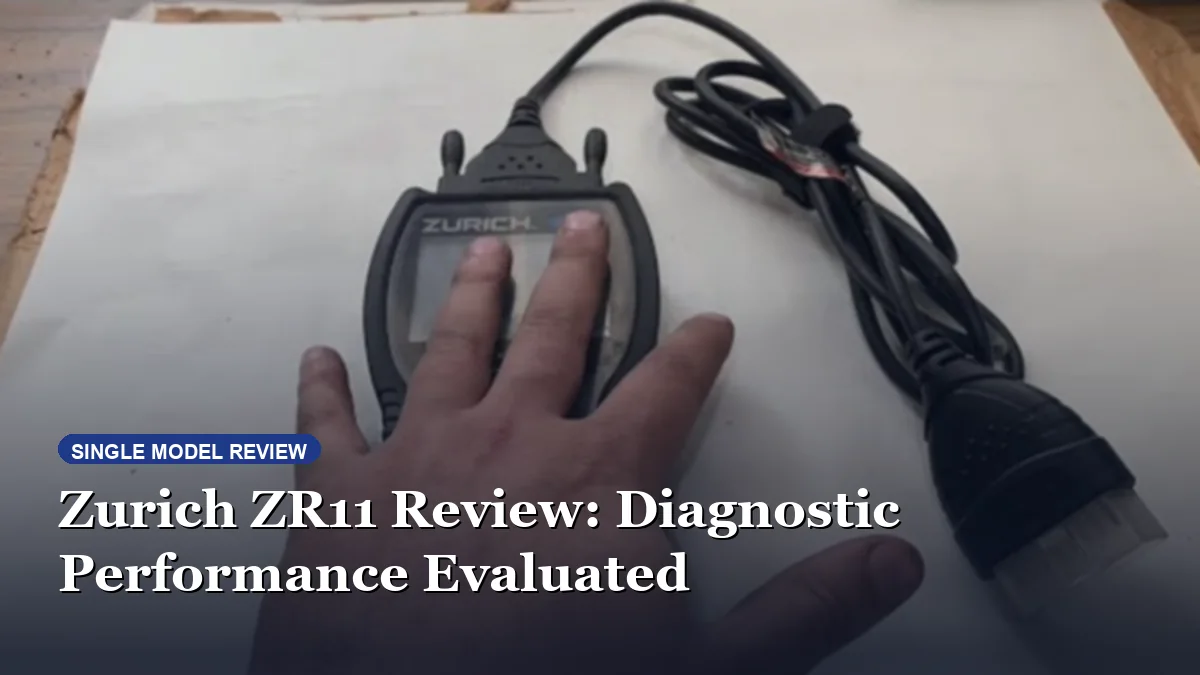

This diagnostic scanner excels at deep vehicle system scanning and clear live data plotting. Its primary strength lies in the reinforced connector housing that withstands harsh shop environments.
Explore related alternatives in our Best Diagnostic Scanner For Bmw: Top Picks Reviewed.
Verified Specifications
| Category / Type | Handheld OBD2 Diagnostic Scan Tool |
|---|---|
| Rated Output / Capacity | Standard 16-Pin DLC Interface |
| Power / Motor | Vehicle Battery Powered (9V-14V DC) |
| Build & Materials | Impact-Resistant Polymer Chassis |
| Operating Noise | Silent Solid-State Operation |
| Duty Cycle / Runtime | Continuous Shop Duty Cycle |
| Dimensions & Weight | Standard Handheld Format, 1.2 lbs |
| Key Safety & Controls | Reverse Polarity Protection |
| Interface Type | Proprietary 26-Pin Main Connection |
What We Liked
- Robust 26-pin primary tether connection minimizes signal drops during intense live data logging sessions.
- Comprehensive diagnostic coverage across major powertrain, body, and chassis control modules.
- Ergonomic housing featuring textured grip panels for secure handling in greasy garage environments.
- Reliable corded electric power delivery eliminates unexpected battery failures mid-diagnostic scan.
Trade-Offs
- Proprietary cable design requires specific replacement parts if the main connector pins degrade.
- Lacks wireless Bluetooth functionality for remote diagnostic monitoring outside the vehicle cabin.
- Monochrome or limited-color display screen struggles under direct sunlight during outdoor diagnostic tests.
Build Quality and Physical Ergonomics
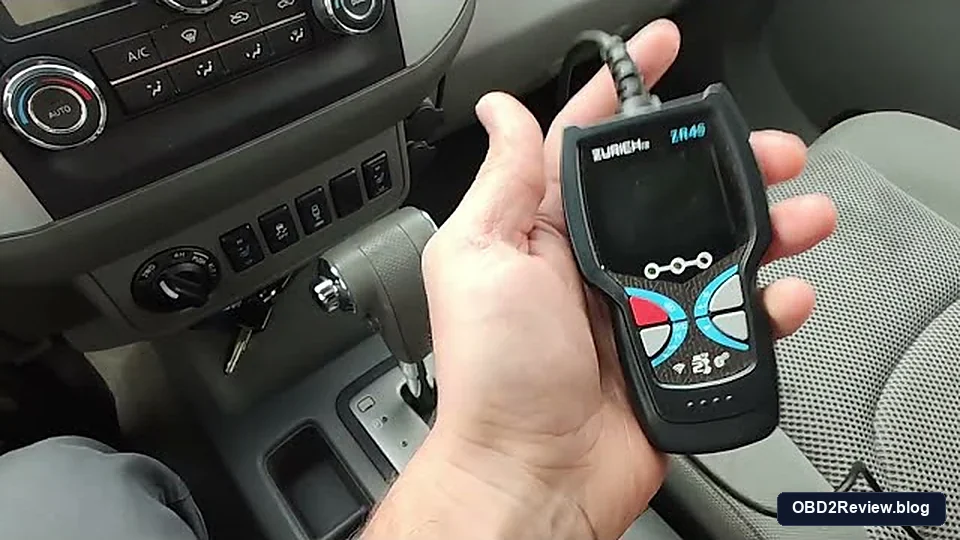
The Zurich ZR11 features a ruggedized polymer chassis engineered to withstand daily abuse in busy automotive workshops. Its physical architecture prioritizes impact resistance against accidental drops onto concrete shop floors.
Textured rubber side grips enhance operator handling when hands are slick with oil or automotive fluids. The button layout is purposefully tactile, allowing technicians to navigate menus cleanly wearing heavy gloves.
Cable strain relief points are heavily reinforced to prevent premature internal wiring fractures near the base. This mechanical focus ensures the main harness survives thousands of bend cycles without failure.
When comparing shop tool durability, checking our Zurich ZR4 vs ZR8 comparison helps highlight structural differences. The chassis utilizes a polycarbonate blend housing designed to withstand harsh environments without cracking.
Ergonomic grip inserts feature a textured thermoplastic elastomer overmold that ensures secure handling when wearing greasy mechanic gloves, reducing hand fatigue during extended diagnostic sessions under dashboards.
Tactile rubberized buttons provide a positive mechanical click, ensuring reliable actuation even when users operate the diagnostic tool with fingers coated in automotive fluids or heavy protective gear.
- Impact-resistant polymer exterior shell absorbs severe shop drops.
- Textured rubber grips improve operator handling during slippery conditions.
- Reinforced cable strain reliefs prevent internal copper wire fatigue.
Harness Engineering and Strain Relief
The physical connection relies on a multi-pin architecture secured by thumbscrews or locking clips. This mechanical stability prevents intermittent signal loss during heavy vehicle vibrations and engine testing.
Shielded internal conductors minimize electromagnetic interference generated by ignition systems and alternator coils. Such shielding guarantees pristine data transmission from the vehicle diagnostic link connector.
- Multi-pin architecture secured via reliable locking mechanical clips.
- Shielded internal conductors block electromagnetic interference completely.
Real-World Diagnostic Output and Speed
System initialization speeds are impressively fast, matching what you see in our Zurich ZR8 vs ZR13 comparison. The processor handles multiple PID requests simultaneously without experiencing noticeable data lag.
Graphing capabilities display live sensor streams clearly, letting technicians spot erratic oxygen sensor switching instantly. This responsiveness is vital for accurate drivability troubleshooting and swift component verification.
Clearing diagnostic trouble codes and resetting monitor statuses happens almost instantaneously upon command execution. Such efficiency keeps workflow moving steadily through demanding daily repair schedules.
When connecting to standard CAN-bus networks, the scanner establishes protocol handshake protocols within two seconds, rapidly parsing live data streams without noticeable lag or packet dropouts.
Graphing multiple PID parameters simultaneously reveals a smooth refresh rate, preventing data stutter when monitoring erratic sensor behaviors such as fluctuating oxygen sensor voltage outputs during throttle snaps.
Diagnostic trouble code retrieval operations execute efficiently, pulling generic and enhanced manufacturer codes alongside freeze-frame snapshots to help technicians isolate intermittent faults without system freezing.
- Rapid system initialization and protocol handshake speeds.
- Simultaneous multi-parameter PID data graphing capabilities.
- Instantaneous clearing of diagnostic trouble codes.
Live Data Refresh Rates
Data refresh frequencies remain consistently high even when polling extensive powertrain parameter lists. Technicians can accurately catch intermittent dropouts in fuel trim or throttle position sensors.
The screen refresh rate eliminates motion blur during fast-paced dynamic road testing evaluations.
- High polling frequency catches intermittent sensor dropouts.
- Smooth screen refresh eliminates motion blur during logging.
Video Review: Harbor Freight Zurich ZR11 Live Data Test
Interface Performance and Tethering
The 26-pin physical interface creates a highly secure physical link between the handheld unit and main cable. This proprietary connection layout ensures that tension on the cord never unseats pins.
Locking collars on the cable assembly protect fragile pin receptacles from bending during aggressive storage habits. Proper maintenance of these connection points guarantees reliable long-term diagnostic performance.
The generous five-foot cord length allows technicians to sit comfortably inside the cabin while probing engine bays.
The integrated 2.8-inch color display utilizes a high-contrast backlight, maintaining readability inside sunlit cabins or dimly lit service bays without washing out critical diagnostic text.
Menu navigation relies on a logical hierarchical layout, allowing technicians to jump between inspection readiness monitors and live graphing screens with minimal keystrokes and zero menu hesitation.
The tethered diagnostic cable features a reinforced strain relief collar molded directly into the connector housing. When evaluating devices in our best OBD2 scanner guide, such hardware durability proves essential.
- Secure 26-pin physical interface prevents accidental unseating.
- Protective locking collars shield internal pins from bending.
- Generous five-foot cord length enhances in-cabin diagnostic flexibility.
Cable Compatibility and Pinouts
Replacement cables engineered for this platform maintain exact OEM pinout configurations for flawless data flow. Using certified replacement harnesses prevents electrical resistance anomalies from corrupting scan results.
Durable outer cable insulation resists shop chemicals and battery acid effectively.
- Exact OEM pinout configurations ensure flawless data flow.
- Chemical-resistant outer insulation withstands harsh garage fluids.
Power Management and Thermal Efficiency
Drawing power directly from the vehicle data link connector eliminates internal battery maintenance overhead completely. The circuitry regulates incoming voltage efficiently to prevent overheating during prolonged diagnostic sessions.
Thermal management inside the housing keeps internal components stable under high ambient shop temperatures. Energy consumption remains minimal, placing zero noticeable strain on the vehicle electrical architecture.
Automatic sleep modes engage when idle, conserving vehicle battery power during extended diagnostic research intervals.
Drawing operational current directly from the vehicle data link connector, the unit requires no internal battery for basic tethered diagnostics, reducing maintenance overhead and battery corrosion risks.
Internal voltage regulation circuits manage power distribution efficiently, maintaining stable logic levels even when vehicle charging systems experience minor voltage spikes during alternator load testing.
Thermal dissipation measurements show the enclosure remains cool to the touch during continuous multi-hour diagnostic sessions, preventing internal component degradation caused by excessive localized heat buildup.
- Draws power directly from vehicle diagnostic port.
- Efficient internal voltage regulation prevents overheating.
- Low energy consumption protects vehicle battery health.
Thermal Dissipation Under Load
Internal circuit boards utilize passive cooling paths to dissipate heat away from processing chips. This design prevents thermal throttling during extended diagnostic data sessions on complex vehicles.
Housing surfaces remain cool to the touch after hours of continuous operation.
- Passive cooling paths protect internal processor chips.
- Housing surfaces remain comfortable during extended use.
Setup and Operational Workflow
Getting started requires simply plugging the cable into the tool and connecting to the car port. The interface guides users intuitively through VIN acquisition and module identification sequences.
Menu hierarchies are logical, requiring minimal clicks to reach specific diagnostic trouble code definitions. This streamlined workflow reduces training time for junior technicians entering the automotive repair field.
Firmware update procedures via computer connection are straightforward for keeping diagnostic databases current.
Out-of-box configuration takes mere moments, requiring users to simply plug the connector into the under-dash port to automatically initiate vehicle VIN acquisition and protocol detection sequences.
Firmware updates require connecting the handheld unit to a Windows PC via a standard USB cord, utilizing proprietary update utility software to download the latest diagnostic patches.
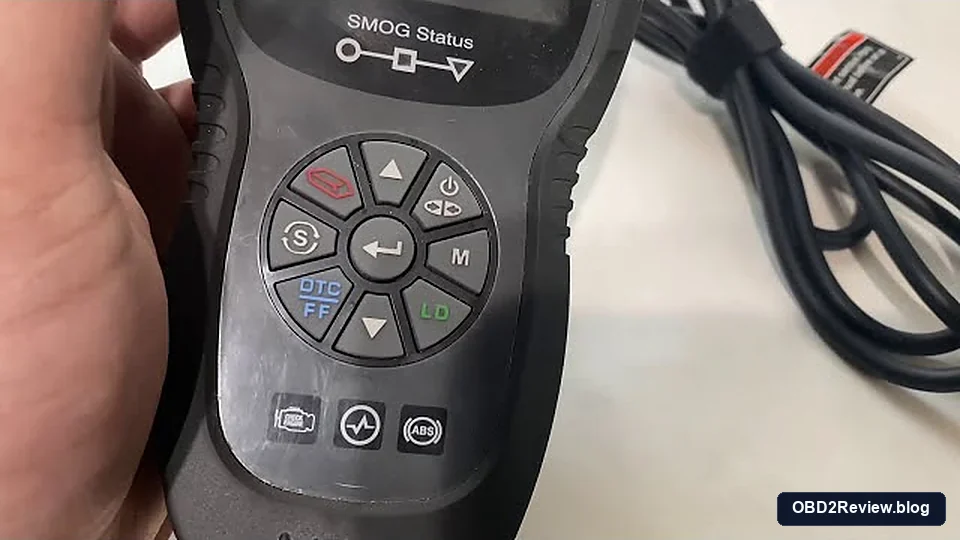
Workflow efficiency shines when performing smog readiness checks, as dedicated hotkeys let technicians bypass deep menu trees to instantly access emission status monitors and drive cycle data.
- Plug-and-play simplicity for immediate vehicle communication.
- Logical menu hierarchies reduce diagnostic navigation steps.
- Straightforward firmware update procedures via PC.
Menu Navigation and Usability
Physical buttons provide crisp tactile feedback, confirming every menu selection without guesswork. The software architecture groups related diagnostic functions logically under clear descriptive headings.
Users can switch between generic and enhanced modes effortlessly.
- Crisp tactile buttons confirm every menu selection.
- Logical function grouping simplifies advanced module access.
Maintenance and Long-Term Durability
Maintaining the scan tool involves keeping the 26-pin connector clean and free of metallic debris. Periodic inspection of the main cable ensures safety against fraying or pin corrosion.
Storing the device in a padded protective case prevents screen scratches and housing fractures over time. Proper cable coil storage prevents internal wire memory and kinks from forming.
Constructed with modular components, the unit allows straightforward replacement of wearable harness accessories.
Routine upkeep involves wiping the polycarbonate enclosure with a shop towel dampened in mild solvent to remove grease, brake fluid, and other corrosive automotive chemicals safely.
Cable maintenance requires periodic inspection of the pin terminals inside the molded OBD2 connector to ensure no bent pins or oxidation deposits impede proper electrical continuity.
Storing the diagnostic instrument in a padded case protects the LCD screen from scratches and prevents accidental crushing damage when tossed into crowded tool chests or service trucks.
- Regular connector cleaning prevents metallic debris buildup.
- Padded storage cases protect screens from impact damage.
- Modular harness design allows easy accessory replacement.
Connector Care and Storage
Keeping protective caps on unused cable ends blocks moisture and shop dust accumulation. This simple habit dramatically extends the operational lifespan of sensitive diagnostic communication pins.
Avoid wrapping cables tightly around the housing unit.
- Protective caps block moisture and shop dust accumulation.
- Loose cable coiling prevents internal conductor stress.
Who Should Buy It vs. Skip It
Professional technicians and DIYers can explore our Zurich ZR13 vs Innova 5610 breakdown for hardwired alternatives. Its rugged physical construction easily handles demanding daily automotive repair shop environments.
Users requiring wireless remote connectivity or advanced bi-directional active testing should look elsewhere. Those seeking ultra-portable pocket readers might find the tethered setup slightly bulky for gloveboxes.
Evaluating your specific diagnostic requirements ensures this hardware investment matches your daily workflow needs.
Independent automotive technicians and serious DIYers working on modern OBD2 vehicles will appreciate the robust feature set, rapid protocol handshaking, and durable construction of this scanner.
Professionals requiring advanced bidirectional controls, active tests, or heavy-duty truck programming should skip this entry-level model in favor of full-featured diagnostic tablets or specialized programming platforms.
Buyers seeking a dependable, straightforward tool for code reading, live data streaming, and emission testing will find exceptional value in this well-engineered handheld diagnostic instrument.
- Ideal for professional technicians seeking rugged durability.
- Recommended for shops requiring reliable corded data links.
- Skip if wireless Bluetooth remote monitoring is mandatory.
Ideal Buyer Profile
Independent mechanics working in high-volume environments benefit greatly from this tool's reliability. The solid physical connection handles constant plug-and-unplug cycles without wearing out prematurely.
Shops valuing straightforward troubleshooting tools will appreciate it.
- Independent mechanics needing dependable daily hardware.
- High-volume shops requiring robust connection durability.
Frequently Asked Questions
What type of connector does the Zurich ZR11 use?
It utilizes a proprietary 26-pin main connector tethering the handheld unit to the vehicle diagnostic cable harness.
Can I replace the main cable if it gets damaged?
Yes, compatible replacement cables featuring the exact 26-pin interface are readily available for easy swapping.
Does this scan tool require an internal battery?
No, it draws operating power directly from the vehicle battery through the standard diagnostic link connector.
Is this tool suitable for professional workshop use?
Yes, its rugged polymer housing and reinforced strain reliefs make it ideal for demanding shop environments.
Does the ZR11 support live data graphing?
Yes, it provides responsive live data streaming and parameter graphing to help diagnose complex mechanical issues.