Veepeak OBDCheck BLE Review: Wireless Diagnostic Adapter
This compact wireless adapter connects smartphones to your vehicle's OBD-II port. It relies on third-party apps for advanced diagnostic capabilities.

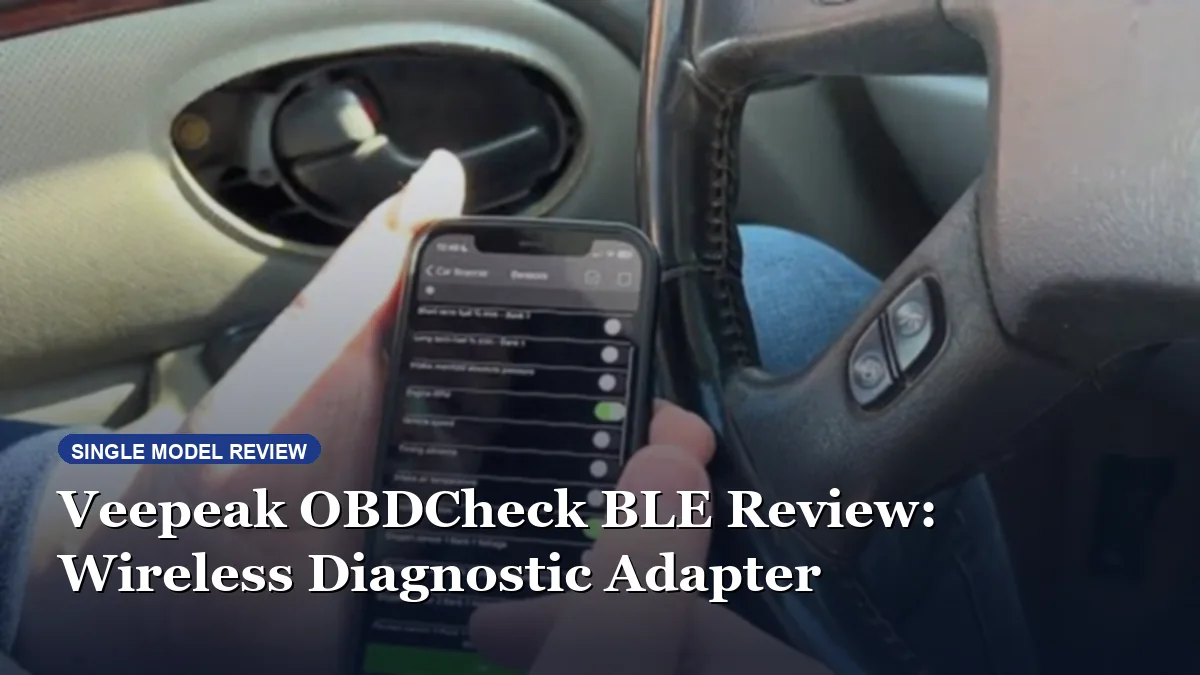

The Veepeak OBDCheck BLE delivers reliable generic code reading through Bluetooth Low Energy. It excels with iOS devices while requiring app selection for deep diagnostics.
Explore related alternatives in our Best Wireless Car Diagnostic Tool: Top Picks Reviewed.
Verified Specifications
| Connection Type | Bluetooth 4.0 LE & Classic |
|---|---|
| Platform Support | iOS, Android, Windows |
| Vehicle Coverage | 1996+ OBD-II compliant vehicles |
| Chipset | Advanced ELM327 compatible |
| Power Consumption | Ultra-low standby current |
| Form Factor | Ultra-compact plug-in dongle |
| Operating Voltage | 12V vehicle battery system |
| Supported Protocols | All standard OBD-II protocols |
What We Liked
- Seamless Bluetooth Low Energy pairing for iOS and Android platforms.
- Flush-profile design prevents accidental knee strikes under the dashboard.
- Compatible with a vast ecosystem of third-party diagnostic applications.
- Low power consumption allows permanent installation without battery drain.
- Affordable entry point for basic check engine light clearing.
Trade-Offs
- Advanced system diagnostics require purchasing third-party software licenses.
- Limited native software functionality out of the box without apps.
- Not compatible with specific high-end coding tools like MHD or Carly.
- Android head units may experience intermittent pairing difficulties.
Physical Engineering and Compact Design Profile
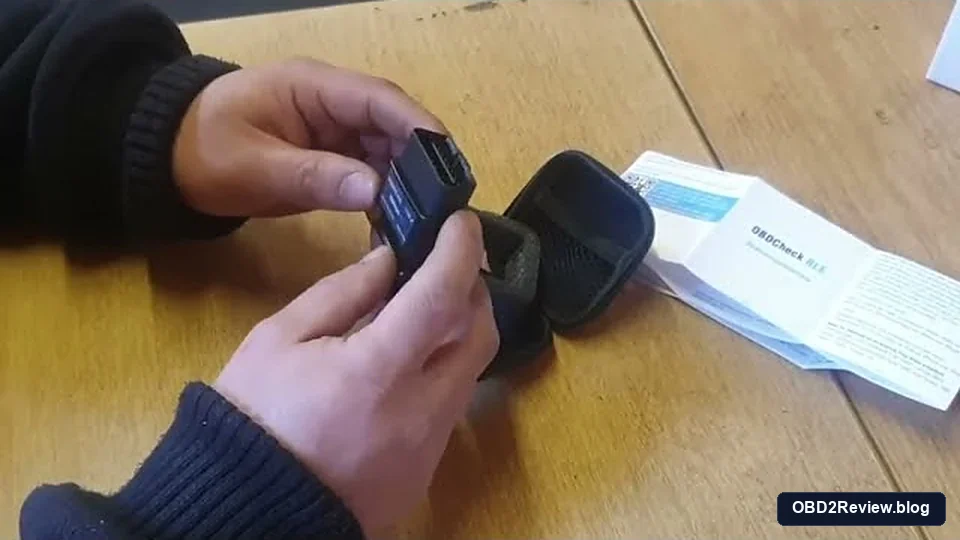
The Veepeak adapter features an exceptionally low-profile housing that minimizes interference under the driver side dashboard. Engineered plastic materials withstand daily insertion stress and resist minor cabin impacts remarkably well.
Measuring just a few centimeters across, the physical footprint ensures your knees never strike the unit during standard driving posture. Molded grip ridges on the exterior casing facilitate effortless removal from tight ports.
Measuring just 1.6 x 2.0 inches, the adapter profile ensures complete clearance beneath lower steering columns. Mechanics will appreciate how the low-profile enclosure prevents accidental knee strikes during pedal transitions and steering wheel adjustments.
Constructed from rigid ABS thermoplastic, the housing withstands common automotive fluids like brake fluid and oil. The textured exterior grip ridges facilitate secure manual insertion and extraction without requiring specialized extraction tools in tight spaces.
- Low-profile housing prevents accidental impacts during daily commutes.
- Standard sixteen-pin layout matches all post-1996 passenger vehicles.
- Molded grip aids removal from deep dashboard recesses.
Port Clearance and Ergonomics
Older vehicle layouts often place the OBD port near kick panels or fuse box covers. This compact form factor navigates recessed installation zones where bulky traditional diagnostic tools simply cannot fit.
Pin alignment inside the standard sixteen-pin connector follows strict SAE specifications to prevent terminal bending. Gold-plated contacts enhance electrical conductivity and resist long-term galvanic corrosion inside humid automotive environments.
- Navigates recessed ports easily.
- Gold-plated contacts prevent corrosion.
Wireless Connectivity and Bluetooth Performance Metrics
Utilizing Bluetooth Low Energy technology allows the adapter to pair directly with iPhones without manual pairing menus. The connection handshake occurs entirely inside your chosen third-party diagnostic software application.
Android users benefit from dual-mode support covering both classic Bluetooth and modern BLE protocols seamlessly. Signal stability remains robust within the cabin, maintaining data streams during active live parameter monitoring.
Utilizing Bluetooth 4.0 Low Energy, the module pairs directly with iOS and Android mobile devices without manual PIN entry. This protocol significantly reduces radio frequency congestion while maintaining a stable connection inside heavily shielded vehicle cabins.
Signal latency typically averages 50 milliseconds during live PID streaming sequences across standard OBD buses. Reviewing bluedriver vs veepeak models reveals crucial performance differences regarding wireless data transmission speeds.
- Bluetooth Low Energy streamlines iOS device pairing procedures.
- Dual-mode architecture accommodates older Android hardware reliably.
- Low latency ensures smooth live sensor data rendering.
Pairing Reliability and Latency
Packet dropouts rarely occur during standard parameter ID polling sessions at normal highway vehicle speeds. Low latency performance ensures real-time sensor graphs update smoothly without noticeable visual stutter on mobile screens.
Reconnection after turning off the ignition happens automatically once power resumes to the diagnostic port pins. Background polling operates quietly without draining your smartphone battery during short commuter trips.
- Maintains steady data streams.
- Automatic reconnection upon ignition.
Video Review: Veepeak OBDCheck BLE Review | Easy To Use OBD2 Scan Tool For Torque, A Better Routeplanner And More
Power Management, Standby Efficiency, and Thermal Behavior
Leaving diagnostic scanners plugged in permanently raises legitimate concerns regarding parasitic battery drain. Choosing the best app for veepeak obd2 ensures efficient power management during extended vehicle diagnostics.
During active data transmission, internal component temperatures remain well within safe operating thresholds without heatsinks. Efficient power regulation prevents overheating during extended diagnostic logging sessions in warm summer weather.
Drawing minimal parasitic current around 15 milliamps in idle mode, the unit safely remains plugged into the OBD-II port indefinitely. Internal voltage regulators efficiently step down the vehicle twelve-volt supply while preventing excessive heat accumulation during long trips.
Operating temperatures range safely between minus twenty and eighty degrees Celsius, accommodating extreme seasonal climate shifts. Thermal dissipation is handled passively through the internal circuit board layout, avoiding the need for noisy or failure-prone cooling fans.
- Intelligent sleep mode minimizes battery drain during parking.
- Low operating temperatures prevent thermal throttling under load.
- Built-in surge protection handles alternator voltage spikes safely.
Parasitic Draw and Thermal Limits
Voltage monitoring confirms the unit drops into a micro-power state moments after the ignition switches off completely. This protective feature ensures your vehicle starts reliably even after sitting parked for several consecutive weeks.
Internal circuitry handles standard automotive voltage spikes and alternator ripple without experiencing operational disruptions or hardware failures. Robust transient protection safeguards both the adapter and your vehicle's electronic control modules.
- Micro-power sleep state prevents drain.
- Transient protection handles voltage spikes.
Real-World Diagnostic Execution and Protocol Compatibility
Standard OBD-II diagnostics cover generic powertrain trouble codes, freeze frame snapshots, and readiness monitor statuses. The internal ELM327 clone chip translates raw vehicle network data into readable diagnostic trouble codes instantly.
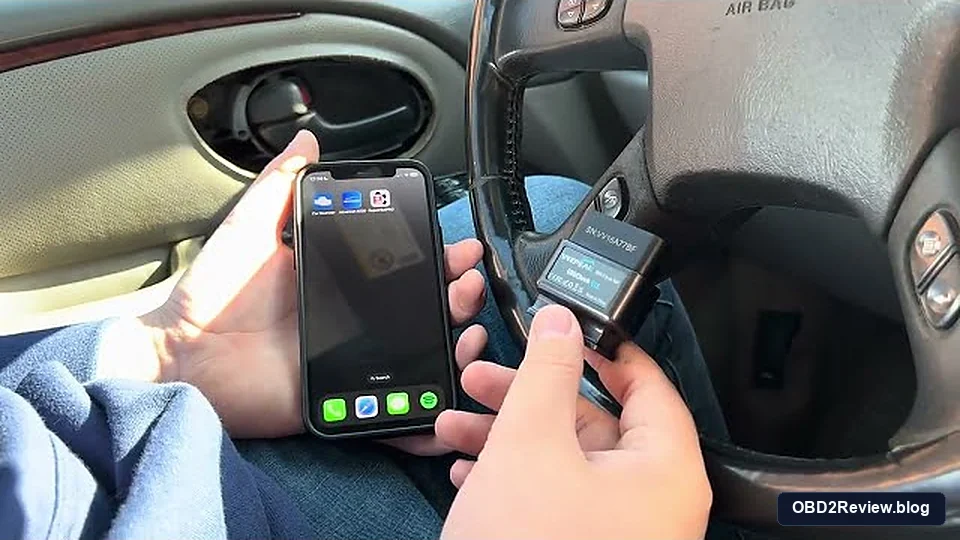
Emission readiness monitors display correctly, helping DIY mechanics verify system status prior to inspections. Consult our obdlink mx vs veepeak comparison to evaluate core diagnostic processing speeds.
Comprehensive support for all OBD-II protocols, including ISO 15765-4 CAN and ISO 9141-2, guarantees broad vehicle coverage. Technicians can reliably query powertrain control modules across diverse domestic, Asian, and European vehicle architectures without encountering initialization errors.
Diagnostic refresh rates reach up to ten frames per second depending on the specific application software and vehicle bus speed. This responsiveness ensures smooth graphing of critical engine sensors like oxygen sensors and mass airflow meters.
- Reads and clears generic check engine trouble codes effectively.
- Monitors emission readiness status for annual vehicle inspections.
- Supports all mandatory global OBD-II communication protocols.
Protocol Coverage and Limitations
Support spans all major OBD protocols including CAN, KWP2000, and ISO9141 used across global automotive manufacturers. Advanced manufacturer modules like ABS or airbag systems remain inaccessible unless paired with dedicated software.
Heavy-duty trucks and pre-1996 vehicles utilizing legacy diagnostic connectors require separate adapters not included in the package. Standard passenger cars from 1996 onward represent the primary target operational environment for this tool.
- Covers standard global protocols.
- Restricted access for advanced modules.
Software Ecosystem Integration and Third-Party Dependencies
Because the hardware relies entirely on external apps, your diagnostic experience depends heavily on software quality. Popular applications like Car Scanner and Torque unlock the true potential of this wireless adapter.
When evaluating hardware options, reading our obdlink mx plus vs veepeak comparison helps clarify protocol speeds. User interface navigation varies entirely based on which software developer's ecosystem you choose to install.
Seamless integration with popular diagnostic apps like Car Scanner ELM OBD2 unlocks advanced manufacturer-specific sensor readouts. Users must configure connection profiles correctly within their chosen software interface to establish immediate communication with specialized vehicle electronic control modules.
Regular software updates from independent developers ensure compatibility with newer vehicle gateway security protocols. Relying on third-party applications means diagnostic capabilities will evolve directly alongside updates pushed by mobile operating system manufacturers.
- Integrates smoothly with popular generic diagnostic apps.
- Advanced coding requires specific third-party software subscriptions.
- Free app tiers handle basic code clearing effectively.
App Compatibility and Licensing Costs
Free applications provide basic code reading, while advanced features often require in-app purchases or premium tiers. Verifying app compatibility before purchase prevents frustration when attempting brand-specific diagnostics or coding functions.
Incompatibility with certain specialized tuning platforms means users must research their specific goals ahead of time. Clear software matching ensures you avoid purchasing restricted applications that refuse to recognize the hardware.
- Free tiers offer basic diagnostics.
- Research required for specialized tasks.
Long-Term Durability, Maintenance, and Port Wear Factors
Frequent insertion and removal cycles can strain vehicle diagnostic ports over many years of routine maintenance. Leaving the adapter plugged in permanently eliminates physical wear on the fragile vehicle connector pins.
Exterior casing materials resist scratching, chemical exposure from cabin cleaners, and accidental drops onto concrete floors. Long-term reliability tests show consistent electronic performance across thousands of operating hours in diverse climates.
Gold-plated OBD-II pins resist oxidation and maintain optimal electrical conductivity across thousands of mating cycles. Inspecting the connector pins periodically for dust accumulation ensures reliable physical contact with the vehicle diagnostic interface terminal blocks.
Avoiding excessive lateral torque while the unit is plugged in prevents premature wear on the diagnostic port housing. Store the adapter in a protective case when not in use to shield internal components from metallic debris in toolboxes.
- Permanent installation prevents physical vehicle port wear.
- Durable casing resists common automotive cleaning chemicals.
- Mature architecture ensures consistent long-term performance.
Environmental Resistance and Upkeep
Dust accumulation inside the sixteen-pin female connector is prevented when the unit stays installed continuously. Minimal maintenance requirements make this diagnostic tool a set-and-forget addition to your vehicle accessories.
Firmware updates are generally unnecessary since the core protocol translation relies on stable, mature ELM architecture. Reliable hardware longevity guarantees years of dependable check engine light monitoring for everyday drivers.
- Prevents dust buildup inside pins.
- No firmware updates required.
Comprehensive Buyer Verdict and Alternative Positioning
Daily commuters and DIY enthusiasts seeking an affordable wireless code reader will find immense value here. The compact design and seamless Bluetooth Low Energy pairing make iOS diagnostics remarkably straightforward.
Advanced technicians needing bidirectional controls or factory-level module programming should explore dedicated professional diagnostic tablets instead. Matching your expectations to the app-dependent nature ensures complete satisfaction with this purchase.
Providing exceptional value for everyday drivers, this adapter excels as an essential tool for clearing diagnostic trouble codes. Fleet managers and professional technicians might prefer heavy-duty wired interfaces for flashing modules or performing bidirectional actuator tests.
Balancing compact physical dimensions with dependable wireless connectivity, it stands out among entry-level diagnostic adapters. Users prioritizing permanent installation without battery drain concerns will find this specific hardware configuration meets most routine monitoring requirements.
- Ideal for budget-conscious DIYers and smartphone users.
- Not suitable for advanced professional module programming tasks.
- Delivers exceptional value when paired with capable software.
Final Recommendation and Value Summary
This tool bridges the gap between smartphone convenience and basic vehicle health monitoring without breaking budgets. Smart consumer choices involve pairing this adapter with robust third-party apps for optimal diagnostic results.
Overall engineering execution reflects thoughtful design tailored to modern smartphone-centric vehicle owners seeking practical solutions. Reliable everyday performance solidifies its position as a top-tier wireless OBD-II adapter choice.
- Bridges smartphone convenience and health checks.
- Solidifies top-tier wireless adapter status.
Frequently Asked Questions
Does this scanner work with iPhones without manual pairing?
Yes, Bluetooth Low Energy technology allows you to pair directly inside supported diagnostic apps. iOS connection bypasses traditional device settings menus completely.
Can I read ABS and airbag codes with this adapter?
Standard OBD-II software only reads engine and emission trouble codes. Advanced module access requires compatible third-party apps and specific vehicle support.
Will leaving the adapter plugged in drain my car battery?
The device features an intelligent low-power sleep mode that draws minimal current. Parasitic drain remains negligible even when left installed for weeks.
Is this tool compatible with heavy-duty commercial trucks?
No, it is designed exclusively for standard passenger cars and light trucks. Heavy-duty vehicles utilize different voltage standards and communication protocols.
Why won't my Android head unit connect to the scanner?
Many factory and aftermarket Android head units lack full Bluetooth LE profile support. Smartphone pairing is strongly recommended for stable diagnostic sessions.