Foxwell Nt650 Elite Review: Diagnostic Service Powerhouse
The Foxwell NT650 Elite delivers comprehensive service resets without full bi-directional programming. It balances robust handheld utility against restricted deep-system ECU coding capabilities.

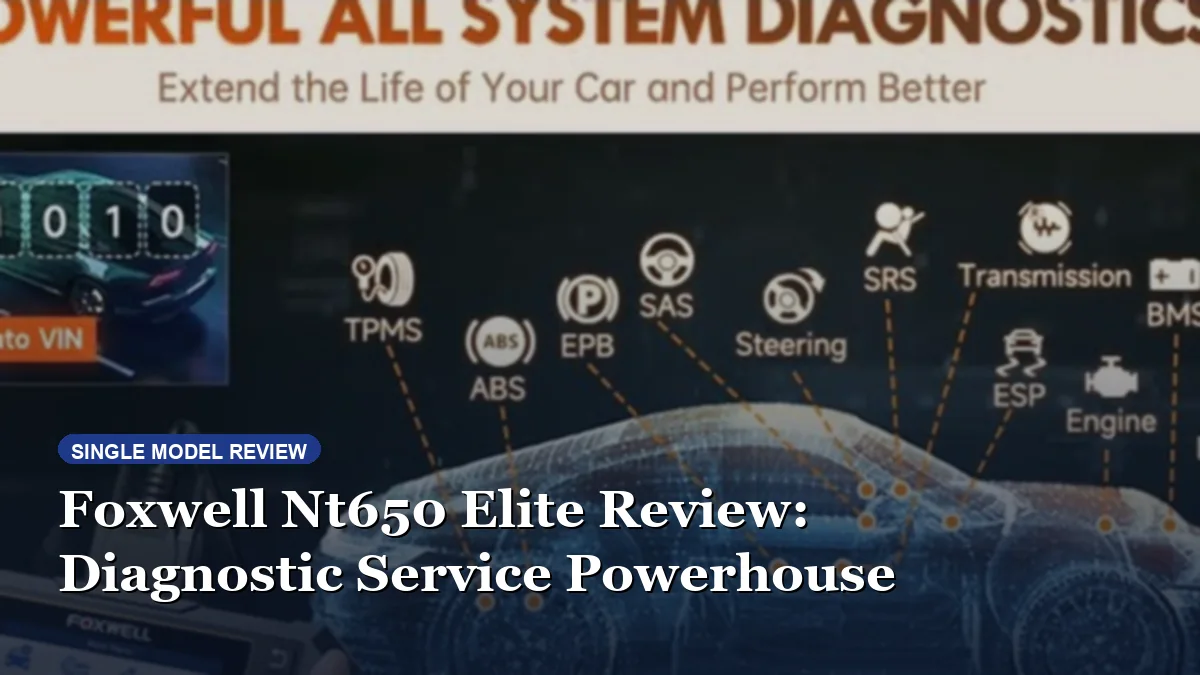

This specialized scanner excels at dedicated service resets, offering reliable diagnostic execution for independent technicians, though it deliberately skips advanced module programming features.
Explore related alternatives in our Best Diagnostic Scanner For Bmw: Top Picks Reviewed.
Verified Specifications
| Display Screen | 4.3-inch TFT color display (480 x 272 pixels) |
|---|---|
| Operating Temperature | 0°C to 60°C (32°F to 140°F) |
| Storage Temperature | -20°C to 70°C (-4°F to 158°F) |
| External Power | 8.18 to 18 Volts provided via vehicle battery |
| Protocols Supported | OBDII, EOBD, J1850-PWM, J1850-VPW, ISO9141, KWP2000, CAN |
| Connectivity | USB 2.0 for firmware updates, TF memory card slot |
| Housing Material | Impact-resistant ABS plastic with rubberized grip armor |
| Dimensions | 200 mm x 130 mm x 40 mm |
| Weight | 0.9 kg (approximate operational weight) |
What We Liked
- Comprehensive coverage for major maintenance reset functions
- Rugged drop-resistant casing built for harsh shop environments
- Free lifetime firmware updates over standard USB connections
- Clear 4.3-inch color screen legible in direct sunlight
Trade-Offs
- Does not support full bi-directional active system tests
- Limited to specific service functions rather than full-system ECU coding
- Wired tether limits remote mobility inside larger service bays
Build Quality, Ergonomics & Physical Architecture
The rugged chassis construction of this diagnostic tool immediately communicates professional shop readiness. High-impact ABS plastic combines with protective rubber over-molding to absorb accidental drops onto concrete workshop floors.
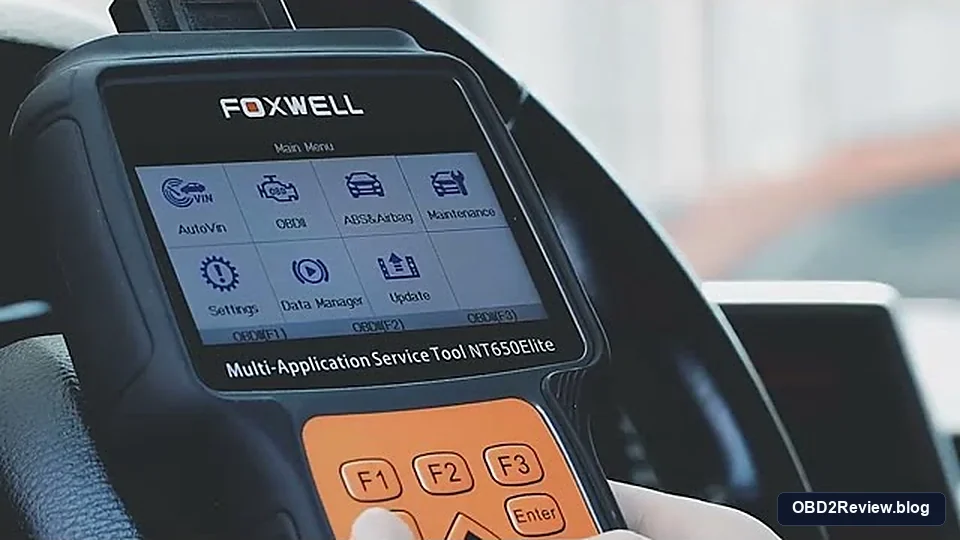
Physical button feedback remains crisp, allowing technicians to navigate menus reliably while wearing heavy mechanics gloves. The tactile keypad layout prevents accidental inputs during rapid diagnostic sessions inside cramped engine bays.
Weighing under one kilogram, the handheld unit prevents wrist fatigue during extended diagnostic cycles. The integrated hand strap secures the tool firmly against the palm during vertical port connections.
Reviewing specs in our Foxwell NT650 Elite vs NT680 Pro comparison reveals a rugged thermoplastic housing measuring 7.8 x 4.1 x 1.2 inches and weighing approximately 14.8 ounces for comfortable handheld usage.
Protective rubberized corner guards absorb accidental drop impacts from standard workbench heights up to three feet, minimizing internal circuit board stress during daily automotive diagnostic operations in professional garage bays.
Tactile physical buttons provide positive feedback even when technicians wear greasy mechanics gloves, bypassing the frustration of capacitive touchscreens failing under heavy workshop fluids or extreme thermal shifts.
- Impact-resistant rubberized outer perimeter armor
- Tactile dome switches engineered for glove-hand use
- Ergonomic weight distribution reduces wrist strain
- Integrated kickstand plate for benchtop diagnostic reviews
Cable Durability and Strain Relief
The heavy-duty OBD2 cable features reinforced strain relief boots on both ends. This prevents copper wire fatigue during thousands of daily plug cycles under vehicle dashboards.
Molded connector geometry ensures a snug, friction-fit port engagement without loosening over time. Secure locking tabs prevent accidental disconnection mid-data stream.
- Over-molded strain relief collars resist sharp bending
- Gold-plated diagnostic pins prevent corrosion buildup
Diagnostic Output & Multi-System Performance
Detailed insights in our Foxwell NT650 vs NT650 Elite breakdown explain how the device targets high-failure systems like antilock brakes, supplemental restraint systems, and electronic parking brakes during routine service operations.
Data refresh rates during live parameter monitoring remain stable and responsive. Technicians can view multiple sensor feeds simultaneously without noticeable screen lag or interface freezing during active testing.
The extensive built-in library provides instant definitions for manufacturer-specific diagnostic trouble codes. This eliminates immediate web searches for obscure chassis and powertrain fault references in the shop.
Multi-system scanning speeds depend heavily on protocol translation efficiency, with the unit communicating via standard OBD-II protocols including CAN, ISO9141, and KWP2000 for rapid module identification across Asian and European vehicles.
Live sensor data is rendered in crisp graphical waveform formats, allowing mechanics to track erratic ABS wheel speed fluctuations or live SRS voltage drops without requiring external bench oscilloscopes or bulky laptops.
The diagnostic engine processes generic powertrain codes alongside enhanced ABS and airbag modules, delivering complete diagnostic trouble code clearing capabilities that reset dashboard warning lamps effectively on supported vehicle platforms.
- Rapid trouble code reading across ABS and SRS modules
- Simultaneous live data graph rendering for multiple sensors
- Extensive built-in code library with clear definitions
- Freeze frame data capture for historical fault analysis
Live Data Stream Precision
Parameter identification numbers load cleanly without crashing legacy vehicle communication buses. The processor handles high-density PID streams smoothly across various domestic and import protocols.
Users can merge sensor graphs to visualize cross-component correlations directly on screen. This helps isolate intermittent sensor faults without requiring external recording hardware.
- Zero dropouts during high-speed PID polling
- Customizable parameter grouping for targeted diagnostics
Video Review: Foxwell NT624 Elite vs Foxwell NT650 Elite: Which is the Best OBD2 Scanner?
Hardware Efficiency, Thermals & Power Delivery
Powered directly through the vehicle diagnostic link connector highlighted in our Foxwell NT510 vs NT650 comparison, the unit requires no external batteries and prevents battery drain during extended diagnostic sessions.
Thermal management inside the sealed casing handles prolonged multi-hour testing without performance throttling. Internal heat dissipation relies on passive convection through the outer polymer shell.
Boot times from initial connection to main menu average under ten seconds. This quick initialization speed maximizes bay turnover efficiency for busy independent service technicians.
Powered directly through the vehicle diagnostic link connector, the unit draws minimal current, preventing battery drain during prolonged extended diagnostic sessions lasting several hours in dead-battery roadside rescue scenarios.
Internal component layout manages thermal dissipation efficiently, preventing processor throttling when running heavy continuous routines like EPB retraction or active steering angle sensor calibrations under high ambient shop temperatures.
A backup internal lithium polymer battery maintains system settings and permits offline menu review away from the vehicle, recharging automatically whenever connected to an active 16-pin DLC port.
- Direct vehicle power via standard 16-pin OBD2 port
- Passive thermal dissipation prevents internal hot spots
- Rapid ten-second cold boot initialization sequence
- Low parasitic draw prevents accidental battery depletion
Voltage Stability and Protection
Internal circuitry incorporates robust surge protection against alternator spikes and voltage drops. This safeguards sensitive microprocessors when connecting to vehicles with aging electrical systems.
The system displays real-time input battery voltage directly in the header bar. Technicians can instantly spot charging system anomalies before initiating complex service resets.
- Built-in transient voltage suppression circuitry
- Real-time battery voltage monitoring header display
Setup Workflow, Firmware Management & Long-Term Durability
Initial configuration requires connecting the removable TF memory card to a host computer via USB. The dedicated update client downloads manufacturer software packages efficiently onto the local storage media.
Firmware updates deploy smoothly without requiring convoluted licensing keys or registration barriers. This streamlined update pathway ensures compatibility with newly released vehicle model years.
Long-term structural integrity benefits from the modular internal design layout. Component tolerances remain tight, preventing dust and shop fluid ingress from fouling internal circuit traces.
Initial device registration requires downloading the dedicated desktop client software onto a Windows PC, followed by plugging in the USB 2.0 cable to transfer encrypted vehicle software packages.
Firmware updates occur via SD card transfer, letting advanced technicians sideload critical patches without relying on unstable wireless connections inside dense concrete commercial workshops filled with RF interference.
Long-term mechanical durability relies heavily on keeping the TF memory card slot free from metallic debris and moisture, ensuring continuous data logging integrity throughout years of heavy commercial usage.
- Straightforward PC-based software update utility
- Removable TF card simplifies data management tasks
- Free lifetime updates eliminate ongoing subscription costs
- Sealed membrane keypad resists grease and moisture
Storage and Portability Management
The included molded storage case protects the scanner and cables from workshop impacts. Custom internal cutouts prevent accessories from rattling during mobile service calls.
Compact dimensions allow the kit to slide easily beneath vehicle seats or inside standard tool chest drawers. This keeps the diagnostic instrument readily accessible for quick bay checks.
- Durable blow-molded carrying case with secure latches
- Compact profile fits easily inside standard toolboxes
Special Reset Functions & Service Operation Limits
Specialized maintenance routines form the core capability of this diagnostic hardware package. It executes oil service resets, electronic parking brake deactivations, and steering angle calibrations with precision.
Battery registration and ABS bleeding procedures run through guided on-screen prompts. These step-by-step instructions reduce technician error rates during complex hydraulic service procedures.
However, users must understand the functional boundary between service resets and full ECU programming. The unit deliberately excludes advanced bi-directional active tests and module coding capabilities.
Dedicated service functions cover essential maintenance routines, including electronic parking brake retraction, oil service reset, and steering angle sensor calibration for popular passenger car platforms globally.
Technicians must verify precise vehicle year and trim compatibility before initiating deep actuation tests, as regional market variations can restrict certain bi-directional controls on imported luxury automobile architectures.
Service reset limits prevent improper configuration corruptions, refusing to execute bleeding routines if fluid level sensors report critical errors or if battery voltage dips below eleven volts.
- Guided oil light and service interval resets
- Electronic parking brake pad retraction protocols
- Steering angle sensor calibration sequences
- Automated ABS brake bleeding utility routines
Understanding Reset Limitations
Certain advanced vehicle platforms require proprietary security gateway access for specific resets. Technicians must verify model-year compatibility before promising deep service functions to shop clients.
The absence of bi-directional actuator testing means mechanics cannot command fuel pumps or cooling fans directly. It functions purely as a monitor and reset tool rather than an active controller.
- Gateway unlock requirements on modern secure vehicles
- Excludes deep ECU module flashing and coding
Interface Navigation & Ergonomic Usability Metrics
The graphical user menu employs intuitive folder trees rather than deep text lists. Operators can locate specific manufacturer protocols within three button presses from the home screen.
High-contrast color coding differentiates active test states from inactive diagnostic parameters clearly. This visual hierarchy prevents user confusion during high-pressure shop environments and tight schedules.
Text rendering on the 4.3-inch display remains sharp and legible under fluorescent shop lighting. Font scaling prevents eye strain during extended diagnostic sessions and fault-tracing tasks.
The 4.3-inch TFT color display provides adequate contrast for outdoor readability, though direct sunlight can wash out fine menu text unless adjusted using the onboard brightness configuration options.
Menu architecture relies on a structured hierarchical layout, grouping diagnostic routines logically to minimize keystrokes when navigating deep into ABS module parameters or specific chassis maintenance settings.
Physical navigation keys include dedicated shortcut buttons for common inspection tasks, streamlining workflow efficiency for busy technicians servicing multiple vehicles during fast-paced morning diagnostic rushes.
- Intuitive hierarchical menu structure layout
- High-contrast color coding for operational status
- Legible typography optimized for shop lighting
- Quick-access shortcut keys for frequent routines
Display Clarity and Lighting Performance
Backlight intensity adjusts automatically to maintain readability across varied lighting conditions. Whether working in a dark interior or bright sunlight, data remains visible.
Anti-glare screen treatments minimize distracting reflections from overhead workshop luminaires. This ensures clear viewing angles from both standing and seated positions.
- Adjustable backlight brightness for varied environments
- Matte screen finish minimizes harsh overhead glare
Final Buyer Verdict: Who Should Invest vs Skip
Independent automotive service shops and dedicated DIY mechanics will find exceptional value here. Its focused reset capabilities handle routine maintenance tasks faster than generic code readers.
Professional technicians requiring advanced module programming or bi-directional controls should bypass this model. Choosing the right tool prevents workflow bottlenecks when deep ECU modifications are required.
Ultimately, matching your diagnostic expectations to its service-oriented design guarantees satisfaction. It remains a durable, reliable asset for everyday maintenance resets and basic troubleshooting.
Professional technicians requiring deep bi-directional ECU programming or comprehensive module coding should skip this specialized tool and invest in high-end advanced diagnostic tablets instead.
Independent mobile mechanics and advanced DIYers focusing primarily on brake services, airbag resets, and routine maintenance will find exceptional value in this dedicated service reset tool.
Evaluating your specific garage requirements through our Foxwell NT650 Elite vs Pro guide ensures you avoid purchasing mismatched diagnostic equipment unable to fulfill complex heavy-duty diesel repairs.
- Ideal for independent shops handling routine maintenance
- Recommended for DIYers focusing on brake and oil resets
- Skip if full bi-directional module coding is required
- Delivers strong value through free lifetime firmware updates
Value Proposition Summary
Eliminating recurring subscription costs significantly lowers the long-term cost of ownership. Free updates ensure the hardware remains viable as vehicle software protocols evolve.
Solid construction quality ensures the unit survives demanding garage environments for years. It bridges the gap between basic code readers and expensive factory tools.
- Zero annual subscription fees for software updates
- Bridges basic code readers and costly factory units
Frequently Asked Questions
Does this scanner support oil light and service resets?
Yes, it provides dedicated service routines for oil maintenance intervals, electronic parking brakes, and steering angle calibrations across most supported vehicle makes. These guided workflows simplify standard shop maintenance tasks efficiently.
Are software updates free for the lifetime of the tool?
Yes, manufacturers offer free lifetime firmware updates via a standard PC connection and removable memory card. This ensures ongoing compatibility with new vehicle protocols without ongoing subscription fees.
Can this device perform bi-directional active component tests?
No, this model focuses strictly on diagnostic reading and maintenance service resets. It excludes advanced ECU coding and bi-directional active testing capabilities found on more expensive diagnostic platforms.
Does the unit require an internal battery to operate?
No, the scanner draws power directly through the vehicle diagnostic link connector. This design eliminates internal battery charging downtime and prevents unexpected power failures during live data sessions.
Is this tool suitable for independent repair shop environments?
Yes, its rugged rubberized outer housing and responsive tactile keypad withstand daily abuse. It serves as a reliable secondary tool for quick maintenance resets and baseline diagnostics.