What Is Short Term Fuel Trim In Engine Diagnostics
Modern engine computers continuously adjust fuel delivery to maintain optimal combustion. Understanding this dynamic parameter helps technicians diagnose complex drivability issues.

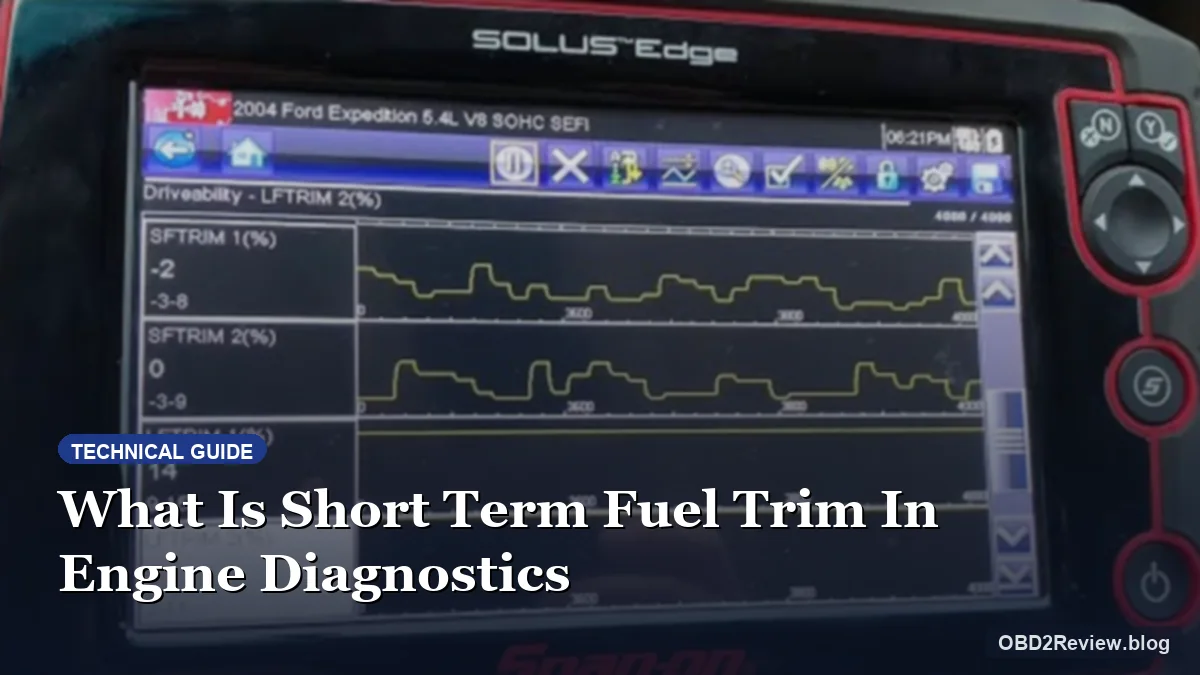
Short term fuel trim represents real-time adjustments made by the powertrain control module to maintain the ideal air-fuel ratio. Monitoring these fluctuating percentages helps isolate unmetered air leaks and faulty injectors.
Looking for matching picks? See our Best Diagnostic Scanner For Bmw: Top Picks Reviewed.
Practical Quick-Reference Table
| Scenario / Metric | Recommended Target | Why It Matters |
|---|---|---|
| Idle Operation | +/- 5 Percent | Indicates stable baseline air-fuel mixture without leaks. |
| Cruising Speed | +/- 3 Percent | Shows efficient fuel atomization under steady highway load. |
| WOT Acceleration | Rich Drop / Zero | ECU typically ignores trim inputs during heavy acceleration. |
| Vacuum Leak | +20 Percent or Higher | Exposes unmetered air entering past the throttle body. |
| Leaking Injector | -15 Percent or Lower | Reveals excess fuel delivery flooding a specific cylinder. |
| Clogged Catalyst | Erratic Fluctuations | Demonstrates delayed oxygen sensor response times. |
Fundamental Principles of Engine Fuel Management
Internal combustion engines require a precise mass ratio of air and fuel to achieve complete combustion. The ideal stoichiometric ratio sits at approximately fourteen point seven parts air to one part fuel.
Engine control computers rely heavily on multiple input sensors to calculate baseline fuel delivery requirements. Temperature sensors, mass airflow sensors, and throttle position sensors establish this primary fuel injector pulse width.
Despite precise factory programming, environmental variables constantly alter incoming air density. Barometric pressure shifts, ambient temperature swings, and altitude changes demand continuous recalibration of the core injection strategy.
Without active feedback loops, engines would frequently run too lean or too rich under varying loads. This operational instability would increase harmful tailpipe emissions and accelerate internal component wear across all cylinders.
- Stoichiometric ratio dictates the ideal baseline for modern gasoline engines.
- Baseline fuel calculations depend on accurate mass airflow sensor inputs.
- Environmental changes require continuous computer management of fuel delivery.
- Active feedback loops prevent severe engine hesitation and emission spikes.
The Role of Electronic Control Units
The powertrain control module processes millions of calculations every second to govern engine operations. It adjusts injector pulse widths instantly based on real-time sensor feedback from the exhaust stream.
Using our recommended best obd2 scanner options, technicians can view these internal computer corrections live. Observing these numerical percentages provides an immediate window into the health of the fuel delivery system.
- Computers process sensor data continuously to maintain proper combustion.
- Live diagnostic scanners reveal hidden fuel delivery anomalies.
Powertrain Control Module Compensation Mechanics
The powertrain control module generates dynamic corrections to maintain stoichiometric balance during combustion. Short term fuel trim acts as the computer's immediate response mechanism to exhaust oxygen content.
When exhaust gases indicate a lean condition confirmed by your best obd ii bluetooth scanner, the computer immediately extends injector opening durations. This rapid intervention injects more fuel to correct temporary combustion imbalances.
Conversely, a rich exhaust signal forces the module to shorten injector pulse widths instantly. Reducing fuel delivery prevents raw hydrocarbons from overwhelming the catalytic converter during active operation.
These adjustments happen multiple times every second during normal driving conditions. The system continuously hunts around the optimal target, creating a rhythmic oscillation visible on advanced scan tools.
- Computers extend injector pulse widths to correct lean exhaust conditions.
- Rich exhaust signals trigger immediate reductions in fuel delivery duration.
- Modulations occur continuously to maintain optimal stoichiometric balance.
- Scan tool graphs display these rapid adjustments as continuous wave patterns.
Distinction Between Short and Long Trims
Short term trims are volatile numbers that reset every time the vehicle ignition turns off. Long term trims represent permanent learning adaptations stored in the module's non-volatile memory.
Persistent short term anomalies eventually force the computer to update long term values. This automated learning process compensates for gradual mechanical wear over thousands of miles.
- Short term adjustments reset automatically upon engine shutdown.
- Long term values store persistent mechanical fuel corrections safely.
Video Walkthrough: Short Term and Long Term Fuel Trims Explained
Oxygen Sensor Feedback Loops and Data Sampling
Exhaust oxygen sensors serve as the primary informants for closed-loop fuel management systems. These specialized components measure residual oxygen levels in the exhaust stream after combustion events occur.
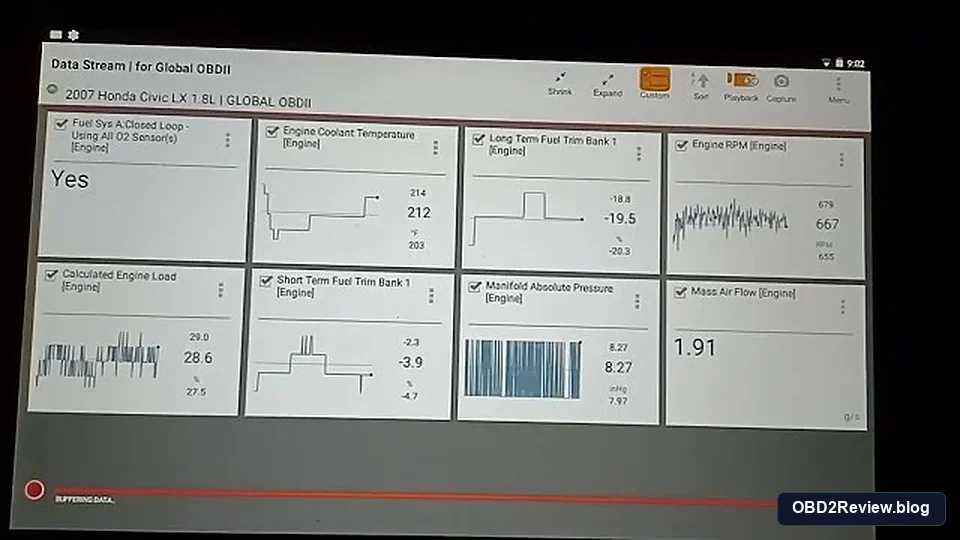
Narrowband sensors produce a switching voltage that toggles rapidly between zero and one volt. A high voltage signals a rich mixture, while low voltage points toward a lean condition.
Wideband sensors offer superior resolution by measuring exact air-fuel ratios across a broad operating spectrum. This precision enables modern engines to maintain tighter control over emissions and fuel economy.
Closed-loop operation relies entirely on functional upstream oxygen sensors sending steady signals. If these sensors fail or become sluggish, the computer cannot calculate accurate fuel trim adjustments.
- Oxygen sensors monitor residual exhaust gases to close the feedback loop.
- Narrowband sensors switch rapidly between high and low voltage states.
- Wideband sensors provide precise air-fuel measurements across wide ranges.
- Damaged oxygen sensors disable accurate real-time fuel trim calculations.
Sensor Warm-Up and Open-Loop Operation
During cold engine startups, the system operates in open-loop mode without sensor feedback. The computer relies strictly on pre-programmed lookup tables until exhaust temperatures reach operating thresholds.
Once internal heaters bring oxygen sensors up to operating temperature, closed-loop engages. Fuel trim data becomes active and reliable only after this transition successfully takes place.
- Cold starts utilize open-loop mode using factory backup maps.
- Closed-loop activation requires heated oxygen sensors to reach operating heat.
Diagnostic Scanner Setup and Live Data Monitoring
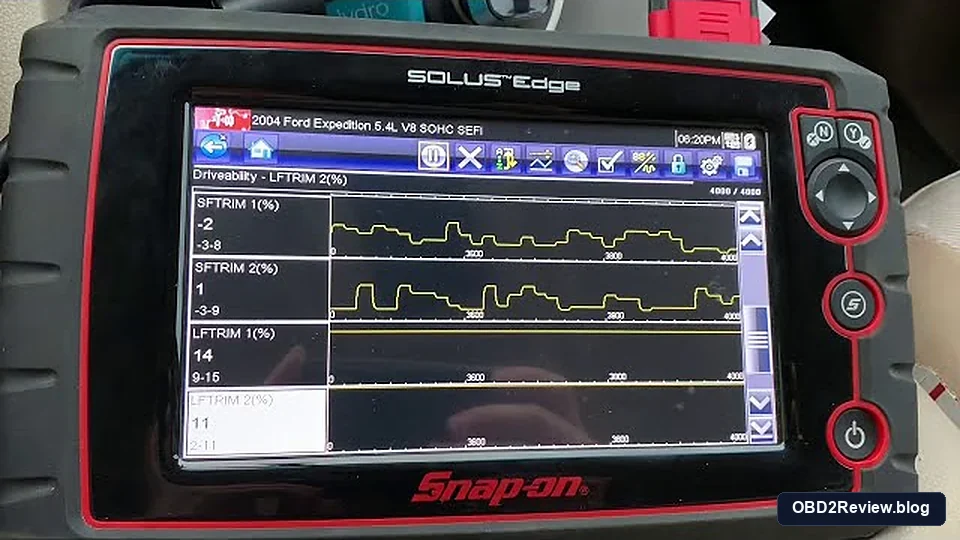
Connecting a wireless diagnostic device like the best bluetooth odb2 scanner requires locating the standardized data link connector under the dashboard. Technicians plug the interface cable securely into this designated sixteen-pin vehicle port.
Selecting live data parameters requires navigating through the scanner menu to engine data streams. Users must isolate specific fuel parameters like short term trim bank one and bank two.
Graphing these live parameters helps reveal patterns that numerical lists often fail to show. A healthy system displays rapid, symmetrical oscillations centering closely around zero percent correction.
Testing should encompass multiple operating states including idle, two thousand rpm, and sudden deceleration. Comparing these varying states isolates whether a fault stems from vacuum leaks or fuel delivery.
- Locate the standard diagnostic link connector beneath the driver dashboard.
- Navigate software menus to isolate live fuel trim data streams.
- Graph numerical data to visualize symmetrical sensor oscillation patterns.
- Test across multiple engine speeds to accurately identify mechanical faults.
Interpreting Scan Tool Update Speeds
Standard generic OBD2 protocols refresh live data at relatively slow sampling rates. Technicians should utilize enhanced manufacturer software when available to capture ultra-fast fuel adjustments.
Slow refresh rates can mask intermittent fuel delivery dropouts during rapid throttle transitions. Fast sampling ensures accurate capture of momentary lean or rich engine spikes.
- Generic protocols provide slower data refresh rates for diagnostics.
- Enhanced software captures rapid fuel delivery adjustments effectively.
Interpreting Positive Versus Negative Trim Readings
Positive percentage readings indicate the computer is adding extra fuel to the combustion chambers. This means the engine is running lean and requires compensation to maintain proper performance.
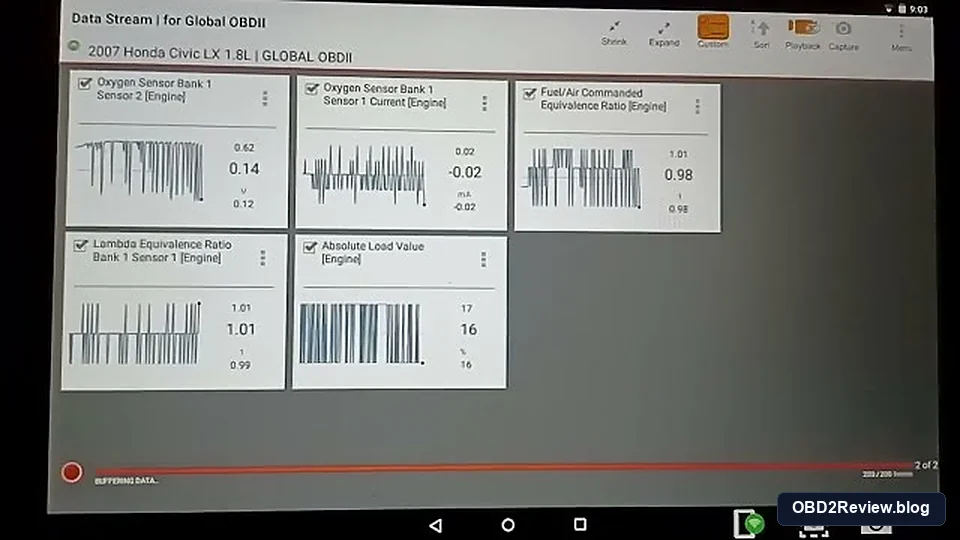
A reading of plus fifteen percent means the computer increased injector pulse width significantly. Such high positive figures usually point toward unmetered air entering past the airflow sensor.
Negative percentage readings show the computer is actively reducing fuel delivery to the cylinders. This indicates the engine is running rich and threatening to flood the exhaust system.
Consistently negative numbers reveal excess fuel entering through leaking injectors or faulty regulators. Recognizing these directional trends guides technicians directly toward the underlying root mechanical cause.
- Positive readings reveal lean conditions requiring added fuel delivery.
- High positive values above ten percent often indicate vacuum leaks.
- Negative readings show rich conditions requiring reduced fuel injection.
- Negative trends point directly toward leaking fuel system components.
Evaluating Bank One Versus Bank Two
V-type engines feature separate exhaust manifolds designated as bank one and bank two. Comparing trim data between banks helps determine if a fault is localized or global.
If only one bank shows extreme positive trims, suspect a localized intake gasket leak. Global issues affecting all cylinders typically stem from shared components like fuel pumps.
- V-style engines divide exhaust streams into separate monitoring banks.
- Comparing banks isolates localized manifold leaks from global fuel issues.
Video Walkthrough: Using Short and Long Term Fuel Trims in Diagnostics
Common Mechanical Failures Causing Extreme Trims
Unmetered air leaks represent the most frequent cause of excessive positive trim numbers. Cracked vacuum lines, deteriorated intake manifold gaskets, and loose boot connections let air bypass sensors.
Weak fuel pumps or clogged fuel filters restrict necessary fluid volume under heavy loads. This starvation forces the computer to max out positive trim limits to prevent engine stalling.
Leaking fuel injectors allow raw gasoline to seep past seals into combustion chambers. This unwanted fluid accumulation forces negative trim corrections as the computer struggles to lean out mixtures.
Faulty mass airflow sensors report incorrect air mass values to the powertrain computer. This miscalculation skews baseline fuel delivery calculations, causing erroneous trim adjustments across all operating speeds.
- Vacuum leaks allow unmeasured air to enter the intake manifold.
- Weak fuel pumps restrict fluid delivery and cause high positive trims.
- Leaking fuel injectors flood cylinders and trigger negative corrections.
- Dirty airflow sensors report false volumetric data to the computer.
Secondary Ignition and Mechanical Faults
Misfiring cylinders dump unburned oxygen directly into the exhaust stream. Oxygen sensors misinterpret this unburned air as a lean condition, forcing incorrect positive trim responses.
Low engine compression reduces volumetric efficiency and disrupts normal combustion chamber dynamics. Technicians must verify mechanical engine integrity before replacing fuel delivery components.
- Cylinder misfires introduce unburned oxygen into the exhaust pipes.
- Internal mechanical wear disrupts combustion efficiency and fuel calculations.
Step-by-Step Diagnostic Workflow for Technicians
Begin every fuel trim diagnostic session by checking for stored diagnostic trouble codes. Review freeze frame data to see exact engine operating conditions when faults originally occurred.
Observe live short and long term trim percentages with the engine idling at operating temperature. Normal parameters should remain close to zero with only minor fluctuations visible on screen.
Raise engine speed to two thousand rpm and hold the throttle steady. If positive idle trims drop back toward zero, suspect an intake vacuum leak rather than a fuel supply problem.
Use a smoke machine to pressurize the intake tract and reveal hidden vacuum leaks. Inspect all rubber hoses, gaskets, and emission components for escaping theatrical smoke trails.
- Scan for stored trouble codes and review freeze frame operating data.
- Observe baseline idle trim percentages on a live diagnostic screen.
- Increase engine speed to isolate vacuum leaks from fuel supply faults.
- Deploy a smoke machine to visually locate hidden intake manifold leaks.
Verifying Fuel Pressure and Injector Balance
Attach a mechanical fuel pressure gauge to the test port on the fuel rail. Compare actual operating pressures against factory specifications to rule out weak pumps or clogged filters.
Perform an electronic injector balance test to verify equal delivery across cylinders. Address any failing injectors before clearing adaptive memory values from the computer.
- Connect a mechanical pressure gauge to evaluate fuel delivery output.
- Execute injector balance tests to verify equal cylinder distribution.
Preventive Maintenance and System Calibration Rules
Regular maintenance routines prevent erratic fuel trim variations and extend component lifespans. Replace dirty air filters promptly to ensure accurate volumetric airflow measurements by the sensor.
Clean mass airflow sensor filaments periodically using specialized non-residue electronic cleaner sprays, especially after using an obd2 code decoder to isolate airflow faults. Never touch sensitive sensor wires with bare fingers.
Inspect rubber vacuum lines and PCV hoses regularly for dry rot and cracking. Preventative hose replacement stops minor air leaks before they trigger dashboard warning lights.
Perform idle re-learning procedures whenever throttle bodies or computers are replaced. This ensures the control module establishes accurate baseline parameters for future fuel calculations.
- Replace clogged engine air filters at recommended factory service intervals.
- Clean airflow sensor wires carefully using approved electronic spray solvents.
- Inspect rubber vacuum lines frequently to prevent unmetered air leaks.
- Execute idle relearn procedures after servicing throttle body components.
Clearing Adaptive Memory After Repairs
Always reset adaptive fuel trim memory after completing physical mechanical repairs. This forces the powertrain control module to build new, accurate calibration tables from scratch.
Allow the vehicle to idle through a complete thermal cycle after resetting memory. Road test the car across varied speeds to ensure long term trims stabilize properly.
- Reset adaptive memory values after completing mechanical system repairs.
- Complete a full thermal idle cycle and road test to verify stability.
Frequently Asked Questions
What is the normal range for short term fuel trim?
Normal values typically fluctuate between plus and minus five percent during standard driving conditions. This constant movement indicates the computer is successfully maintaining proper combustion balance.
Why do short term and long term trims differ?
Short term trim reacts instantly to immediate exhaust changes, while long term trim stores permanent learning adaptations. Permanent memory updates compensate for gradual mechanical wear over time.
What causes a high positive fuel trim reading?
Excessive positive numbers usually indicate unmetered air entering through vacuum leaks or weak fuel pumps. The computer adds fuel to correct dangerous lean conditions inside cylinders.
How does a vacuum leak affect fuel trim data?
Vacuum leaks cause high positive trims at idle because extra air bypasses sensors. These elevated numbers often drop back toward normal when engine speed increases.
Should I clear codes after fixing a trim fault?
Yes, clearing diagnostic codes and resetting adaptive memory forces fresh baseline calculations. This step ensures the computer builds accurate new tables without old fault history.