What Is Long Term Fuel Trim in Automotive Diagnostics
Understanding engine fuel adjustments is vital for accurate diagnostics. This guide clarifies system behavior and monitoring.

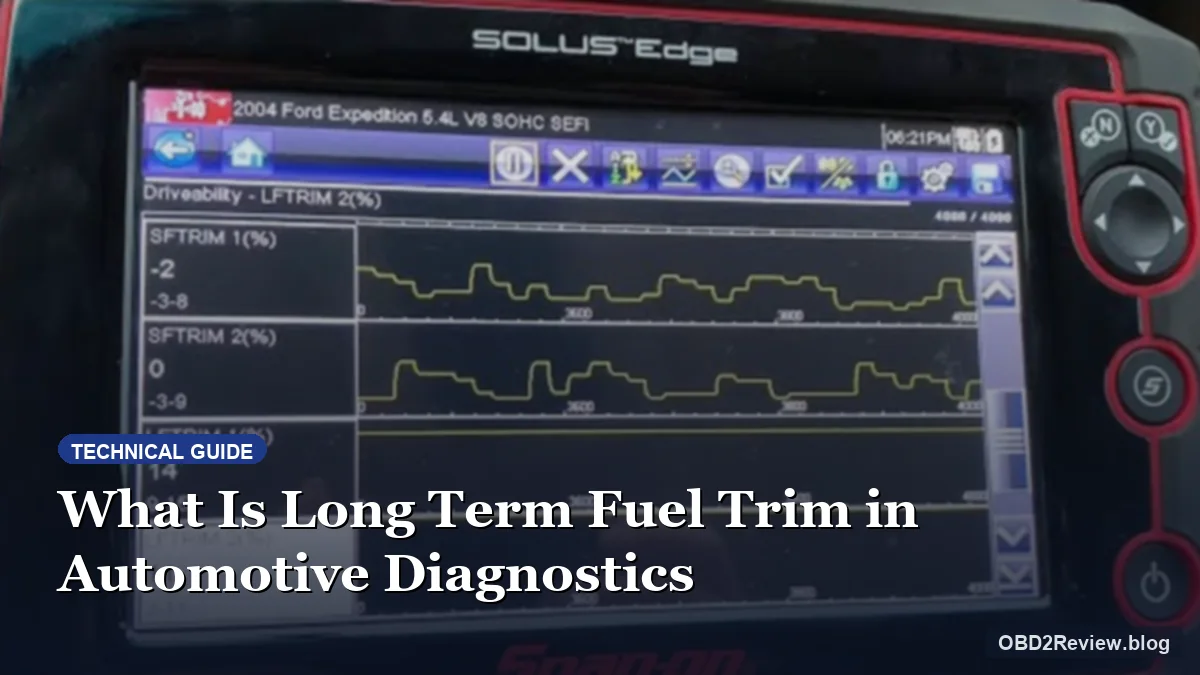
Long term fuel trim measures powertrain fuel adjustments over extended driving cycles to maintain stoichiometric air-fuel ratios.
Looking for matching picks? See our Best Diagnostic Scanner For Bmw: Top Picks Reviewed.
Practical Quick-Reference Table
| Scenario / Metric | Recommended Target | Why It Matters |
|---|---|---|
| Idle Fuel Trim | Within plus or minus 5 percent | Ensures stable combustion at rest |
| Cruising Trim | Zero to plus or minus 3 percent | Verifies efficient highway fuel metering |
| Positive Trim | Under plus 10 percent | Prevents unmetered vacuum leak damage |
| Negative Trim | Above minus 10 percent | Stops severe fuel injector flooding |
| Oxygen Sensor | 0.1 to 0.9 volts cycling | Confirms active closed loop operation |
| Mass Airflow | Matches factory gram per second | Provides accurate base calculation data |
Foundational Concepts of Powertrain Fuel Management
Modern engine computers continuously adapt to changing environmental conditions. They rely on oxygen sensor feedback to modify fuel delivery durations dynamically across various driving states.
Engine control units split these adjustments into distinct categories. Reviewing our best bluetooth obd2 scanner options helps monitor how short term trims react instantly while long term adaptations store persistent corrections.
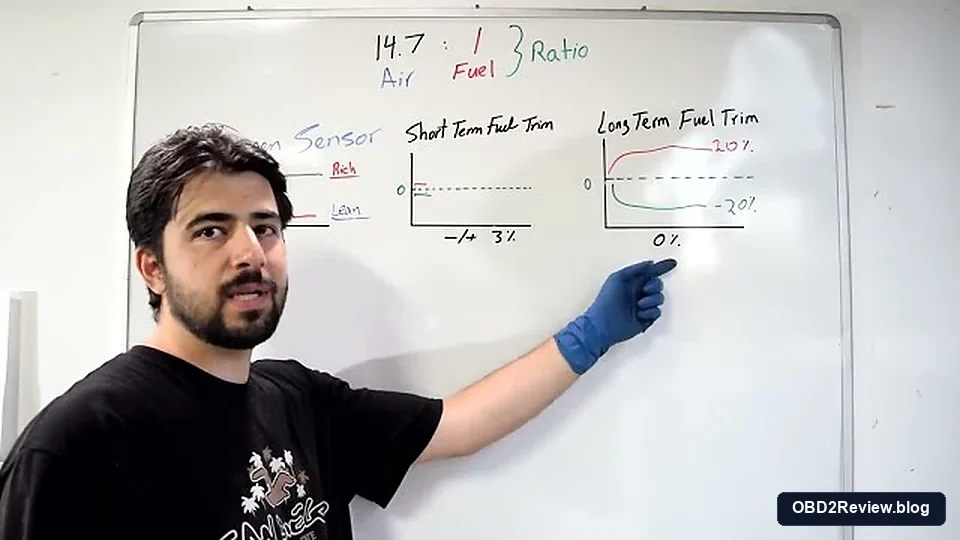
- Computers target a stoichiometric ratio of 14.7 parts air to 1 part fuel.
- Short term adjustments happen instantly based on real-time exhaust gas readings.
- Long term values compensate for gradual mechanical wear and minor vacuum leaks.
- Extreme adaptations trigger dashboard check engine lights and diagnostic trouble codes.
Differentiating Short and Long Term Adjustments
Short term fuel trim fluctuates rapidly as cylinders fire. It represents temporary corrections required for immediate combustion consistency during sudden throttle inputs.
Conversely, long term fuel trim shifts much slower. It captures persistent discrepancies between expected airflow calculations and actual measured combustion results over time.
- Short term data clears instantly when the ignition turns off.
- Long term data remains saved in non-volatile powertrain control memory.
Core Operational Mechanics of Long Term Adjustments
The powertrain computer uses learned values to offset manufacturing tolerances. Using a reliable obd ii bluetooth scanner helps track these adaptive memory registers preventing drivability issues as internal components age.
When fuel injectors clog or fuel pumps weaken, the computer notices lean exhaust signals. It systematically increases pulse width until the oxygen sensors report balanced combustion chemistry.
- Learned values prevent constant manual tuning by human technicians.
- Adaptive memory updates occur continuously during closed loop operation stages.
- Extreme weather shifts require minor baseline compensation from stored tables.
- Fuel pressure drops force the computer to extend injector duty cycles.
How Control Units Process Exhaust Gas Feedback
Exhaust oxygen sensors measure leftover oxygen in the manifold. They send voltage signals back to the main processor for immediate evaluation and correction.
If voltage remains low, the system identifies a lean condition. The computer then broadens the fuel delivery window to restore proper chemical balance.
- Narrowband sensors switch rapidly between high and low voltage states.
- Wideband sensors provide precise linear measurements across broader air-fuel ranges.
Video Walkthrough: Short Term and Long Term Fuel Trims Explained
Step-by-Step Setup and Calibration of Diagnostic Scanners
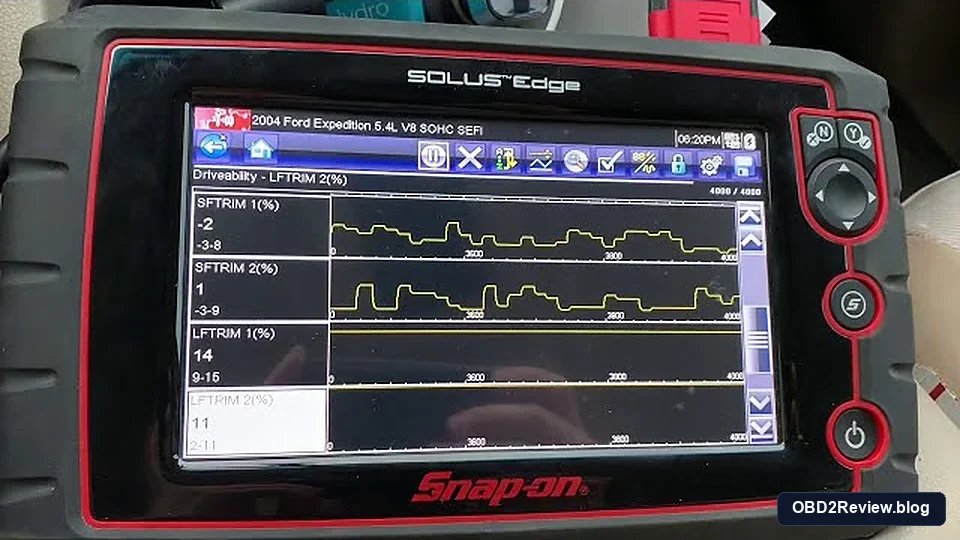
Connecting a diagnostic tool requires locating the under-dash port. Technicians can use our best obd2 scanner choices to securely interface with the standardized vehicle data link before ignition.
Technicians should select live data streaming menus on their equipment. Navigating to fuel system parameters allows real-time observation of both short and long term adaptation percentages.
- Ensure the vehicle reaches normal operating temperature before logging data.
- Select specific parameter identifiers for bank one and bank two sensors.
- Record baseline idle metrics prior to executing snap throttle tests.
- Verify battery voltage remains stable to prevent erratic module communication errors.
Navigating Live Data Menus for Fuel Metrics
Finding the correct data stream menus prevents diagnostic confusion. Users should filter displayed parameters to isolate fuel trim percentages from unrelated sensor readings.
Graphing these percentages reveals hidden trends over time. Steady upward climbs usually point toward developing vacuum leaks or failing fuel supply pumps.
- Isolate specific PIDs for comprehensive fuel system evaluation.
- Use line graphs to track percentage fluctuations during test drives.
Interpreting Positive and Negative Trim Percentages
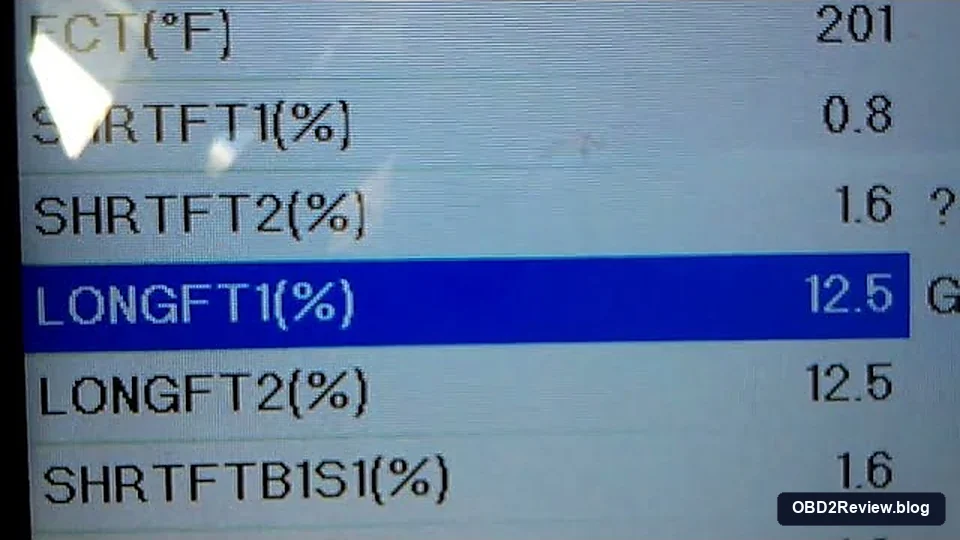
Positive percentages indicate the computer is adding extra fuel. Checking our obd2 code decoder tool helps identify why the engine runs lean due to unmetered air leaks or restricted delivery components.
Negative percentages show the computer is reducing fuel delivery. This reflects a rich running condition caused by leaking fuel injectors or restricted exhaust flow paths.
- Values between negative five and positive five represent optimal health.
- Numbers exceeding plus ten require immediate mechanical inspection and repair.
- Excessive negative readings often suggest a dripping fuel injector nozzle.
- Balanced numbers across banks confirm uniform cylinder health and sealing.
Diagnosing Extreme Lean and Rich Conditions
Lean faults trigger high positive numbers on scan tool displays. Technicians must inspect intake gaskets, vacuum hoses, and crankcase ventilation valves thoroughly.
Rich faults generate large negative numbers in system memory. Mechanics should check fuel pressure regulators and perform cylinder balance tests to isolate failures.
- Smoke machines help locate hidden intake manifold vacuum leaks.
- Fuel pressure gauges verify proper delivery pump and regulator function.
Common Mistakes and Troubleshooting Faulty Sensor Data
Many technicians misdiagnose trim data by ignoring engine temperature. Evaluating fuel adaptations before the thermostat opens leads to false diagnostic conclusions regarding component health.
Another frequent error involves neglecting exhaust leaks upstream of sensors. Ambient air entering through cracks tricks oxygen sensors into reporting false lean conditions to computers.
- Always warm engines completely before recording diagnostic freeze frames.
- Inspect exhaust manifold gaskets for black soot and carbon trails.
- Verify mass airflow sensor cleanliness before condemning fuel injectors.
- Check for software updates that address factory fuel calibration errors.
Isolating Sensor Failures from Mechanical Issues
Faulty oxygen sensors can output skewed voltage signals. This forces the computer to miscalculate fuel delivery adjustments and corrupt stored long term values.
Cross-checking sensor data with a handheld gas analyzer confirms actual exhaust emissions. This step prevents replacing expensive parts based on bad electrical signals.
- Test sensor response times using dedicated diagnostic scan tools.
- Inspect wiring harnesses for heat damage or high resistance.
Maintenance and Safety Protocols for Fuel Systems
Working around high-pressure fuel systems demands strict safety adherence. Technicians must relieve residual line pressure before disconnecting fuel lines to prevent dangerous fuel spray hazards.
Regular maintenance preserves long term fuel trim health. Replacing dirty air filters, cleaning fuel injectors, and changing fuel filters protects the entire powertrain management network.
- Wear approved eye protection and nitrile gloves during maintenance tasks.
- Keep chemical spill kits nearby when opening pressurized fuel circuits.
- Disconnect the negative battery terminal before servicing electrical components.
- Perform post-repair road tests to verify normalized trim percentages.
Preventative Steps for Long-Term System Health
Proactive upkeep prevents costly powertrain component failures over time. Using quality fuel additives helps keep injector tips clean and spray patterns optimal.
Inspecting vacuum lines during routine oil changes catches degradation early. Stopping minor leaks prevents secondary damage to catalytic converters and oxygen sensors.
- Replace engine air filters according to factory mileage intervals.
- Inspect rubber vacuum lines for cracking and dry rot annually.
Advanced Diagnostic Scenarios and Live Data Logging
Advanced troubleshooting requires capturing data during road tests. Technicians analyze fuel trim shifts under load to catch intermittent delivery faults that do not appear at idle.
Comparing bank one against bank two isolates specific cylinder problems. If only one bank shows skewed trims, the issue likely resides in a localized mechanical failure.
- Log CSV files during acceleration runs for detailed post-test analysis.
- Monitor mass airflow grams alongside fuel trims under heavy throttle.
- Check for correlated misfire counts when fuel trims spike.
- Evaluate throttle position sensor correlation during snap tests.
Analyzing Multi-Bank Discrepancies Under Load
Split engine configurations present unique diagnostic challenges. Technicians must differentiate between global faults affecting both banks and localized problems.
Global issues usually stem from fuel pumps or clogged filters. Localized problems point to single-side intake leaks or dedicated bank fuel injectors.
- Global fuel pressure drops impact all cylinders simultaneously.
- Localized intake gaskets cause asymmetric bank trim variations.
Preventing Engine Damage Through Regular Trim Analysis
Ignoring chronic high fuel trims risks severe internal damage. Excessively lean conditions cause high combustion temperatures that can melt catalytic converter substrates and pistons.
Conversely, extreme rich conditions wash oil from cylinder walls. This accelerates piston ring wear and dilutes engine crankcase oil with unburned fuel contaminants.
- Address check engine lights promptly to avoid expensive secondary failures.
- Monitor live data periodically during routine vehicle service visits.
- Protect emission control devices by maintaining correct air-fuel ratios.
- Ensure proper fuel octane ratings to prevent erratic combustion events.
Protecting Catalytic Converters and Emission Hardware
Catalytic converters operate within strict temperature thresholds. Unburned fuel entering the exhaust stream causes thermal overload and destroys precious metal catalysts.
Catching fuel trim abnormalities early preserves expensive emission components. Routine scanning provides an affordable safeguard against catastrophic engine and exhaust failures.
- Excessive unburned fuel overheats internal ceramic brick structures.
- Proper fuel trims ensure long component lifespans for all hardware.
Frequently Asked Questions
What is long term fuel trim in basic terms?
It represents the computer's long-term memory adjustments for fuel delivery. These learned values compensate for mechanical wear over extended driving cycles.
What causes high positive fuel trim numbers?
Unmetered air entering the engine usually causes high positive numbers. Common culprits include vacuum leaks, faulty intake gaskets, and weak fuel pumps.
How does short term trim differ from long term trim?
Short term trim reacts instantly to oxygen sensor feedback. Long term trim stores persistent corrections in computer memory over longer operating periods.
What is considered a normal fuel trim percentage?
Numbers between minus five and plus five percent are normal. Percentages exceeding ten percent indicate an underlying mechanical or electrical fault.
Can a dirty mass airflow sensor affect fuel trim?
Yes, contaminated sensors miscalculate incoming air volume. This inaccuracy forces the computer to apply incorrect fuel delivery corrections and skew trims.