What Does Evap Monitor Not Ready Mean
Understanding emission monitor status prevents inspection failure. Technical readiness indicates whether onboard computers successfully completed required diagnostic self-tests.

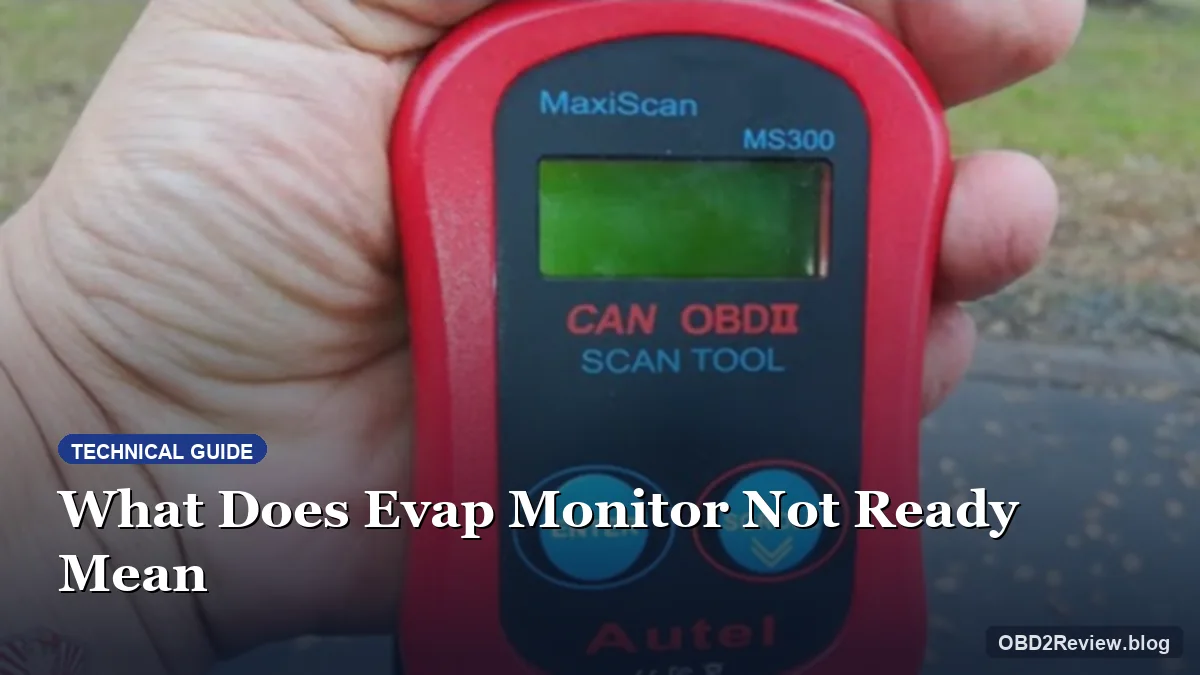
An unready evaporative emission monitor means the Powertrain Control Module lacks sufficient drive cycle data to verify system integrity.
Looking for matching picks? See our Best Obd2 Scanner: Top Diagnostic Tools Tested (2026).
Practical Quick-Reference Table
| Diagnostic Parameter | Standard Threshold | Operational Impact |
|---|---|---|
| Fuel Tank Level | 1/4 to 3/4 capacity | Required for purge and leak tests. |
| Ambient Temperature | 40°F to 95°F range | Prevents false pressure readings. |
| Soak Time | 8 hours minimum cold | Allows complete powertrain temperature drop. |
| Idle Stability | Under 800 RPM steady | Verifies baseline vacuum generation. |
| Purge Valve Duty | Variable 0 to 100% | Regulates vapor flow into intake manifold. |
| Monitor Status | Complete (Ready) | Allows passing state emissions inspection. |
Core Fundamentals of OBD2 Emission Monitors
Modern vehicle computers continuously run internal routines to verify emission control hardware. When a diagnostic trouble code clears or batteries disconnect, these vital monitors reset completely.
An unready status indicates the computer needs more driving data. Pairing your phone with a best bluetooth odb2 scanner option helps track monitor completion quickly.
Internal readiness flags rely on strict parameters before initiating self-tests. Temperature, speed, and load profiles must match exact engineering specifications programmed by the manufacturer.
Understanding these foundational principles helps technicians avoid wasted time replacing functional components. The system is merely waiting for proper operating conditions to execute verification routines.
- Battery disconnection clears all diagnostic monitor readiness flags instantly.
- Clearing generic trouble codes forces every emission monitor to reset.
- State inspection stations allow a limited number of incomplete monitors.
- Readiness status differs significantly from active diagnostic trouble codes.
Understanding Powertrain Control Module Logic
The powertrain control module orchestrates every single emission verification routine automatically. It monitors sensor inputs continuously while comparing them against pre-programmed baseline thresholds.
If any sensor exhibits erratic behavior, the computer suspends the monitoring routine immediately. This prevents false failures and ensures accurate diagnostic reporting during daily commutes.
- Microprocessors track hundreds of parameters during every single engine cycle.
- Algorithm rules dictate when specific emission tests are allowed to start.
Technical Mechanics of the Evaporative System
The evaporative emission control system traps harmful fuel tank vapors safely. Using a reliable best obd ii bluetooth scanner helps technicians monitor these charcoal canisters.
During specific driving phases, a purge solenoid opens to draw trapped vapors inside. The engine safely burns these hydrocarbons during normal combustion to minimize atmospheric pollution.
Modern systems also perform tiny pressure tests to detect fuel system leaks. Using specialized sensors, the computer pressurizes or creates a vacuum inside the fuel tank.
If pressure decays faster than allowed thresholds, the system flags a minor leak. Maintaining absolute vacuum integrity is essential for passing the evaporative self-test routine.
- Charcoal canisters require regular ventilation to maintain adsorption capacity.
- Fuel cap seals prevent atmospheric pressure from disrupting internal vacuum tests.
- Purge solenoids regulate precise vapor flow directly into the intake manifold.
- Tank pressure sensors measure microscopic changes during diagnostic leak checks.
Vapor Storage and Purge Operation
Fuel vapors migrate continuously toward the charcoal canister via specialized tubing. The porous carbon material holds these hydrocarbons securely until engine management commands purging.
Opening the purge valve allows intake manifold vacuum to draw vapors away. Fresh air enters through a vent solenoid to replenish the charcoal filter completely.
- Charcoal absorbs immense volumes of hydrocarbon molecules efficiently.
- Intake vacuum provides the necessary suction for vapor evacuation.
Video Walkthrough: Evap Monitor Not Ready? Evaporative Emission Control System Monitor Explained
Step-by-Step Drive Cycle Execution Protocols
Executing a manufacturer-specific drive cycle forces the evaporative monitor to run. Drivers must follow strict vehicle speed, acceleration, and deceleration profiles without interruption.
Cold starting the vehicle with a fuel level between quarter and three-quarters is mandatory. The powertrain control module initiates the evaporative self-test during this initial idle phase.
Steady highway cruising follows the initial idle period to stabilize fuel slosh. Maintaining constant throttle input allows the computer to monitor tiny pressure fluctuations accurately.
Finally, coasting down from highway speeds without touching brakes completes the profile. This deceleration phase lets the module verify sensor calibration under high-vacuum conditions.
- Start with a completely cold engine after an eight-hour soak.
- Keep fuel tank levels within the quarter to three-quarters window.
- Maintain steady highway speeds without abrupt throttle pedal movements.
- Allow natural coastdown deceleration to finish the diagnostic cycle.
Executing Specific Speed and Load Profiles
Precise vehicle speed management ensures the Powertrain Control Module gathers valid data. Fluctuating speeds disrupt pressure readings inside the sealed fuel tank assembly.
Smooth pedal application prevents abrupt manifold vacuum spikes that cancel routines. Technicians often consult an online obd2 code decoder tool while monitoring live readiness flags dynamically.
- Smooth throttle inputs stabilize intake manifold pressure readings.
- Scan tools track real-time monitor status during road testing.
Common Diagnostic Troubleshooting Scenarios
When an evaporative monitor refuses to run, minor hardware faults are usually responsible. Even a slightly loose fuel filler cap introduces enough airflow to prevent testing.
Faulty purge control solenoids frequently stick open or closed during operation. This prevents proper vapor evacuation and stops the computer from initiating readiness tests.
Cracked rubber vacuum lines allow ambient air to bleed into the system. Visual inspections must cover every hose connecting the charcoal canister to the engine.
A failing fuel tank pressure sensor gives inaccurate feedback to the module. If baseline voltages drift outside acceptable limits, the testing sequence stays suspended.
- Inspect fuel filler cap rubber gaskets for cracking or debris.
- Test purge solenoid electrical resistance and mechanical movement.
- Examine all evaporative hoses for dry rot and splitting.
- Verify fuel tank pressure sensor signal voltage using a multimeter.
Identifying Stubborn Intermittent Faults
Intermittent wiring faults often prevent monitors from completing their diagnostic cycles. High resistance in connector terminals tricks the computer into suspending self-tests.
Smoke testing the evaporative assembly quickly reveals hidden micro-cracks. Introducing low-pressure smoke highlights escaping vapor paths instantly across the entire chassis.
- Check wiring harnesses near exhaust components for thermal damage.
- Perform low-pressure smoke machine tests to locate tiny leaks.
Environmental and Temperature Prerequisites
Ambient weather conditions directly dictate whether evaporative monitors can execute. Freezing winter temperatures or extreme summer heat frequently delay readiness status completion.
Most vehicle computers require ambient temperatures between forty and ninety-five degrees. Operating outside these strict meteorological boundaries suspends internal self-test algorithms completely.
Engine coolant temperatures must also reach specific operating ranges during testing. A defective thermostat causes prolonged warm-up times, keeping emission monitors permanently unready.
Fuel temperature sensors prevent testing if liquid fuel is too hot. Excessive vapor formation at high temperatures renders low-pressure leak calculations completely inaccurate.
- Verify ambient air temperature falls within the required operating window.
- Inspect engine thermostat operation to ensure proper warm-up cycles.
- Monitor fuel temperature sensor data streams using an OBD2 scanner.
- Avoid running drive cycles during severe weather or storms.
Managing Thermal Stabilization Rules
Thermal equilibrium is critical for accurate fuel vapor pressure measurement. Temperature swings inside the fuel tank cause expanding gases that mask leaks.
Allowing the vehicle to sit overnight ensures complete thermal soak conditions. This stabilizes all fluid temperatures prior to executing cold-start drive cycles.
- Ensure a full eight-hour soak period before starting tests.
- Monitor coolant and intake air temperatures via live scan data.
Video Walkthrough: If the EVAP Monitor is not ready, will your car pass Smog?
Hardware Inspection and Vacuum Line Integrity
Physical inspection of emission hardware is mandatory for stubborn vehicles. Corrosion on metallic lines or damaged plastic connectors destroys system hermetic sealing.
The charcoal canister itself can become saturated with liquid fuel. Overfilling the gas tank forces raw liquid into the carbon bed, destroying vapor storage capacity.
Vapor vent solenoids located near the canister require functional testing. If the vent valve fails to close tightly, pressure testing routines cannot build vacuum.
Replacing damaged hoses restores the pressure boundaries needed for monitoring. High-grade fuel-resistant tubing ensures long-term reliability against hydrocarbon degradation.
- Check charcoal canisters for weight gain caused by liquid fuel.
- Test electrical operation of remote vapor vent solenoids.
- Replace degraded rubber hoses with certified fuel-vapor tubing.
- Ensure mounting brackets securely hold all emission components.
Checking Canister Purge Valve Operation
The canister purge valve regulates vapor transfer into the engine. Applying manual vacuum to the valve tests its internal diaphragm integrity.
Electrical actuation commands should produce an audible clicking sound. Failure to click indicates an internal electrical winding or solenoid failure.
- Test purge valve diaphragm holding capability with a hand pump.
- Listen for clear audible clicks during active command tests.
Professional Workshop Diagnostics and Scan Tools
Choose a top device from our best obd2 scanner guide to execute bi-directional actuator tests. Forcing the computer to run functional tests manually saves hours of driving.
Live data graphing allows professionals to watch fuel tank pressure change. Technicians can identify failing sensors or erratic valve behavior within seconds.
Workshop diagnostic software displays specific enable criteria in real-time. Mechanics instantly see which exact parameter prevents the monitor from switching to ready.
Using professional equipment eliminates guesswork during stubborn emission readiness repairs. Every sensor input is verified against factory engineering specifications simultaneously.
- Utilize bi-directional scan tools to command active evaporative tests.
- Graph fuel tank pressure sensor voltages during active routines.
- Review freeze frame data for clues regarding interrupted monitor runs.
- Confirm software calibration updates match current technical bulletins.
Interpreting Manufacturer Service Bulletins
Factory service bulletins often detail software updates for readiness issues. Early calibration software frequently featured overly strict monitor enable parameters.
Reprogramming the powertrain control module resolves persistent unready conditions. Technicians flash updated software calibrations directly into the vehicle computer.
- Check manufacturer databases for known emission readiness updates.
- Reprogram control modules when firmware bugs prevent monitor completion.
Preventive Maintenance and System Readiness
Routine maintenance prevents emission monitor readiness issues from recurring. Replacing fuel caps periodically ensures tight sealing against atmospheric pressure changes.
Avoiding the habit of topping off gas tanks protects charcoal canisters. Stopping fuel nozzle clicks prevents liquid fuel from entering vapor lines.
Keeping battery terminal connections clean avoids accidental computer resets. Uninterrupted power supplies preserve stored readiness flags during minor electrical servicing.
Addressing check engine lights immediately prevents cascading emission system failures. Proactive care ensures vehicles remain inspection-ready throughout the entire operating year.
- Replace fuel filler caps every few years to maintain seals.
- Never top off fuel tanks past the automatic nozzle shutoff.
- Apply dielectric grease to battery terminals to prevent corrosion.
- Address stored diagnostic trouble codes before they affect monitors.
Best Practices for Long-Term Compliance
Establishing regular inspection routines safeguards vehicle emission compliance. Checking monitor status prior to state inspections prevents unexpected rejection notices.
Maintaining clean fuel filler necks prevents debris from compromising seals. Simple housekeeping steps guarantee reliable evaporative system performance year-round.
- Scan readiness monitors a week before state inspections.
- Keep fuel filler neck areas clean during refueling stops.
Frequently Asked Questions
What causes the evap monitor to remain unready?
An unready status usually means insufficient drive cycle data has been collected. Missing exact temperature or fuel level parameters prevents testing.
Can a loose gas cap cause this issue?
Yes, a loose or damaged fuel filler cap prevents proper system pressure. This atmospheric leak forces the computer to suspend testing.
How long does it take to ready the monitor?
Completing the monitor typically requires one cold-start drive cycle. Following specific manufacturer speed and load profiles accelerates completion.
Will disconnecting the battery reset readiness?
Yes, disconnecting battery power clears all emission monitors instantly. The vehicle must then complete all drive cycles over again.
Can I pass inspection with an unready monitor?
Most states permit one incomplete monitor for newer vehicles. Older models often require every single emission monitor to show ready.