What Are Obd2 Readiness Monitors: Technical Guide
Vehicle emission testing requires checking specific computer self-tests. These internal flags confirm all pollution controls function correctly.

Readiness monitors are digital flags inside the engine control unit. They prove the vehicle completed mandatory diagnostic routines without active fault codes.
Looking for matching picks? See our Best Obd2 Scanner: Top Diagnostic Tools Tested (2026).
Practical Quick-Reference Table
| Scenario / Metric | Recommended Target | Why It Matters |
|---|---|---|
| Drive Cycle Execution | All flags set | Ensures compliance |
| Battery Disconnection | Monitors reset | Requires recalibration |
| Continuous Monitors | Always active | Real-time safety |
| Evap System Test | Cold start idle | Detects fuel vapor leaks |
| Oxygen Sensor Monitor | Closed loop operation | Optimizes air-fuel ratio |
| Catalyst Efficiency | Highway cruising | Reduces tailpipe pollutants |
Core Fundamentals of Emissions Diagnostics
Modern vehicles utilize advanced electronic control units to monitor emissions components constantly. Readiness flags track whether specific subsystems completed self-tests successfully during normal driving conditions.
When mechanics clear trouble codes using the best professional obd2 scanner, these flags reset to incomplete. Specific driving cycles are required to re-run algorithms before emissions testing.
Understanding how these flags operate prevents unexpected inspection failures. Each monitor targets a distinct part of the powertrain to ensure strict compliance with environmental regulations.
Continuous monitors run during every engine cycle without interruption. These include misfire detection, fuel system status, and comprehensive component monitoring for immediate fault detection.
Non-continuous monitors require specific operating conditions to execute properly. Sensors evaluate catalytic converters, evaporative emissions, oxygen sensors, and secondary air injection systems only during distinct phases.
- Continuous monitors evaluate misfires and fuel trims constantly.
- Non-continuous tests require strict drive cycle parameters.
- Clearing fault codes instantly resets all readiness monitors.
- State inspections reject vehicles with incomplete status flags.
Understanding System Initialization
Initializing vehicle computers requires stable battery voltage and correct operating temperatures. Mechanics must verify powertrain health before initiating any formal drive cycle procedures.
Cold soak periods are essential for accurate evaporative system evaluations. Allowing the engine to cool ensures ambient temperature sensors match coolant temperature readings prior to startup.
- Maintain steady battery voltage above twelve volts.
- Allow complete cool down periods for evaporative tests.
Step-by-Step Drive Cycle Calibration
Executing a manufacturer-specific drive cycle forces the computer to run incomplete tests. Technicians follow precise speed, braking, and idle parameters to satisfy internal algorithms.
Cold start procedures typically begin the calibration routine. Mechanics must start the engine from a cold soak and let it idle without touching accelerator pedals for several minutes.
Acceleration phases test catalytic efficiency and oxygen sensor responsiveness. Smooth throttle applications up to specific highway speeds allow the powertrain module to gather sensor data.
Deceleration phases allow sensors to measure deceleration fuel cutoff behavior. Drivers must coast down safely without pressing brakes to let engine vacuum stabilize internal readings.
Steady cruising speeds finalize EGR and evaporative system evaluations. Maintaining constant throttle input for extended periods enables computers to lock in completion statuses.
- Start with a fully cooled engine and idle.
- Accelerate smoothly to designated highway cruise speeds.
- Decelerate without braking to test fuel cutoff.
- Monitor scan tool live data during testing.
Executing Specialized Evaporative Tests
Evaporative emission monitors are notoriously difficult to set correctly. Fuel tank fill levels must remain between one quarter and three quarters full.
Small leaks require precise pressure differentials inside the fuel tank. Technicians must avoid opening gas caps or refueling during the entire calibration sequence.
- Keep fuel levels near half capacity.
- Avoid opening fuel caps during testing.
Video Walkthrough: OBD2 scanner READINESS monitors explained | I/M Readiness
Common Diagnostic Challenges and Troubleshooting
Technicians frequently encounter stubborn monitors that refuse to set. Hidden pending fault codes can silently block readiness routines without triggering dashboard warning lights.
Intermittent electrical issues prevent control modules from completing internal checks. Corroded ground straps or weak batteries will disrupt sensor communication and terminate active routines.
Aftermarket software tuners often disable specific emissions sensors entirely. This modification creates permanent incomplete flags that fail mandatory state inspections.
Thermostat failures prevent engines from reaching proper operating temperatures. Without adequate operating heat, the powertrain computer refuses to run catalyst and oxygen sensor tests.
Vacuum leaks disrupt air-fuel ratios during closed loop operation. Resolving underlying mechanical defects is mandatory before attempting any drive cycle calibration procedures.
- Scan for hidden pending fault codes regularly.
- Inspect ground connections and battery condition.
- Verify thermostat performance and operating temperature.
- Check for aftermarket ECU modifications.
Resolving Stubborn Evap Monitors
Evaporative monitors rely heavily on ambient temperature sensors. Mechanics must verify ambient readings match actual workshop temperatures to prevent false completion failures.
Purge valve solenoids must seal tightly to pass pressure tests. A leaking purge valve will prevent the system from building required vacuum levels.
- Verify ambient temperature sensor accuracy.
- Test purge valve solenoid sealing integrity.
Maintenance and Safety Protocols
Workshop safety during drive cycle testing is paramount. Technicians must obey local traffic laws while performing on-road calibration procedures to prevent accidental collisions.
Accessing an obd2 code decoder requires secure cable routing inside the cabin. Loose equipment in the footwell can easily interfere with brake pedals and compromise vehicle safety.
Battery disconnections erase all stored diagnostic readiness data instantly. Technicians should use memory savers when replacing vehicle batteries to preserve learned parameters.
High-temperature exhaust components present severe burn hazards. Mechanics must allow catalytic converters and exhaust pipes to cool before performing under-car visual inspections.
Personal protective equipment protects workers from hazardous fluids. Always wear eye protection when inspecting pressurized fuel and emissions control systems.
- Obey local traffic laws during road tests.
- Secure diagnostic cables away from foot pedals.
- Use memory savers during battery replacement.
- Wear appropriate personal protective equipment.
Protecting Sensitive Electronic Modules
Voltage spikes can damage expensive powertrain control units permanently. Always ensure ignition switches are off before disconnecting diagnostic wiring harnesses.
Static electricity poses significant risks to delicate circuit boards. Technicians should utilize grounded wrist straps when handling exposed electronic control modules.
- Turn off ignition before disconnecting harnesses.
- Use grounded wrist straps for bench work.
Scan Tool Integration and Live Data Analysis
Technicians utilizing the best obd2 scanner models can view real-time readiness status dashboards, reading generic parameter IDs to verify whether individual emission monitors are complete or incomplete.
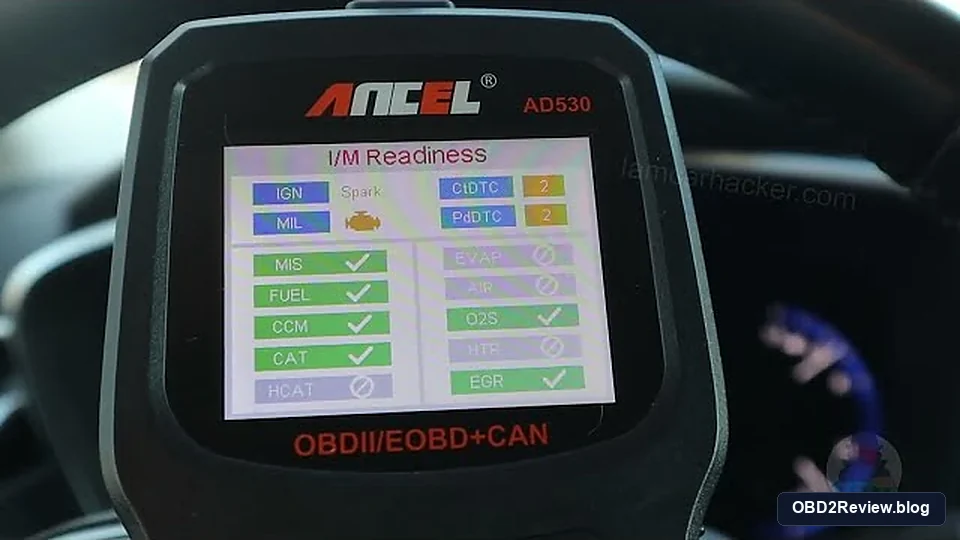
Advanced diagnostic software graphs sensor voltage fluctuations simultaneously. Observing oxygen sensor waveforms helps mechanics evaluate catalytic converter conversion efficiency.
Freeze frame data records exact operating conditions when faults occur. Analyzing these snapshots reveals the precise moment an emission monitor failed to execute properly.
Bi-directional control features allow technicians to command actuators manually. Testing purge valves and vent solenoids directly accelerates diagnostic troubleshooting workflows.
Software updates from manufacturers improve diagnostic algorithm accuracy. Keeping scan tool firmware updated ensures compatibility with newest vehicle architectures.
- Check readiness status dashboards on scan tools.
- Analyze freeze frame data for failure context.
- Utilize bi-directional controls for actuator testing.
- Update scan tool firmware regularly.
Interpreting Parameter IDs
Parameter IDs supply numerical data regarding monitor status. Technicians decode these hex values to pinpoint exact system testing failures.
Understanding specific PID byte structures simplifies complex diagnostic tasks. Reviewing manufacturer service documentation ensures accurate interpretation of emissions readiness data.
- Decode hexadecimal parameter ID values.
- Consult factory service manuals for PIDs.
Video Walkthrough: What Are Readiness Monitors? (And How to Reset Them Fast)
Environmental Regulations and Compliance Standards
Environmental protection agencies mandate strict emissions testing procedures. State inspection stations rely on readiness monitors to enforce clean air regulations effectively.
Vehicles must pass automated onboard diagnostic inspections to renew registrations. Incomplete readiness flags result in immediate testing rejections across participating jurisdictions.
OBD2 standards require standardized diagnostic communication protocols globally. Utilizing the best obd2 bluetooth scanners allows technicians to read readiness monitors regardless of vehicle manufacturer.
Zero-emission vehicles utilize unique power management testing systems. Understanding alternative powertrain diagnostics ensures compliance with modern environmental compliance frameworks.
Tampering with emissions equipment triggers permanent diagnostic flags. Regulatory agencies penalize unauthorized modifications designed to bypass mandatory emission control systems.
- Comply with state electronic inspection standards.
- Understand standardized OBD2 communication protocols.
- Avoid unauthorized modifications to emissions systems.
- Ensure all monitors complete before testing.
Navigating State Inspection Requirements
Different states allow specific numbers of incomplete monitors. Older vehicles often permit one incomplete non-continuous monitor while newer models demand perfection.
Knowing local waiver policies helps vehicle owners manage compliance. Mechanics advise clients on exact driving requirements to clear stubborn readiness monitors.
- Check local state inspection allowance rules.
- Inform clients about required drive cycles.
Advanced System Validation Methods
Professional technicians utilize bench testing for advanced validation. Simulating sensor inputs with specialized signal generators verifies computer processing integrity.
Oscilloscope analysis confirms proper sensor signal waveform generation. Clean square waves and sinusoidal patterns prove that sensors communicate effectively.
Pressure transducers measure exact exhaust backpressure during testing. High backpressure indicates clogged catalytic converters that block proper exhaust gas evacuation.
Thermal imaging cameras identify restricted catalytic converters easily. Temperature differentials across the catalyst housing highlight internal flow restriction issues.
Comprehensive system validation prevents recurring emission inspection failures. Combining road testing with bench analysis ensures ultimate repair reliability.
- Use signal generators for bench testing.
- Analyze sensor waveforms with oscilloscopes.
- Measure exhaust backpressure with transducers.
- Inspect catalytic converters with thermal cameras.
Validating Sensor Response Times
Oxygen sensor response speed degrades over extended mileage. Measuring switching frequency ensures sensors meet strict manufacturer specifications.
Slow response times cause monitors to abort testing routines. Replacing sluggish sensors restores rapid switching behavior and completes readiness flags.
- Measure oxygen sensor switching frequency.
- Replace sluggish sensors to restore readiness.
Frequently Asked Questions
What causes readiness monitors to reset?
Clearing diagnostic trouble codes or disconnecting the vehicle battery erases stored readiness data. Powertrain control units require a specific drive cycle to re-establish complete monitor status before state emissions testing.
Can a car pass inspection with incomplete monitors?
Most jurisdictions permit older vehicles to have one incomplete non-continuous readiness monitor. Modern vehicles generally require every single emission monitor to show complete status to pass official inspections.
How long does it take to set readiness monitors?
Setting monitors can take anywhere from fifteen minutes to several days of mixed driving. Completing the process depends heavily on meeting exact manufacturer drive cycle parameters and temperature thresholds.
Why won't my evaporative monitor complete its test?
Evaporative monitors require precise ambient temperatures and fuel levels between one quarter and three quarters. Opening the gas cap or failing a cold soak period will abort the calibration cycle instantly.
Do pending trouble codes block monitor completion?
Yes, pending fault codes prevent emission monitors from running or completing their self-tests. Technicians must diagnose and repair underlying mechanical defects to clear pending codes and allow readiness flags to set.