Can Obd2 Scanner Drain Car Battery: Technical Realities
Diagnostic tools connect directly to the vehicle's diagnostic link connector. Understanding their parasitic draw protects your electrical system from unexpected failures.

Yes, leaving certain diagnostic equipment plugged in can drain your vehicle battery over several days. Modern tools with Bluetooth or live data monitoring draw continuous power if left connected.
Looking for matching picks? See our Best Bluetooth Car Scanner: Top Diagnostic Picks.
Practical Quick-Reference Table
| Scenario / Metric | Recommended Target | Why It Matters |
|---|---|---|
| Standard Code Reader | Unplug after use | Prevents micro-amp parasitic draw |
| Bluetooth OBD2 Dongle | Disconnect when parked | Maintains active wireless radio link |
| Dedicated Diagnostic Tablet | Power down fully | Internal battery or OBD power draw |
| Ignition Off Current | Under 50 milliamps | Normal threshold to avoid flat battery |
| Extended Parking Time | Over 48 hours | Unplug all diagnostic hardware immediately |
| Battery Voltage Check | 12.6 volts DC | Ensures healthy baseline before testing |
Understanding OBD2 Port Electrical Architecture
The standard diagnostic link connector supplies continuous power directly from the vehicle battery. Pin sixteen delivers twelve volts without requiring the ignition key to be turned on.
This constant power availability allows software evaluated in our Car Scanner ELM vs Torque Pro comparison to read system data instantly. However, auxiliary devices remain powered when the engine is shut down.
Automotive electrical systems rely on strict voltage thresholds to maintain proper computer module function. Unregulated peripheral devices connected to this port can disrupt the normal sleep mode sequence.
Engineers designed this circuit for temporary diagnostic testing during active repair procedures. Leaving equipment attached permanently circumvents original equipment manufacturer power management protocols designed to protect modules.
- Pin sixteen provides constant battery voltage.
- Ignition status does not restrict port power.
- Sleep mode protocols can be interrupted.
- Temporary testing design intent remains primary.
Circuit Protection and Fuses
Vehicle wiring harnesses utilize dedicated fuses to protect the diagnostic port from overloads. A short circuit inside a connected scanner will immediately blow this specific fuse to prevent fires.
However, normal low-current draw does not trigger these safety fuses. Instead, it slowly depletes the battery storage capacity over extended periods of vehicle inactivity.
- Dedicated fuses protect wiring.
- Low current bypasses fuse triggers.
Parasitic Draw Characteristics of Diagnostic Tools
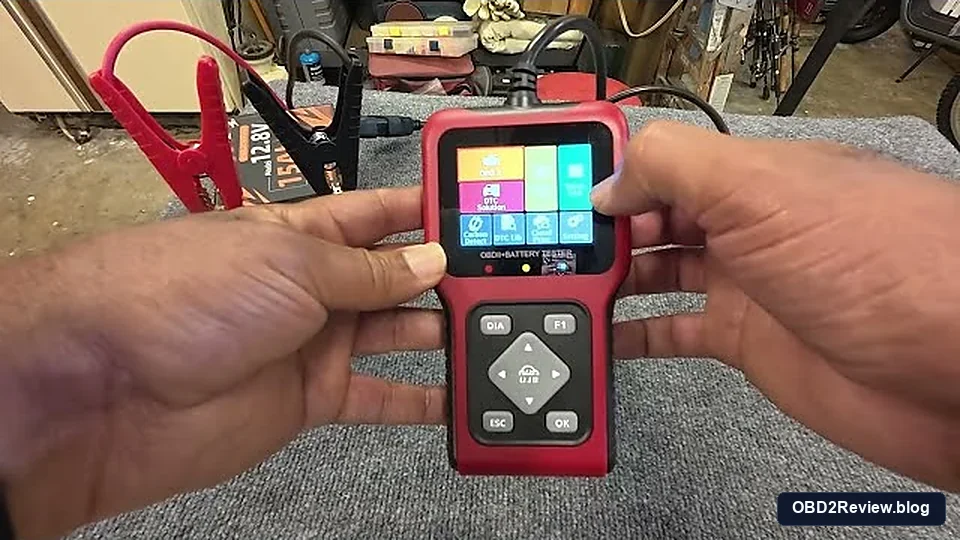
Every electronic device plugged into the diagnostic port introduces a small parasitic electrical load. Models featured in our best OBD2 scanner guide typically consume minimal current while awaiting user input commands.
More advanced diagnostic tablets increase this load significantly due to active processing chips. When these units remain powered on, they pull substantial amperage from the main vehicle battery steadily.
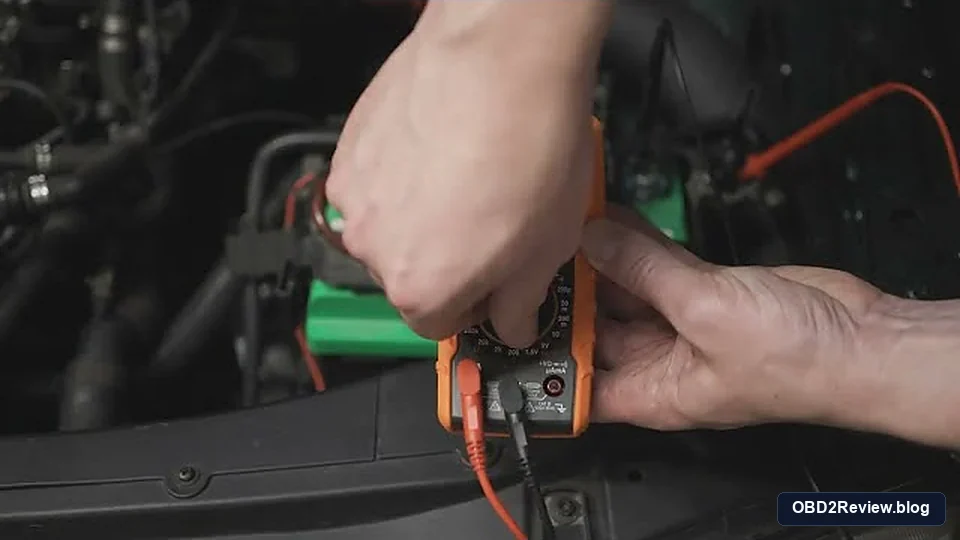
Measuring this parasitic draw requires a digital multimeter configured correctly in series. Technicians must monitor the total amperage to ensure it remains well below the normal vehicle threshold.
Exceeding acceptable standby current limits will quickly drain a healthy battery within days. Identifying rogue equipment prevents unexpected starting failures during routine vehicle storage intervals.
- Parasitic electrical loads vary by device.
- Advanced tablets consume higher amperage.
- Multimeters measure exact current draw.
- Standby limits prevent dead batteries.
Measuring Amperage Safely
Technicians disconnect the negative battery cable before inserting a multimeter for testing. This isolates the circuit so every milliamp of parasitic draw flows directly through the measurement tool.
Modern vehicles require several minutes to enter complete sleep mode before reading. Observing this delay ensures accurate diagnostic data regarding actual scanner power consumption levels.
- Disconnect negative battery cable first.
- Allow modules time to sleep.
Video Walkthrough: Will obd2 drain battery?
Bluetooth Adapters and Continuous Wireless Power
Modern wireless diagnostic dongles remain plugged in by users for daily convenience. These compact units maintain an active Bluetooth radio link paired with our free OBD2 code decoder utility during scans.
Maintaining this wireless broadcast requires continuous electrical energy from the port circuit. While individual draw figures appear small, they accumulate steadily over forty-eight hours of inactivity.
Some advanced wireless adapters feature built-in sleep modes to reduce power consumption. If the companion mobile application loses connection, the hardware should enter a low-power standby state automatically.
Unfortunately, software glitches or faulty firmware can prevent proper sleep mode activation. This malfunction traps the adapter in a high-draw state that rapidly exhausts the starting battery.
- Wireless dongles maintain constant connections.
- Power consumption accumulates over time.
- Intelligent firmware triggers sleep states.
- Firmware glitches prevent proper shutdown.
Managing Smartphone App Connections
Closing the smartphone application does not always disconnect the wireless adapter completely. Users must terminate background processes to ensure the hardware stops transmitting diagnostic data packets.
Manually unplugging the compact dongle remains the absolute safest preventative measure. Eliminating physical contact guarantees zero parasitic drain on the vehicle electrical architecture overnight.
- Terminate background smartphone processes.
- Unplug dongles manually after use.
Diagnostic Scanners Left Connected Overnight
Leaving a full-size diagnostic scanner attached overnight invites severe battery depletion. Checking our battery registration scanner guide helps you manage these heavy electrical loads properly.
When an external scanner stays connected, vehicle control modules may stay awake. Network communication buses fail to enter low-power sleep mode because they detect an active external diagnostic session.
This widespread computer awakening multiplies the total parasitic drain across multiple modules. Instead of a simple scanner draw, the entire vehicle network drains the battery rapidly.
Vehicle owners often discover a completely dead battery after weekend parking intervals. Recovering from this deep discharge condition requires a prolonged bench recharge or complete battery replacement.
- Full-size scanners consume high current.
- Control modules fail to sleep.
- Network buses remain fully active.
- Deep discharge damages battery health.
Network Bus Wakeup States
Controller area network buses constantly monitor for incoming diagnostic communication requests. An attached scanner keeps these communication channels open, preventing normal module shutdown sequences from occurring.
Consequently, alternator charging history and driving habits influence overall battery resilience. Weak batteries succumb much faster to these persistent network wake-up currents during overnight parking periods.
- Communication channels remain constantly open.
- Weak batteries succumb much faster.
Troubleshooting Voltage Drops and Power Drains
Diagnosing unexpected battery failure begins with a systematic parasitic draw test. Technicians isolate circuits by pulling individual fuses until the excessive amperage drop disappears from the multimeter.
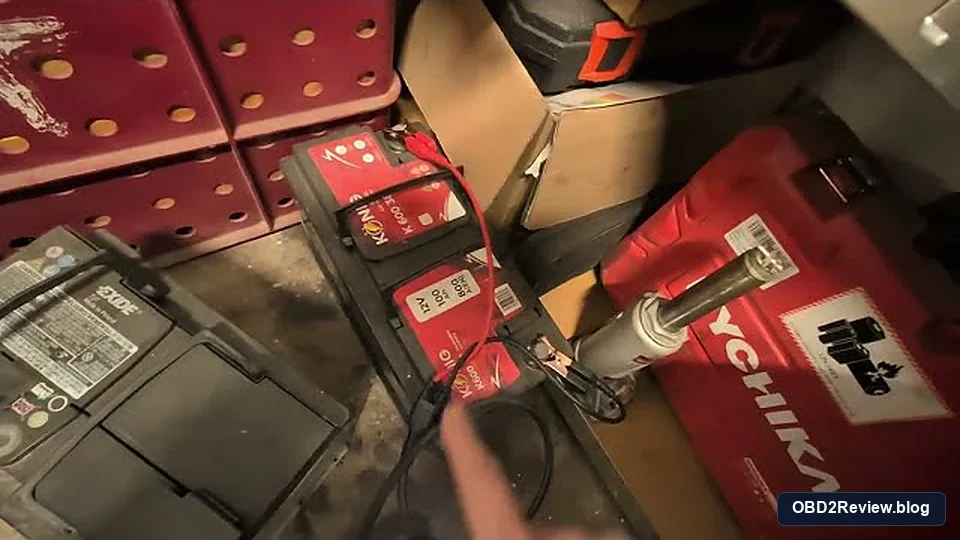
If pulling the diagnostic fuse resolves the high draw, the connected hardware is responsible. Inspecting the port wiring reveals any aftermarket modifications causing continuous power feedback loops.
Corroded connector pins inside the port can also create high-resistance shorts. These anomalies mimic parasitic drains by generating micro-currents that slowly deplete vehicle starting capabilities over time.
Mechanics evaluate alternator output and starter performance alongside diagnostic port testing. Comprehensive electrical evaluations ensure no underlying charging system faults contribute to the mysterious battery discharge.
- Perform systematic parasitic draw tests.
- Isolate circuits by pulling fuses.
- Inspect diagnostic port for corrosion.
- Evaluate overall charging system health.
Verifying Battery Health Parameters
A fully charged automotive battery should measure approximately twelve point six volts. Readings dropping below twelve volts indicate significant capacity loss requiring immediate professional testing and charging.
Chronic deep discharges permanently sulfate lead plates inside conventional starting batteries. Protecting this critical chemical balance requires avoiding unnecessary parasitic loads from auxiliary electronic equipment.
- Measure baseline voltage accurately.
- Prevent chronic deep discharge cycles.
Video Walkthrough: Progressive Snapshot Device Killing Car Battery – Parasitic Drain Fix
Best Practices for Safe Hardware Disconnection
Developing disciplined disconnection habits eliminates accidental battery drains completely. Operators should always unplug diagnostic equipment immediately after finishing troubleshooting procedures or clearing trouble codes.
Storing compact wireless adapters in the glove box serves as a great visual reminder. This physical habit prevents leaving devices attached during long airport parking periods or weekend trips.
Professional technicians rely on organized tool carts to track all active equipment. Ensuring every diagnostic scanner returns to its designated storage bay prevents costly roadside assistance calls.
Routine maintenance checks of the diagnostic port preserve long-term electrical reliability. Adhering to these simple operational guidelines protects vehicle batteries from unnecessary parasitic stress and premature failure.
- Unplug equipment immediately after testing.
- Store wireless dongles out of sight.
- Utilize organized tool storage bays.
- Perform routine port inspections.
Preventive Operational Checklist
Establish a strict pre-shutdown vehicle inspection routine before leaving the driver seat. Checking the lower dashboard area confirms no forgotten cables or flashing diagnostic indicator lights remain.
Educating vehicle operators about parasitic electrical loads reduces unexpected maintenance expenditures. Simple awareness transforms potential battery failures into completely preventable mechanical maintenance tasks.
- Check lower dashboard before exiting.
- Educate operators on parasitic loads.
Frequently Asked Questions
Will a basic code reader drain my battery overnight?
Basic code readers generally consume very minimal electrical current when sitting inactive inside the vehicle port. However, leaving them plugged in continuously for several days can still deplete weak starting batteries completely, especially during cold weather conditions.
Always disconnect all diagnostic tools immediately after finishing your troubleshooting tasks to prevent any unexpected battery failures.
Do Bluetooth OBD2 adapters consume power when the car is off?
Yes, wireless OBD2 adapters maintain active radio frequency transmitters that remain connected directly to constant port power. This continuous wireless broadcast creates a steady parasitic draw that slowly exhausts vehicle starting reserves over a long weekend.
Remove these compact Bluetooth dongles whenever your vehicle remains parked for extended periods to safely preserve full starting battery voltage capacity.
Why do control modules stay awake when a scanner is attached?
External diagnostic equipment constantly sends polling signals across the internal vehicle communication network bus. These continuous data requests prevent computer modules from entering their normal low-power sleep states efficiently.
This widespread network activity multiplies total vehicle electrical current consumption exponentially, causing much faster battery depletion than a single idle scanner would produce alone overnight.
How many milliamps of parasitic draw are considered normal?
Most modern passenger vehicles tolerate a standby parasitic draw under fifty milliamps safely. Exceeding this specified electrical threshold will cause premature battery discharge during standard overnight parking intervals or extended storage periods.
Measure total amperage with a digital multimeter connected in series to accurately verify proper electrical system health before storing your automobile.
What should I do if my scanner caused a dead battery?
Jump-start the discharged vehicle immediately and drive it at highway speeds to recharge the storage cells. You may require a professional load test to verify permanent battery damage after experiencing a deep discharge.
Always unplug diagnostic equipment going forward to prevent repeat electrical issues and protect your vital starting system components.