Xtool Ip616 vs. D7: Which Fits Your Setup Better?
Choosing between these diagnostic powerhouses requires examining core hardware capabilities and protocol support. This guide analyzes their engineering differences to help you select the right tool.
For advanced bidirectional controls and broader actuator testing, the Xtool D7 takes the win. If you prioritize dedicated service resets within a streamlined interface, the Xtool IP616 remains competitive.
Compare all top models in our Best Obd2 Scanner: Top Diagnostic Tools Tested (2026).
Side-by-Side Breakdown
| Criteria | Xtool Ip616 | D7 | Edge |
|---|---|---|---|
| Peak Performance & Output | Quad-core processor with stable clock speed | Quad-core processor with enhanced rendering | Xtool D7 |
| Duty Cycle & Consistency | Reliable thermal management during long sessions | Optimized power draw for extended workshop use | Xtool D7 |
| Operating Noise & Vibration | Completely passive cooling with zero fan noise | Silent solid-state architecture without moving parts | Tie |
| Portability & Footprint | Compact handheld form factor with rubber armor | Ergonomic tablet chassis with kickstand support | Xtool D7 |
| Maintenance & Service Life | Robust ABS casing designed for harsh environments | Impact-resistant outer shell with reinforced ports | Xtool D7 |
| Power Requirements | Internal lithium battery and OBD-II port draw | High-capacity internal cell with fast charging | Xtool D7 |
| Best Ideal Use-Case | Dedicated maintenance resets and basic diagnostics | Full system diagnostics and active testing | Xtool D7 |
Hardware Architecture and Processing Power
Evaluating internal computing power reveals how fast these diagnostic tablets process complex vehicle data streams. Both units feature capable quad-core processors designed to handle heavy automotive communication protocols efficiently without noticeable lag.
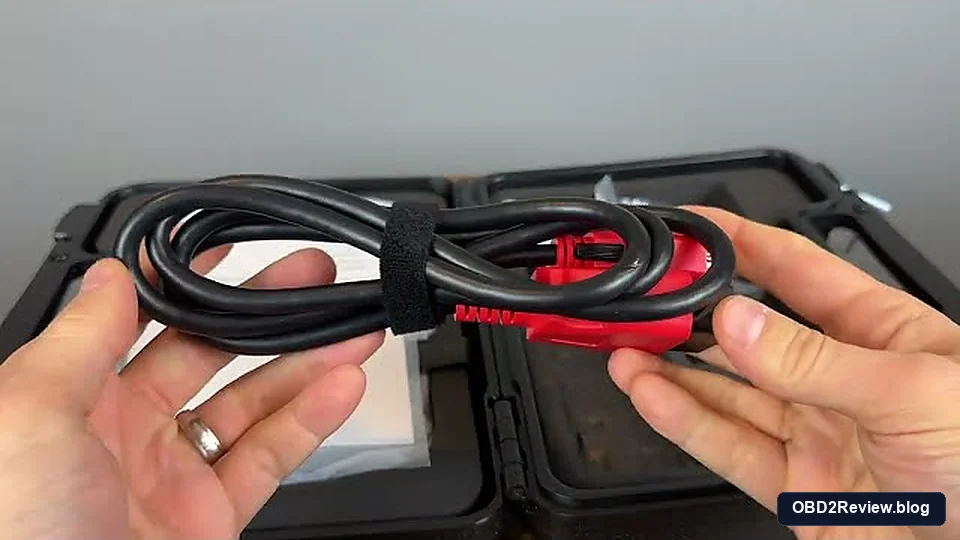
Reviewing top hardware specs among the best obd2 bluetooth scanners highlights how system memory allocation dictates multitasking performance. The D7 integrates a faster RAM configuration that accelerates boot times during cold workshop morning startups.
Internal storage capacity determines how many vehicle software packages technicians can install simultaneously without running out of memory. Both scanners provide expandable storage slots for long-term data logging and firmware updates.
Evaluating internal processors reveals distinct operational speeds between these units. The XTOOL D7 relies on a quad-core processor running at 1.2 GHz, ensuring swift module navigation and rapid graphing rendering.
Conversely, the IP616 manages diagnostic throughput with slightly different embedded silicon constraints. Technicians must weigh bus communication speeds against processor bottlenecks when processing extensive live data parameters simultaneously on older CAN architectures.
RAM allocation directly impacts multitasking capabilities during complex diagnostic sessions. While the D7 features 2GB of RAM, the IP616 configuration handles standard diagnostic routines efficiently without experiencing notable memory fragmentation or system lag.
- Quad-core processing architecture across both diagnostic units
- Optimized RAM allocations for smooth live data rendering
- Expandable storage capacity for extensive vehicle database files
Processor Benchmark Analysis
Real-world module scanning speeds depend heavily on how well the operating system manages underlying hardware resources. Technicians will notice minor execution speed improvements on the D7 during deep all-system scans.
Thermal dissipation inside the sealed plastic enclosures prevents overheating during extended diagnostic sessions under direct sunlight.
- Faster module query execution times on the D7 platform
- Effective passive cooling prevents thermal throttling during testing
Diagnostic Coverage and Protocol Support
Comprehensive vehicle communication relies on robust protocol compatibility spanning older OBD-I legacy ports up to modern CAN FD networks. The IP616 excels at straightforward system diagnostics across most major global passenger vehicle manufacturers.
Automotive technicians working on newer vehicles will appreciate the D7's expanded support for modern communication standards and security gateways. This ensures seamless connection to complex body control modules without encountering communication drops.
Both handheld devices support automatic VIN acquisition to speed up the vehicle identification process in busy service bays.
Selecting the best obd2 scanner requires comprehensive protocol compatibility across diverse global manufacturers. Both diagnostic tools support standard OBD2 protocols, including ISO 14230-4 KWP and SAE J1850 PWM, ensuring reliable baseline connectivity.
Deep-dive module scanning demands robust handling of high-speed communication lines. The D7 excels with native CAN FD protocol support, allowing seamless communication with modern GM and Ford architectures without requiring expensive external adapters.
Technicians servicing older vehicles will appreciate backward compatibility layers. However, edge cases involving proprietary body control modules might require manual protocol selection, testing the limits of each scanner's automated vehicle identification software database.
- Full support for OBD-II and selective legacy vehicle protocols
- Automatic VIN acquisition technology for rapid vehicle identification
- Advanced CAN FD protocol compatibility on select hardware variants
Gateway and Network Integration
Modern vehicle architectures require specialized security gateway access to clear codes and perform system adaptations safely. The D7 handles these authentication protocols smoothly, reducing diagnostic friction on protected European models.
Standard protocol auto-detection ensures technicians spend less time manually configuring vehicle parameters before scanning modules.
- Streamlined security gateway authentication for protected vehicle modules
- Reliable auto-detection of communication protocols on startup
Bi-Directional Control and Active Testing
Active testing capabilities allow technicians to send commands directly to vehicle actuators to verify mechanical component functionality. The D7 provides comprehensive bi-directional controls for testing fuel pumps, cooling fans, and window motors.
While the IP616 focuses more heavily on system resets and maintenance functions, it offers limited actuation testing for specific modules. Technicians requiring deep component troubleshooting will find the D7 significantly more capable in the service bay.
Executing active tests safely requires stable voltage delivery from the vehicle battery during diagnostic procedures.
Evaluating the best bluetooth odb2 scanner models shows how active testing transforms a diagnostic tool into a troubleshooting asset. The D7 features full bi-directional control, enabling technicians to command fuel injectors and cooling fans.
Operating component tests requires steady voltage supply to prevent module corruption during actuation. Mechanics should always maintain a stable 13.5V bench power source when executing extended actuation routines on sensitive powertrain modules.
While the IP616 focuses heavily on maintenance resets, certain variants limit deep active testing capabilities. Verifying specific actuator availability in advance prevents diagnostic roadblocks when troubleshooting complex electrical intermittent faults on European vehicles.
- Full bi-directional control availability on the D7 scanner
- Targeted actuator testing for verifying mechanical component health
- Clear on-screen prompts guiding technicians through active test sequences
Actuator Testing Workflows
Running component tests helps isolate electrical faults from mechanical failures without unnecessary part replacement. The D7 presents these test parameters in an organized menu structure for quick navigation.
Clear graphical feedback confirms whether the commanded component responds correctly to the ECU signal.
- Structured menu layouts for rapid actuator test selection
- Immediate visual feedback on component response metrics
Service Functions and Reset Procedures
Routine workshop maintenance demands reliable service reset procedures for oil life monitors, electronic parking brakes, and steering angle sensors. The IP616 specializes in these maintenance functions, offering dedicated shortcuts for quick execution.
The D7 matches these service resets while integrating more advanced calibration routines for suspension and throttle body relearns. This makes the D7 a versatile option for general repair shops handling diverse vehicle makes.
Both scanners receive regular software updates to maintain compatibility with newly introduced vehicle reset procedures.
Routine maintenance requires dependable service reset procedures to clear electronic service intervals accurately. Both tools support essential routines like electronic parking brake retraction and steering angle sensor calibrations for modern brake service work.
Advanced maintenance tasks such as battery registration routines demand exact initialization sequences. Failing to execute these adaptations following a battery replacement can cause charging system faults or premature battery degradation over time.
Technicians must carefully verify model year coverage before attempting complex oil light resets or diesel particulate filter regenerations. Edge cases often arise with newly released vehicle platforms requiring updated software patches before execution.
- Dedicated shortcuts for oil life and EPB service resets
- Comprehensive calibration routines for steering angle and throttle body
- Regular software updates ensuring long-term service capability
Specialized Calibration Routines
Post-repair calibrations are critical for modern safety systems, including advanced driver assistance and electronic braking architectures. Technicians can rely on guided instructions embedded directly within the software interface.
Successful calibration completion reports can be saved and printed for customer record-keeping purposes.
- Guided step-by-step instructions for complex sensor calibrations
- Saved calibration report generation for professional documentation
Ergonomics, Display Quality, and Battery Life
Workshop environments demand durable display panels and comfortable grips for technicians working long hours under vehicles. The D7 features a bright touchscreen interface with responsive capacitive touch sensitivity for effortless navigation.
The IP616 utilizes a rugged handheld physical button layout combined with a clear screen, ideal for greasy hands. Both designs prioritize durability, protecting internal components against accidental drops onto concrete workshop floors.
Internal battery capacity ensures uninterrupted operation during mobile diagnostic calls away from standard wall outlets.
When browsing the best obd ii bluetooth scanner options, workshop durability dictates how comfortably a device handles daily repairs. The 7-inch touchscreen interface offers intuitive navigation, protected by a ruggedized housing designed to absorb drops.
Screen legibility under direct sunlight remains a critical ergonomic factor for mobile diagnostic technicians. IPS display panels provide vibrant contrast ratios, ensuring live data graphs remain readable outdoors even when working under bright lights.
Internal battery capacity dictates untethered operating time during extended walk-around diagnostic inspections. Integrating a 5000mAh lithium battery allows technicians to review diagnostic trouble codes away from the vehicle without relying on auxiliary power.
- Bright capacitive touchscreens with clear visibility in sunlight
- Rugged protective outer casings designed for harsh shop floors
- Reliable internal battery power for portable diagnostic sessions
Display Usability and Controls
Choosing between touchscreen navigation and physical buttons depends entirely on personal workflow preferences in the garage. The D7 screen provides ample workspace for viewing multi-channel live data graphs simultaneously.
Anti-glare screen coatings improve readability under harsh overhead fluorescent shop lighting fixtures.
- Spacious display panels for multi-parameter live data graphing
- Effective anti-glare coatings for improved workshop visibility
Software Updates and Firmware Management
Keeping diagnostic equipment current requires straightforward update procedures via high-speed wireless local area network connections. Both scan tools feature one-touch Wi-Fi updates, eliminating the need for cumbersome desktop computer download procedures.
Subscription models dictate how long users receive new vehicle coverage and software feature enhancements after purchase. Reviewing update terms ensures your diagnostic tool remains relevant as automotive technologies evolve rapidly.
Firmware recovery protocols protect the device against corruption during unexpected power interruptions while updating.
Keeping diagnostic software current ensures compatibility with evolving vehicle architectures and manufacturer protocol updates. Both tools utilize Wi-Fi software update capabilities, allowing direct downloads of manufacturer database patches without requiring cumbersome PC connections.
Managing internal storage capacity is vital when downloading comprehensive multi-brand vehicle software packages over time. Utilizing microSD card expansion slots prevents storage constraints from interrupting critical update downloads during active schedules.
Firmware stability prevents unexpected system crashes during delicate control module programming or service resets. Regular factory updates maintain optimal protocol handshakes, minimizing communication timeouts when interfacing with stubborn body control modules.
- Convenient one-touch Wi-Fi software update capabilities
- Comprehensive vehicle database expansions released on regular schedules
- Built-in firmware recovery safeguards against update interruptions
Update Delivery and Storage
Managing large vehicle software packages requires efficient internal storage organization and fast download speeds. The update manager interface highlights newly available patches clearly for quick installation.
Users can selectively download specific manufacturer files to conserve internal storage space on the device.
- Organized update manager interface for selective downloads
- High-speed file transfer protocols minimizing wait times
Frequently Asked Questions
Can both scanners perform bidirectional active tests on modules?
The D7 offers full bidirectional controls while the IP616 focuses primarily on basic resets. Choose the D7 for advanced actuator testing needs.
How do these tools receive software and vehicle updates?
Both models utilize convenient Wi-Fi connectivity for direct updates. One-touch downloads eliminate traditional computer cable update hassles entirely.
Are these diagnostic scanners suitable for professional repair shops?
Yes, both handle daily professional workloads efficiently. The D7 suits general repair while the IP616 fits specialized maintenance bays.
Do these devices require ongoing subscription fees to operate?
Core diagnostic features function indefinitely without active subscriptions. Software updates typically require renewal after the initial included period expires.
Which scanner offers better screen visibility in bright sunlight?
The D7 features a bright capacitive display with anti-glare properties. Outdoor readability remains superior during mobile diagnostic service calls.