Wired vs. Wireless Obd2 Scanner: Which Fits Your Setup Better?
Choosing the right diagnostic interface requires balancing hardware reliability against software flexibility. This technical guide evaluates both architectures under genuine shop conditions.

For heavy bench diagnostics and continuous flashing, wired units remain the undisputed industry standard. For mobile scan work and rapid dashboard triage, wireless OBD2 scanners deliver unmatched ergonomic freedom.
Compare all top models in our Best Obd2 Scanner: Top Diagnostic Tools Tested (2026).
Side-by-Side Breakdown
| Criteria | Wired | Wireless Obd2 Scanner | Edge |
|---|---|---|---|
| Peak Performance & Output | Zero-latency direct bus connection | Bluetooth/Wi-Fi packet routing | Wired |
| Duty Cycle & Consistency | Uninterrupted 12V DLC power | Battery dependent or DLC powered | Wired |
| Operating Noise & Vibration | Completely passive electronic operation | RF interference risks in dense shops | Wired |
| Portability & Footprint | Bulky tethered cable harnesses | Pocket-sized dongle form factor | Wireless Obd2 Scanner |
| Maintenance & Service Life | High wear on physical pin connectors | Firmware dependent longevity | Wired |
| Power Requirements | Parasitic draw from vehicle port | Internal battery or port power | Wireless Obd2 Scanner |
| Best Ideal Use-Case | Deep module programming and flashing | Multi-vehicle fleet quick scanning | Split |
Architectural Differences in Vehicle Communication
Understanding how data flows from the vehicle network to your display changes everything. Direct physical cables eliminate protocol translation overhead for maximum throughput during complex module coding sessions.
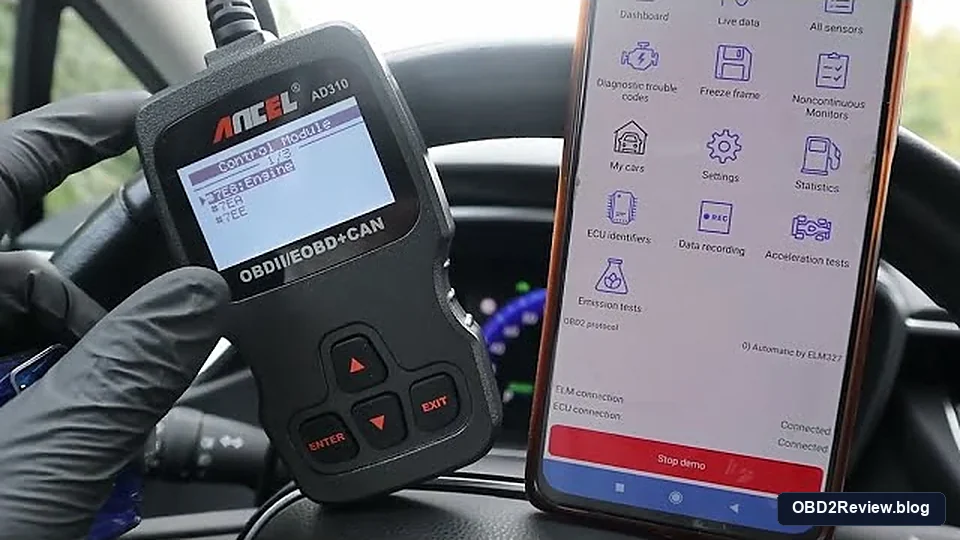
Conversely, wireless hardware packages microcontrollers inside the OBD port adapter. These units rely on local radio frequencies to stream live telemetry to a smartphone or shop tablet.
Wired interface protocols utilize physical transceiver chips directly linked to the OBD2 port pins, ensuring uninterrupted controller area network message delivery across standard dual-wire differential signaling paths without packet drops.
Wireless adapters translate these low-level physical signals into serial data streams, packaging them into Bluetooth or Wi-Fi radio frequency frames before transmitting them to a separate mobile or desktop host device.
- Wired connections utilize direct copper pathways for zero data loss.
- Wireless adapters convert CAN bus traffic into Bluetooth or Wi-Fi packets.
- Physical tethers isolate diagnostic traffic from local radio frequency interference.
Physical Layer Protocols and Transceivers
Selecting the best obd2 scanner ensures physical transceivers inside tethered scan tools handle high-speed CAN networks effortlessly. They maintain continuous synchronization without dropping packets during extended diagnostic logging.
Wireless dongles must compress and transmit telemetry packets over the air. This adds microscopic latency that rarely affects basic code reading but matters during deep flashing.
- Hardware transceivers dictate raw bus speed limits.
- Air transmission introduces variable packet delivery times.
Evaluating Data Throughput and Signal Latency
When diagnosing intermittent electrical faults, latency can obscure critical sensor drops. Tethered interfaces stream live PID graphs with absolute frame-rate consistency and zero buffer delay.
When reviewing our top wireless obd2 scanners, you will notice that interference can occasionally disrupt pairing bonds, while heavy live-data sessions might introduce minor micro-stuttering across shared radio frequencies.
High-speed USB or serial wired connections support peak throughput rates exceeding standard diagnostic requirements, easily managing multi-module live data logging sessions without experiencing command queue overruns or dropped PID requests.
Bluetooth connections introduce intrinsic propagation delay, typically ranging between ten and fifty milliseconds, which can slightly distort oscilloscope-style graphing or rapid parameter identification refreshes during advanced engine performance troubleshooting tasks.
- Wired systems guarantee rock-solid live PID graphing refresh rates.
- Wireless units are vulnerable to 2.4GHz spectrum crowding in modern shops.
- Direct serial communication prevents dropped frames during heavy data requests.
Real-Time PID Graphing Performance
Monitoring dozens of live parameters simultaneously pushes adapter bandwidth to its absolute limit. Tethered units handle high-frequency polling easily due to high-speed serial bus integration.
Wireless devices must throttle refresh rates to prevent buffer overflows over standard Bluetooth channels. Technicians analyzing fast transients should always prioritize dedicated wired displays.
- High PID counts require robust data bandwidth.
- Throttling prevents dropped frames on wireless connections.
Ergonomics, Portability, and Shop Integration
Even when choosing the best budget obd2 scanner, daily shop workflows demand equipment that adapts to cramped footwells. Pocket-sized wireless dongles let technicians slide beneath dashboards without tripping over thick cables.
Tethered diagnostic units require the technician to sit inside the cabin or manage long umbilical cords. However, this eliminates the risk of misplacing small adapters inside customer vehicles.
Handheld wired units provide dedicated physical keypads and ruggedized rubber boots, designed to withstand oily shop environments and accidental drops onto concrete floors while maintaining immediate tool availability.
Compact wireless dongles sit flush within the lower dashboard, eliminating tangled wire harnesses and allowing technicians to perform road test monitoring safely from the driver seat using a tablet.
- Wireless adapters disappear completely inside the under-dash OBD port.
- Wired handsets remain securely tethered and easy to locate on crowded benches.
- Cable management adds minor setup time when moving between multiple vehicles.
Workspace Footprint and Cable Management
Tangled cables create persistent safety hazards in busy automotive service bays. Mobile wireless tools eliminate cord clutter entirely by leveraging existing shop tablets or personal phones.
Despite cord management challenges, tethered tools never run out of battery power mid-test. Shop environments often benefit from a hybrid approach matching tool style to job type.
- Cord clutter increases tripping risks around active service lifts.
- Wireless setups leverage existing tablet screens for cleaner benches.
Power Stability, Duty Cycles, and Parasitic Draw
Electronic control unit reprogramming requires uninterrupted power delivery throughout lengthy update sequences. A sudden voltage drop caused by battery saver modes can brick expensive modules instantly.
Wired diagnostic terminals draw steady operating current directly from the vehicle harness. Wireless dongles often rely on internal lithium cells that require regular recharging during long shifts.
Direct vehicle powering through pin sixteen of the DLC guarantees continuous operating voltage for wired scanners, preventing unexpected shutdowns during lengthy flash programming or security immobilizer matching routines.
Wireless modules left plugged into dormant vehicles can induce minor parasitic battery drain, requiring smart sleep modes or manual disconnection to protect aging starter batteries over extended storage intervals.
- Wired tools draw constant operating power from the DLC port safely.
- Wireless dongles risk battery depletion during multi-hour diagnostic sessions.
- Voltage stability is vital for successful ECU flashing operations.
Battery Life and Charging Considerations
Maintenance routines for wireless hardware must include regular battery checks before every shift. Dead internal cells will halt emergency roadside diagnostics immediately when time matters most.
Tethered handsets are always ready because they draw power upon connection. This eliminates dead battery anxiety during unexpected mobile service calls.
- Internal batteries demand proactive charging protocols.
- DLC-powered tethered units offer permanent operational readiness.
Durability, Build Quality, and Long-Term Maintenance
Automotive repair environments expose delicate electronics to grease, solvents, and accidental drops. Ruggedized tethered housings survive daily impacts against shop concrete floors much better than plastic dongles.
Connector pins inside heavy cable harnesses endure thousands of insertion cycles before failing. Wireless adapters concentrate all mechanical stress directly onto the vehicle port pins.
Exploring top professional obd2 scanner options reveals that dedicated strain reliefs prevent copper conductor fatigue, while replaceable tether cables extend the overall service life span of busy shop diagnostic units.
Wireless interface enclosures depend heavily on injection-molded plastic integrity and internal potting agents to resist moisture intrusion, oxidation, and vibrational stress during permanent on-board installation scenarios.
- Tethered tools feature robust strain relief boots to protect cabling.
- Wireless dongles risk physical damage if kicked while plugged into the dash.
- Service life depends heavily on connector quality and housing materials.
Connector Wear and Port Preservation
Repeatedly plugging rigid wireless adapters into worn OBD ports can loosen vehicle pins. Tethered cables isolate port stress away from the vehicle interface using flexible extension leads.
Replacing a damaged cable on a wired unit costs significantly less than buying a new wireless adapter. Long-term maintenance budgets favor repairable tethered architectures.
- Rigid adapters transfer leverage forces directly to vehicle pins.
- Cabled units protect vehicle ports via strain-relief designs.
Software Ecosystems and Diagnostic Capabilities
Modern vehicle diagnostics rely heavily on continuous software updates and expansive vehicle coverage databases. App-driven wireless scanners receive seamless over-the-air updates directly through mobile operating system stores.
Dedicated wired diagnostic tablets often utilize proprietary operating systems with annual update subscriptions. Both approaches provide deep bi-directional control, but their user interfaces differ significantly.
Advanced wired diagnostic tablets typically feature closed, proprietary operating systems optimized exclusively for factory-level bi-directional controls, calibration resets, and extensive OEM database access across diverse vehicle electronic modules.
Wireless hardware relies on third-party mobile applications, requiring seamless firmware update compatibility with iOS and Android platforms to maintain access to evolving diagnostic trouble code definitions.
- Wireless apps offer intuitive touch interfaces on standard tablets.
- Dedicated wired tools provide robust, isolated diagnostic environments.
- Firmware update frequency varies widely across different manufacturer brands.
Interface Complexity and Learning Curves
App-based diagnostic platforms feel instantly familiar to technicians accustomed to modern smartphones. Dedicated handheld units feature physical buttons that work easily with greasy workshop gloves.
Choosing the right ecosystem depends on whether your technicians prefer touchscreens or tactile buttons. Both hardware types support advanced service resets and actuation tests.
- Touch interfaces streamline complex text navigation.
- Physical buttons perform reliably in adverse weather conditions.
Determining the Right Tool for Your Specific Workload
Selecting between these two diagnostic form factors requires an honest assessment of daily service tasks. High-volume programming shops need the absolute reliability and data speed of tethered hardware.
Independent mobile technicians and multi-brand general repair shops benefit greatly from wireless flexibility. Evaluate your typical diagnostic jobs before committing capital to a single ecosystem.
Professional automotive technicians servicing complex electrical faults benefit most from dedicated wired handheld units due to their unwavering signal stability and comprehensive bi-directional testing software capabilities during repairs.
Casual DIYers and fleet managers prioritizing everyday convenience often choose wireless adapters for quick fault clearing and efficient remote vehicle tracking directly from modern mobile smartphones without hassle.
- Match tool architecture directly to your primary diagnostic workloads.
- Consider investing in both tool types for complete shop versatility.
- Evaluate software subscription costs alongside initial hardware pricing.
Hybrid Fleet Maintenance Strategies
Many professional service operations maintain a mixed inventory of diagnostic equipment. Lead technicians use wired units for complex module programming while general bays use wireless scanners.
This multi-tiered approach maximizes shop efficiency and ensures the right tool is always available. Building a versatile diagnostic arsenal keeps turnaround times exceptionally low.
- Mixed inventories optimize efficiency across diverse repair tasks.
- Specialized tools prevent bottlenecks during heavy diagnostic shifts.
Frequently Asked Questions
Do wireless OBD2 scanners experience noticeable data lag during live graphing?
Wireless units occasionally exhibit minor buffering delays due to Bluetooth packet routing. However, modern high-speed protocols minimize this latency for most standard diagnostic tasks.
Can a wireless OBD2 adapter drain my car battery if left plugged in?
Many wireless dongles lack true automatic sleep modes and draw parasitic current. Always unplug unmonitored adapters before storing vehicles for extended periods to prevent battery discharge.
Why do professional ECU flashing shops prefer wired diagnostic tools?
Wired connections eliminate the risk of dropped radio packets during long programming sequences. Uninterrupted power and data stability prevent catastrophic module corruption during critical software flashes.
Are wireless OBD2 scanners compatible with all smartphone operating systems?
Most wireless adapters pair seamlessly with both Android and iOS mobile platforms. Always verify app compatibility before purchasing specialized diagnostic hardware for your shop tablets.
Do wired OBD2 scanners require expensive annual software subscription renewals?
Subscription models vary widely depending on the specific diagnostic tool manufacturer and tier. Many professional units require active update packages for full bi-directional module control features.