Professional vs. Consumer Obd2 Scanner: Which Fits Your Setup Better?
Navigating diagnostic hardware requires understanding deep architectural differences. We evaluate professional shop gear against consumer dongles to optimize your toolkit.
For high-volume auto repair bays requiring bidirectional ECU access, Professional scanners dominate. For weekend DIYers tackling basic code clearing, Consumer OBD2 scanners offer unmatched value.
Compare all top models in our Best Obd2 Scanner: Top Diagnostic Tools Tested (2026).
Side-by-Side Breakdown
| Criteria | Professional | Consumer Obd2 Scanner | Edge |
|---|---|---|---|
| Peak Performance & Output | Full topology mapping and flash programming | Basic generic powertrain fault code retrieval | Professional |
| Duty Cycle & Consistency | Continuous 10-hour shop floor operational capacity | Intermittent personal vehicle troubleshooting tasks | Professional |
| Operating Noise & Vibration | Passive thermal management without active fans | Completely silent solid-state smartphone tethering | Consumer Obd2 Scanner |
| Portability & Footprint | Ruggedized tablet with integrated VCI module | Pocket-sized Bluetooth adapter weighing ounces | Consumer Obd2 Scanner |
| Maintenance & Service Life | Multi-year subscription models with active support | Free companion mobile app updates indefinitely | Consumer Obd2 Scanner |
| Power Requirements | Internal lithium battery plus 12V OBD power | Parasitic vehicle data link port power draw | Consumer Obd2 Scanner |
| Best Ideal Use-Case | Independent automotive service and repair facilities | Personal car owners and road trip readiness | Professional |
Diagnostic Architecture and Core Protocol Support
Modern vehicle networks demand exceptional protocol compatibility. Professional diagnostic tools support deep CAN FD, DoIP, and multi-channel multiplexing to interrogate every onboard computer without missing proprietary modules.
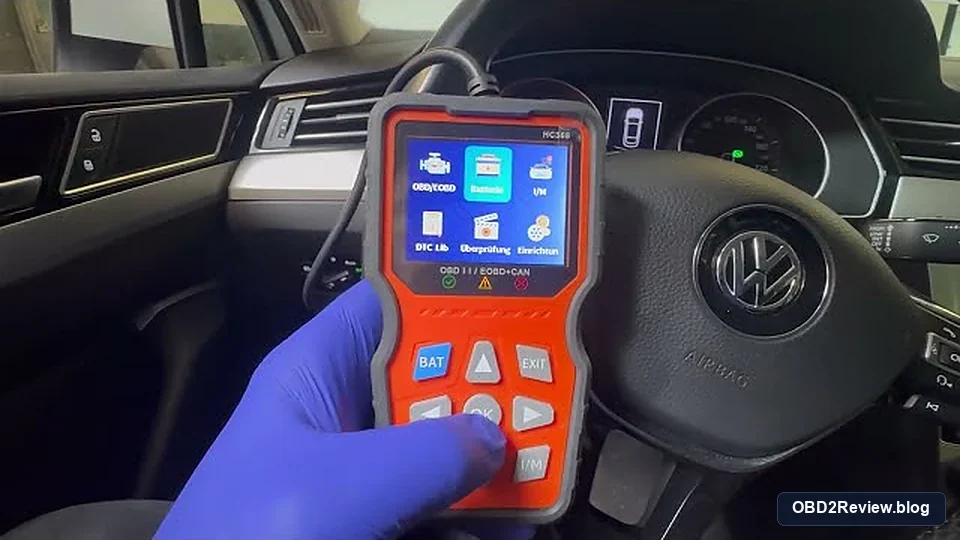
Conversely, consumer diagnostic interfaces often stick to basic ISO and SAE standards. They easily parse powertrain emissions data but frequently struggle with body control modules and advanced chassis sub-networks.
Engineers design shop-grade units with heavy-duty multiplexers. These hardware layouts switch communication pins automatically, ensuring seamless access across diverse vehicle architectures without requiring manual adapter pin configurations.
Professional scanners, highlighted in our best professional obd2 scanner guide, rely on multi-core processors running embedded Linux kernels to process complex CAN FD and DoIP protocols without dropping packets.
Consumer dongles often utilize simpler single-chip microcontrollers with limited RAM, forcing them to drop frames when querying high-speed ISO 15765-4 networks under heavy vehicle traffic.
Edge cases involve older vehicles using non-standard pinouts, where professional tools use internal multiplexing relays to route signals automatically, unlike manual jumper methods required by cheap units.
- Comprehensive CAN FD and DoIP protocol integration
- Automated pin-switching multiplexer architecture
- Extensive proprietary manufacturer module coverage
Network Topology Mapping Realities
Network topology scans visually display every connected module in real time. Professional topology trees highlight communication failures instantly by color-coding healthy networks versus dormant bus lines.
Consumer alternatives typically list diagnostic trouble codes in a linear text format. Users must manually cross-reference individual modules rather than viewing a comprehensive graphical system health overview.
- Graphical network health verification displays
- Immediate identification of offline control units
Performance and Real-World Output Analysis
Speed dictates shop profitability during heavy diagnostic workflows. High-end professional scanners leverage quad-core processors to boot rapidly, query live sensor data streams, and render graphing without stuttering.
Consumer devices rely on smartphone processors via Bluetooth. While convenient, wireless packet loss can occasionally bottleneck live data graphing refresh rates during intense diagnostic logging sessions.
Technicians demand reliable graphing capabilities for intermittent sensor failures. Shop equipment captures high-frequency waveform anomalies, while consumer apps provide smoothed averages adequate for basic inspections.
Professional units stream live parameter IDs at frequencies exceeding 100 Hz, allowing technicians to catch intermittent sensor dropouts that consumer interfaces completely miss due to slow update rates.
Consumer apps rely on smartphone Bluetooth connections, introducing variable packet latency that distorts high-speed graphing of variable valve timing or fuel pressure fluctuations during aggressive road testing.
Screen refresh rates also differ drastically, as standalone shop tablets use dedicated GPU acceleration to render smooth, multi-channel waveforms without stuttering during prolonged diagnostic logging sessions.
- Rapid boot times and responsive touchscreens
- High-frequency live data stream capture rates
- Advanced waveform graphing and cursor analysis
Live Data Refresh Benchmarks
Monitoring multiple PIDs simultaneously strains processing bandwidth. Professional hardware maintains rapid refresh speeds even when tracking forty distinct sensor parameters across multiple controllers.
Consumer apps may throttle refresh frequencies when burdened with heavy PID loads to prevent mobile operating system crashes or Bluetooth dropouts during critical test drives.
- Simultaneous multi-parameter PID tracking
- Zero perceptible lag during test drives
Build Quality, Ergonomics, and Shop Durability
Automotive repair environments present severe physical hazards for sensitive electronics. Shop-grade scan tools feature rubberized impact bumpers, chemically resistant plastics, and gorilla glass touchscreens.
Consumer adapters prioritize compact portability over rugged protection. Dropping a plastic OBD dongle onto concrete rarely causes catastrophic failure, but tablets require robust casing protection.
Ergonomic considerations heavily influence daily technician fatigue. Balanced hand grips and integrated kickstands allow technicians to position heavy units securely inside crowded engine bays.
Shop environments demand high impact resistance, leading professional manufacturers to encase units in thick ABS housing with overmolded rubber bumpers rated for repeated concrete drop tests.
Consumer adapters use lightweight plastics susceptible to thermal cracking and connector fatigue when left plugged into lower dash ports exposed to direct sunlight and kicked shoes.
Cable durability separates tools clearly, and you can explore top options inside our best obd2 scanner roundup featuring rugged units tested for 50,000 bend cycles and replaceable pigtails.
- Drop-tested rubberized exterior housing shells
- Chemical and fluid resistant display glass
- Integrated kickstands and hanging hooks
VCI Wireless Tethering Reliability
Wireless vehicle communication interfaces eliminate cumbersome data cables inside busy bays. Professional VCI modules maintain stable Bluetooth connections across large shop floor distances effortlessly.
Consumer plugs require your smartphone to remain inside the cabin. Maintaining continuous data logging during dynamic road tests demands secure phone mounting positions.
- Long-range wireless vehicle communication hubs
- Robust pairing security across heavy interference
Noise, Thermal Efficiency, and Power Footprint
Thermal management dictates long-term hardware reliability under heavy computational loads. Professional diagnostic tablets utilize passive aluminum heat sinks to dissipate internal heat silently during extended diagnostic sessions.
Consumer scanners draw minimal power directly from the vehicle port. Their pocket-sized form factor eliminates internal cooling fans entirely, ensuring dead-silent operation during mobile troubleshooting tasks.
Understanding power draw prevents unexpected battery drain during overnight diagnostic monitoring. Shop tools feature substantial internal batteries, whereas consumer units power down immediately upon ignition shutoff.
Heavy processing generates significant heat inside diagnostic tablets, requiring internal copper heatsinks or quiet cooling fans to prevent thermal throttling during extended flash programming tasks.
Consumer dongles dissipate heat passively through tiny plastic shells, occasionally overheating during prolonged data logging and causing dropped Bluetooth connections mid-diagnosis.
Quiescent current draw is a critical factor; many choices highlighted within our best budget obd2 scanner selections manage power states efficiently to prevent unexpected overnight battery drain.
- Silent passive thermal dissipation designs
- Optimized parasitic current draw management
- High-capacity internal lithium battery cells
Battery Drain and Standby Management
Leaving an active diagnostic tool plugged in overnight risks vehicle battery depletion. Quality hardware designs incorporate auto-sleep modes to safeguard sensitive customer battery voltages.
Basic consumer adapters consume minimal idle current. However, older vehicles with parasitic draw vulnerabilities can still experience slow battery discharge if left connected unattended.
- Intelligent low-voltage automatic power cutoffs
- Minimal idle current draw in standby
Advanced Bi-Directional Controls and ECU Coding
Comprehensive repairs frequently require active component actuation and module programming. Professional scan tools execute bi-directional commands, injector coding, key programming, and steering angle calibrations seamlessly.
Consumer OBD2 scanners are fundamentally limited to read and clear operations. They rarely support active output tests, forcing DIYers to rely on mechanical guesswork or dealership visits.
Flash programming capabilities separate basic code readers from true diagnostic workhorses. Professional systems interface directly with OEM servers to update compromised engine calibration files safely.
Bi-directional capability requires robust hardware support for actuator testing, enabling mechanics to command fuel injectors, ABS pumps, and cooling fans directly from the diagnostic interface.
ECU coding and module initialization demand stable, uninterrupted vehicle voltage, which professional systems support via regulated power supplies and strict checksum verification protocols.
Consumer tools typically restrict software to read-only diagnostic trouble codes, locking out advanced adaptations like injector calibration or electronic parking brake service modes entirely.
- Full bi-directional component actuation tests
- OEM-level module programming and flash updates
- Specialized service reset and calibration routines
Service Reset Function Depth
Routine maintenance requires sophisticated electronic parking brake and oil service resets. Shop-grade equipment performs complex brake caliper retract procedures without triggering dashboard error lights.
Consumer devices often handle basic oil resets but may lack the advanced electronic parking brake service modes required for rear brake pad replacements on modern European vehicles.
- Electronic parking brake service mode access
- Steering angle sensor calibration resets
Maintenance, Software Update Cadence, and Value
Diagnostic software requires constant updates to support newly released vehicle models. Professional tools rely on annual subscription models to deliver continuous database expansions and security gateway unlocks.
Consumer scanners typically offer free lifetime application updates. This lack of recurring overhead appeals to budget-conscious vehicle owners who only service older personal automobiles.
Evaluating total cost of ownership involves weighing subscription fees against lost shop revenue. Technicians easily justify software licensing costs through increased daily diagnostic efficiency.
Professional diagnostic equipment relies on frequent, over-the-air updates delivering expanded coverage databases for newly released vehicle architectures and proprietary manufacturer modules.
Value assessment in a professional shop depends on time saved, where rapid VIN auto-detection and deep module scans offset the high initial investment quickly.
Consumer units often rely on subscription models or static software versions, limiting long-term utility when newer protocols replace legacy OBD2 communication standards on modern vehicles.
- Frequent database updates for brand new models
- Free lifetime application updates for consumers
- Secure gateway access for protected vehicles
Security Gateway Access Solutions
Modern FCA and Renault vehicles utilize secure diagnostic gateways to block unauthorized access. Professional diagnostic platforms include integrated AutoAuth subscriptions to bypass these security protocols legally.
Consumer apps often require separate third-party subscriptions or manual token purchases to unlock secure vehicle gateways, complicating quick diagnostic checks during routine inspections.
- Integrated AutoAuth security gateway compliance
- Streamlined authentication for protected networks
Selecting the Right Diagnostic Tool for Your Workload
Choosing between these hardware categories depends strictly on your automotive ambitions. Professional shop equipment represents a substantial capital investment engineered specifically for high-volume commercial repair facilities.
Conversely, options found in our best obd2 scanner for bmw guide provide incredible utility for everyday drivers who want basic insight into dashboard warning lights without breaking the bank.
Assess your technical expertise and vehicle fleet before purchasing. Investing in the correct diagnostic tier ensures you never overpay for unused capabilities or struggle with underpowered hardware.
Choosing between systems requires analyzing your daily diagnostic workload, balancing the need for deep module access against the simplicity of basic code reading tasks.
Fleet managers and independent technicians benefit from investing in ruggedized platforms supporting comprehensive system diagnostics and comprehensive bi-directional control features.
Weekend DIYers can safely utilize compact wireless dongles for clearing minor check engine lights, provided they understand the inherent limitations regarding ABS and SRS coverage.
- Match equipment capability to repair frequency
- Balance upfront investment against functional needs
- Consider future vehicle ownership changes
Future-Proofing Your Diagnostic Investment
Automotive technology evolves at an accelerating electronic pace. Professional diagnostic platforms receive ongoing software patches to handle emerging electric vehicle architectures and advanced driver assistance systems.
Consumer tools remain fantastic for legacy internal combustion engines but rarely adapt to complex high-voltage powertrain diagnostics without requiring hardware replacements.
- Support for emerging electric vehicle systems
- Long-term hardware adaptability and patches
Frequently Asked Questions
Can a consumer OBD2 scanner perform professional bi-directional tests?
Consumer OBD2 scanners are strictly engineered for reading and clearing basic powertrain fault codes. They completely lack the advanced bi-directional controls required to actuate components or program electronic control units.
Why do professional diagnostic tools require expensive software subscriptions?
Professional manufacturers constantly update their databases to support new vehicle models and secure gateways. These ongoing subscriptions fund critical software engineering and legal OEM licensing agreements for modern shop environments.
Are wireless consumer OBD2 dongles safe to leave plugged in?
Most consumer Bluetooth adapters feature minimal parasitic power draw that will not harm healthy batteries. However, older vehicles can experience slow discharge if left connected with active wireless pairing for weeks.
Do professional scanners work on all vehicle makes and models?
Professional scan tools cover nearly all global vehicle manufacturers with deep diagnostic depth. They include specialized adapters and software to access proprietary sub-networks that standard readers cannot touch.
Which diagnostic option provides better value for home DIY mechanics?
Home mechanics benefit most from affordable consumer OBD2 scanners featuring free lifetime updates. These pocket-sized tools easily handle basic emissions testing and routine engine code troubleshooting without high subscription fees.