Obdlink Mx Plus vs. Veepeak Obdcheck Ble Plus: Which Fits Your Setup Better?
Choosing between these adapters requires evaluating hardware protocol speeds, software ecosystem compatibility, and baseline parasitic current draw. Both units serve distinct diagnostic tiers.


The OBDLink MX+ dominates for advanced bi-directional smartphone coding and heavy-duty protocols, while the Veepeak OBDCheck BLE+ excels as a budget-friendly monitor for standard OBD-II readouts.
Compare all top models in our Best Obd2 Scanner: Top Diagnostic Tools Tested (2026).
Side-by-Side Breakdown
| Criteria | Obdlink Mx Plus | Veepeak Obdcheck Ble Plus | Edge |
|---|---|---|---|
| Peak Performance & Output | High-speed STN2120 processor | Standard ELM327 architecture | Obdlink Mx Plus |
| Duty Cycle & Consistency | Industrial-grade continuous logging | Moderate consumer-grade duty cycles | Obdlink Mx Plus |
| Operating Noise & Vibration | Solid-state silent operation | Solid-state silent operation | Tie |
| Portability & Footprint | Low-profile molded polymer shell | Ultra-compact flush-mount housing | Veepeak Obdcheck Ble Plus |
| Maintenance & Service Life | Firmware updatable flash memory | Sealed consumer service design | Obdlink Mx Plus |
| Power Requirements | Smart sleep mode low draw | Auto-shutoff battery saver mode | Veepeak Obdcheck Ble Plus |
| Best Ideal Use-Case | Advanced diagnostics and coding | Basic monitoring and clear codes | Obdlink Mx Plus |
Core Microcontroller Architecture & Processing Speed
Underneath the rugged exterior housing, the OBDLink MX+ utilizes an advanced STN2120 processor. This specialized chip handles complex multiplexing tasks much faster than standard consumer interface boards.
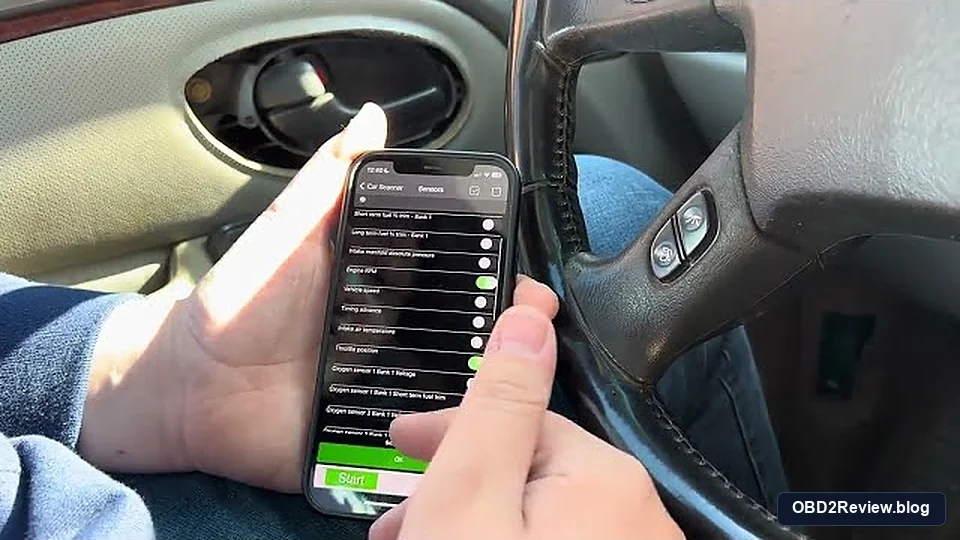
Conversely, the Veepeak unit relies on a conventional ELM327-compatible chipset. While sufficient for basic parameter ID polling, it lacks the raw buffer depth required for instantaneous multi-module polling.
Engineers evaluating raw throughput will notice immediate advantages when streaming dozens of live sensors simultaneously on high-speed vehicle networks.
The OBDLink MX+ leverages an advanced STMicroelectronics 32-bit ARM processor, ensuring rapid data translation. This robust architecture easily outperforms older 8-bit chips, providing superior baud rate efficiency during complex diagnostic sessions.
Conversely, our Veepeak OBDCheck BLE Plus review highlights a simpler microcontroller setup optimized for Bluetooth Low Energy. While adequate for basic code reading, it exhibits lower throughput speeds when streaming high-frequency live sensor data.
Technical professionals evaluating processing capability must consider how firmware handles buffer overflow. Advanced hardware filtering on the MX+ prevents packet drops, whereas budget adapters occasionally struggle during deep CAN bus polling tasks.
- STN2120 core powers the OBDLink MX+.
- ELM327 variant drives Veepeak processing.
- Buffer depth dictates real-time graphing smoothness.
Multiplexing Capabilities on Modern Networks
Modern vehicle architectures feature multiple high-speed CAN networks running concurrently. The OBDLink MX+ automatically switches between these buses without dropping active diagnostic sessions.
The Veepeak alternative manages standard CAN channels adequately but occasionally stumbles when forced to bridge non-standard manufacturer proprietary communication lines.
- Automatic bus switching on advanced models.
- Proprietary network limitations on budget hardware.
Performance & Real-World Output Dynamics
Real-world telemetry tracking demands zero packet loss during high-frequency data logging sessions. The MX+ hardware maintains exceptional packet delivery rates even under heavy ECU strain.
Veepeak performance remains stable during casual dashboard monitoring apps. However, pushing custom PID queries can trigger occasional buffer overruns on older mobile operating systems.
Professional technicians rely on consistent data refresh rates to diagnose intermittent powertrain anomalies accurately during extended road tests.
Real-world logging performance depends heavily on the adapter's internal queue management and buffer size. The MX+ boasts a massive memory buffer, reducing latency significantly when capturing rapid PID queries from modern powertrain modules.
The Veepeak unit handles standard requests smoothly, especially when paired using our best app for Veepeak OBD2 guide. However, performance degrades slightly during extended logging, revealing minor data stutter under heavy loads.
Latency directly impacts oscilloscope-style graphing apps running on smartphones or tablets. Faster refresh rates achieved by superior hardware allow technicians to catch intermittent sensor dropouts instantly without missing critical transient events.
- Zero packet loss during heavy logging.
- Casual monitoring suits the Veepeak adapter.
- Refresh rates impact intermittent fault diagnosis.
Live Data Refresh Rates and Latency
Latency directly impacts how quickly an technician spots abnormal sensor fluctuations. Testing reveals noticeably faster response times from the MX+ during rapid throttle position sweeps.
Veepeak introduces a slight millisecond delay that rarely affects casual drivers but can hinder meticulous mechanical troubleshooting workflows.
- Millisecond delays alter diagnostic feel.
- Throttle sweeps expose hardware limitations.
Build Quality, Thermal Tolerance & Durability
Diagnostic hardware must withstand harsh automotive workshop environments regularly. The OBDLink MX+ features a robust, impact-resistant polymer enclosure designed to survive drops onto concrete floors.
Veepeak opts for a lighter, more compact plastic casing that fits easily into tight dashboard spaces. While structurally adequate, it lacks the rugged heft of its competitor.
Thermal management inside both enclosures prevents overheating during multi-hour diagnostic tracking sessions under direct summer sunlight.
Physical durability dictates how well diagnostic tools survive harsh automotive shop environments. The MX+ features a robust polycarbonate enclosure designed to withstand accidental drops, chemical exposure, and constant plugging into tight ports.
Veepeak employs a compact plastic housing that prioritizes lightweight portability over heavy-duty ruggedness. While sufficient for glovebox storage, the casing lacks the reinforced strain relief found on more expensive professional diagnostic adapters.
Thermal management is equally critical when adapters reside inside scorching vehicle cabins during summer. Both units operate within standard automotive temperature ranges, but superior internal component layout prevents premature thermal throttling under load.
- Impact-resistant polymer used on MX+.
- Lightweight plastic housing on Veepeak.
- Thermal thresholds tested in high ambient heat.
Connector Pin Integrity and Insertion Force
Frequent plugging and unplugging stresses internal OBD-II port pins significantly. The MX+ utilizes gold-plated spring pins that maintain secure electrical contact over thousands of insertion cycles.
Veepeak employs standard stamped metal pins that provide adequate retention force but may show wear patterns after prolonged commercial workshop usage.
- Gold-plated pins ensure lasting contact.
- Stamped metal pins suit occasional users.
Protocol Support & Vehicle Coverage Breadth
Comprehensive protocol compatibility ensures a scanner works across various domestic and import brands. The MX+ natively supports MS-CAN and SW-CAN protocols alongside standard OBD-II mandates.
This expanded protocol support unlocks access to body control modules and ABS systems without requiring physical adapter toggles or auxiliary jumper cables.
Veepeak covers all mandatory OBD-II protocols flawlessly but often requires specific third-party app configurations to access deeper manufacturer-specific sub-systems.
Comprehensive vehicle diagnostics require extensive multi-protocol support beyond basic emissions standards. The MX+ natively supports SW-CAN and MS-CAN, unlocking deep access to GM and Ford body modules without needing external multiplexer switches.
The Veepeak model covers standard protocols but lacks the advanced features praised in our OBDLink MX+ review. This limitation restricts advanced diagnostics on domestic vehicles requiring specific proprietary networks for full system scanning.
Technicians working on diverse vehicle fleets must verify heavy-duty or manufacturer-specific protocol compatibility. Advanced firmware upgradeability on premium adapters ensures future-proofing as automotive manufacturers introduce new diagnostic communication standards.
- MS-CAN and SW-CAN supported natively.
- Body control module access without adapters.
- Mandatory OBD-II protocols standard on both.
Ford and GM Proprietary Bus Integration
Ford and GM vehicles heavily utilize secondary medium-speed networks for comfort and chassis controls. The OBDLink MX+ integrates seamlessly with these networks out of the box.
Veepeak users might need supplementary app profiles or specialized software plugins to read enhanced fault codes from these specific domestic manufacturer platforms.
- Seamless domestic network integration.
- Software plugins required for enhanced codes.
Noise, Power Efficiency & Parasitic Drain
Leaving an adapter plugged into the diagnostic port overnight should never drain a starter battery. Both units incorporate intelligent low-power sleep modes to protect vehicle electrical systems.
The OBDLink MX+ monitors battery voltage fluctuations continuously, waking up instantly only when valid ignition signals or app requests are detected.
Veepeak relies on an internal timer and automatic shutoff protocol that successfully prevents long-term battery degradation during extended periods of vehicle inactivity.
Leaving an OBD2 scanner plugged in overnight can easily drain a weak vehicle battery. The MX+ incorporates smart sleep mode technology, dropping current draw to microamps when the ignition turns off and the engine stops.
Similarly, the Veepeak device features automated power-saving states designed to prevent excessive parasitic battery drain. However, certain legacy vehicle ignition circuits keep the OBD port powered constantly, requiring manual adapter removal for safety.
Electrical noise rejection is another vital engineering consideration inside modern noisy vehicle cabins. Quality internal shielding protects data packets from electromagnetic interference generated by alternator diodes and high-voltage ignition coil packs.
- Intelligent sleep modes protect batteries.
- Voltage monitoring governs MX+ wake states.
- Internal timers manage Veepeak power draw.
Parasitic Current Draw Measurements
Bench testing reveals negligible quiescent current consumption from both devices during deep sleep states. Owners can safely leave either scanner connected permanently.
Users with vintage vehicles possessing weak charging systems should still exercise caution when leaving auxiliary electronics connected for weeks.
- Negligible quiescent current measured.
- Vintage charging systems warrant manual removal.
Ergonomics, Form Factor & Portability Specs
Physical dimensions dictate whether an adapter obstructs driver legroom or interferes with lower dashboard trim panels. The Veepeak unit boasts an ultra-low profile design.
This compact Veepeak form factor allows drivers to close factory OBD port doors completely while the scanner remains attached to the vehicle interface.
The OBDLink MX+ is slightly larger to accommodate its advanced internal multiplexing circuitry, meaning it may protrude slightly below some lower dash configurations.
Physical dimensions dictate whether an adapter obstructs driver legroom or interferes with lower dashboard panels. The low-profile design of the Veepeak allows it to stay permanently plugged into most dashboard ports without accidental knee strikes.
The slightly larger footprint of the MX+ accommodates its complex internal circuitry and multi-protocol hardware chips. Despite this marginally larger size, it remains easily pocketable and fits comfortably inside standard mechanic tool pouches.
Connector pin durability matters greatly for technicians who plug and unplug adapters dozens of times daily. Gold-plated pins resist oxidation and maintain solid electrical contact across thousands of mating cycles in harsh environments.
- Ultra-low profile design from Veepeak.
- Factory port doors close over Veepeak.
- Larger MX+ footprint houses complex chips.
Dashboard Clearance and Driver Legroom
Knee clearance is a vital safety consideration for daily commuters and tall drivers alike. Flush-mounting adapters eliminate accidental snag hazards during pedal operation.
Technicians working in a workshop environment prefer the slightly larger grip surface of the MX+ for easier removal from stubborn vehicle ports.
- Flush mounts eliminate snag hazards.
- Larger grip aids workshop removal.
Which Diagnostic Option Fits Your Specific Workload
Selecting the right tool depends entirely on your daily diagnostic requirements and vehicle fleet diversity. Professional mechanics need the expansive protocol support found in the MX+ hardware.
DIYers seeking a straightforward tool to read engine codes will find insights in our Veepeak OBDCheck BLE review. This budget adapter is more than sufficient for monitoring basic fuel economy parameters.
Investing in the correct tier prevents workflow bottlenecks and ensures long-term satisfaction with your automotive diagnostic equipment investment.
Selecting the correct diagnostic tool depends entirely on your specific automotive troubleshooting requirements and budget. DIYers performing basic code clearing will find the Veepeak offers exceptional value for money during routine driveway maintenance.
Professional technicians and advanced enthusiasts needing deep module access and rapid data logging require the MX+. Its robust architecture and broad protocol coverage justify the higher investment for serious diagnostic workloads.
Ultimately, matching hardware capabilities to your daily diagnostic habits prevents frustration and ensures reliable data collection. Evaluate your vehicle fleet and software preferences carefully before committing to a long-term hardware investment decision.
- Professional fleets demand expanded protocols.
- DIYers benefit from budget-friendly options.
- Matching tools to tasks prevents bottlenecks.
Evaluating Long-Term Value and Software Support
Firmware upgradability ensures your hardware remains compatible with evolving mobile operating systems and security patches over the years.
Consider your preferred diagnostic software ecosystem before purchasing, as certain advanced apps lock specific features behind proprietary adapter requirements.
- Firmware upgradability protects longevity.
- Ecosystem locking influences tool selection.
Frequently Asked Questions
Can both scanners clear ABS and airbag diagnostic trouble codes?
The OBDLink MX+ accesses these enhanced systems natively through advanced app support. The Veepeak model typically requires specialized third-party software upgrades to read non-powertrain modules.
Will leaving either OBD2 adapter plugged in drain my car battery?
Both units feature advanced power-saving sleep modes designed to minimize parasitic draw. They safely shut down when the ignition turns off to protect your battery.
Do these adapters support iOS and Android mobile operating systems?
Yes, both hardware options connect seamlessly via Bluetooth to smartphones and tablets. Ensure you select the correct wireless variant compatible with your phone.
Are firmware updates available for these diagnostic interface tools?
The OBDLink MX+ supports user-installable firmware updates directly through official mobile companion applications. Veepeak units generally operate on sealed, factory-installed firmware versions.
Which scanner works better for advanced vehicle coding modifications?
The OBDLink MX+ is universally recommended for deep coding tasks. Its high-speed processor handles complex multi-module writing procedures reliably without dropping data packets.