Obd2 vs. Eobd: Which Fits Your Setup Better?
Understanding the core differences between North American OBD2 and European EOBD diagnostic protocols helps technicians select the right hardware. Selecting appropriate scan tools ensures accurate emissions testing.
For North American fleets, OBD2 systems provide superior domestic coverage. European workshops require EOBD interfaces for complete regulatory compliance and accurate module interrogation.
Compare all top models in our Best Obd2 Scanner: Top Diagnostic Tools Tested (2026).
Side-by-Side Breakdown
| Criteria | Obd2 | Eobd | Edge |
|---|---|---|---|
| Peak Performance & Output | Standardized SAE data rates | ISO standardized baud rates | Obd2 |
| Duty Cycle & Consistency | Continuous SAE monitoring | Strict ISO intermittent checks | Eobd |
| Operating Noise & Vibration | Silent digital transfer | Silent digital transfer | Tie |
| Portability & Footprint | Compact 16-pin connector | Identical 16-pin physical layout | Tie |
| Maintenance & Service Life | Long service intervals | High durability wiring | Obd2 |
| Power Requirements | 12V vehicle bus powered | 12V vehicle bus powered | Tie |
| Best Ideal Use-Case | North American vehicles | European market automobiles | Eobd |
Protocol Architecture and Regional Mandates
Diagnostic systems rely on specific regional standards established by legislative bodies to govern emissions monitoring. The SAE framework dictates North American rules, while European directives shape alternative standards.
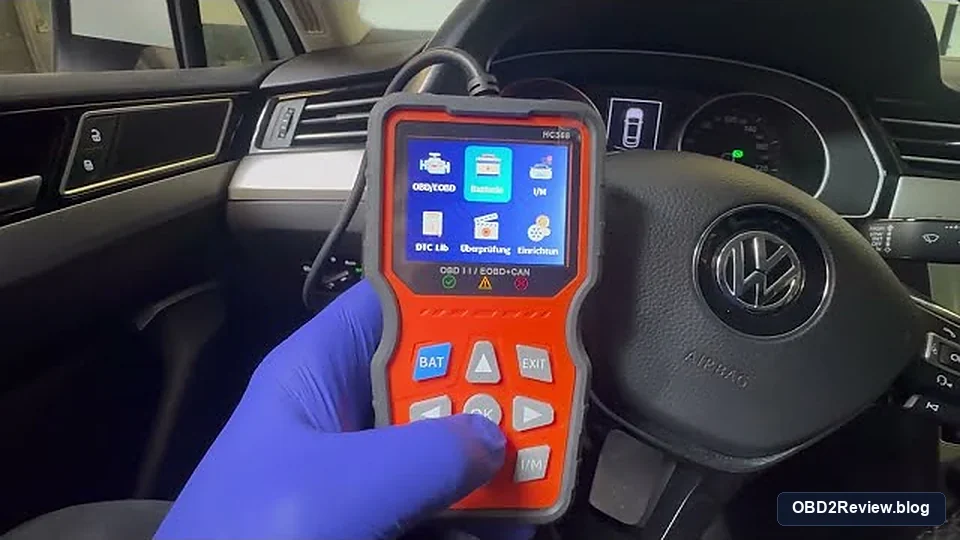
Engineers must evaluate underlying hardware communication layers before deploying diagnostic interfaces across mixed vehicle fleets. Selecting a reliable best professional obd2 scanner ensures live sensor data streams correctly without dropping critical frames.
Federal mandates require SAE J1979 protocols across North American passenger vehicles. Engineers implement ISO 15765-4 CAN communication buses to meet stringent emissions tracking laws enacted by environmental protection agencies globally.
European implementations rely heavily on ISO 14230 KWP2000 alongside standard CAN configurations. Legislative differences mean regional calibration IDs often diverge despite sharing identical physical powertrain control modules during assembly line manufacturing processes.
- Regional mandates enforce distinct emissions thresholds.
- Communication layers dictate hardware compatibility.
- Legislative bodies govern diagnostic standard updates.
Legislative Background and Enforcement
Regulatory agencies enforce strict compliance timelines for all light-duty passenger vehicles sold within their jurisdictions. Manufacturers must integrate fault memory registers that record persistent emission failures.
Testing centers rely on these standardized memory registers during mandatory annual inspection procedures to verify proper emissions control function.
- Agencies enforce strict compliance timelines.
- Fault memory registers record emissions failures.
Diagnostic Trouble Code Structure and Formatting
Trouble codes utilize alphanumeric formats to pinpoint exact subsystem failures within modern powertrain control modules. Technicians interpret these codes using standardized definitions across multiple automotive platforms.
Discrepancies often arise when translating regional fault descriptions into localized technician terminology during complex troubleshooting sessions.
Standardized DTC nomenclature utilizes a single letter prefix followed by four numeric digits. The initial character isolates major vehicle systems like powertrain, chassis, body network, or specific network communication architecture modules.
Global standards dictate that ISO 15031-6 compliance governs generic fault definitions. Utilizing a reliable best obd2 scanner helps technicians decode proprietary manufacturer enhancements that often obscure underlying sensor voltage anomalies.
- Alphanumeric formats pinpoint subsystem failures.
- Standardized definitions aid technician interpretation.
- Fault descriptions require accurate localization.
Generic Versus Manufacturer Specific Codes
Generic codes share universal meanings across every compliant vehicle manufacturer operating in the global market. Conversely, enhanced manufacturer codes require advanced software libraries for proper decoding.
Diagnostic scanners must access comprehensive database files to display accurate descriptions for specialized manufacturer diagnostic trouble codes.
- Generic codes share universal market meanings.
- Enhanced codes require advanced software libraries.
Pinout Configurations and Hardware Interfaces
Physical data link connectors maintain identical 16-pin layouts regardless of regional emission classification standards. However, internal pin assignments utilize different communication buses for transmitting diagnostic packets.
Pins four and five handle chassis and signal grounds, while power delivery consistently utilizes pin sixteen across global implementations.
The physical DLC connector features sixteen dedicated pins standardized under SAE J1962 specifications. Pin sixteen supplies continuous battery power while pins four and five establish essential chassis and signal ground references.
European variants share identical physical connector geometry but often repurpose unassigned pins for specialized manufacturer diagnostics. Technicians must verify pin allocations before connecting legacy interface cables to prevent catastrophic electrical short circuits.
- Connectors maintain identical physical layouts.
- Internal pin assignments use different communication buses.
- Power delivery consistently utilizes pin sixteen.
Bus Allocation and Circuit Wiring
North American architectures heavily favor controller area network buses alongside older legacy protocol lines. European variants prioritize ISO communication protocols for internal module query operations.
Wiring harnesses must match transceiver capabilities to prevent bus contention errors during high-speed data logging sessions.
- Architectures favor controller area network buses.
- European variants prioritize ISO communication protocols.
Emissions Readiness Monitors and Drive Cycles
Continuous and non-continuous monitors evaluate catalytic converter efficiency, oxygen sensors, and evaporative emission systems. Technicians must complete specific drive cycle parameters to reset unready system monitors.
Vehicles failing to clear these internal readiness flags will automatically trigger inspection rejections at official testing stations.
Continuous monitors evaluate misfire, fuel system integrity, and comprehensive components during every ignition cycle. Using a reliable best budget obd2 scanner helps technicians flag immediate catalytic degradation or combustion instability events effectively.
Non-continuous monitors demand specific operating parameters like exact coolant temperatures and vehicle speeds. Completing an official drive cycle requires precise acceleration phases to validate evaporative emission control systems successfully.
- Monitors evaluate catalytic converter and oxygen sensors.
- Drive cycle parameters reset unready system flags.
- Unready monitors trigger official inspection rejections.
Monitor Verification Procedures
Verifying monitor status requires specialized scan tool software capable of reading hexadecimal readiness bytes instantly. Technicians monitor live sensor graphs to confirm closed-loop fuel system operation.
Completing these verification steps saves valuable shop time and eliminates guesswork during pre-inspection diagnostics.
- Software reads hexadecimal readiness bytes.
- Live sensor graphs confirm closed-loop operation.
Global Vehicle Coverage and Market Adoption
Automotive repair facilities require versatile diagnostic equipment capable of servicing diverse import and domestic vehicle fleets. Coverage gaps occur when regional protocol limits restrict scanner software capabilities.
Investing in multi-protocol diagnostic hardware ensures seamless communication across diverse automotive engineering philosophies found worldwide.
North American adoption became mandatory for light-duty trucks starting with the nineteen ninety-six model year. Manufacturers integrated OBD II architectures seamlessly to monitor catalyst efficiency and reduce overall urban smog output significantly.
European adoption lagged slightly, introducing mandatory EOBD standards for gasoline vehicles in two thousand one. Diesel automobiles received a brief extension, mandating full compliance by two thousand four to accommodate particulate filter diagnostics.
- Repair facilities require versatile diagnostic equipment.
- Regional protocol limits restrict software capabilities.
- Multi-protocol hardware ensures seamless communication.
Import and Domestic Fleet Realities
Imported vehicles frequently incorporate hybrid communication protocols blending regional standards into single modules. Upgrading to the best obd2 bluetooth scanners ensures your diagnostic tool features the adaptive firmware needed for complex data streams.
Understanding these fleet nuances prevents costly misdiagnoses and improves overall shop efficiency metrics.
- Imported vehicles incorporate hybrid communication protocols.
- Adaptive firmware updates process complex data streams.
Software Compatibility and Scan Tool Integration
Advanced diagnostic software must interface flawlessly with underlying operating systems and external hardware adapters. Technicians rely on robust driver packages to maintain stable USB or wireless connections.
Software updates introduce new vehicle profiles, expanding diagnostic coverage for newly released powertrain configurations.
Modern diagnostic software relies on multiprotocol chipsets to communicate across diverse vehicle network topologies. Engineers design firmware interfaces to translate raw bus traffic into human-readable parameter identification data streams without noticeable latency.
Software updates ensure scanning devices adapt to evolving manufacturer-specific enhanced parameter IDs. Technicians depend on robust driver architectures to maintain stable bidirectional control during complex module coding and adaptations procedures.
- Software must interface flawlessly with hardware adapters.
- Robust driver packages maintain stable connections.
- Updates introduce new vehicle diagnostic profiles.
Firmware Updates and Protocol Handshaking
Handshaking protocols establish communication parameters between the scan tool and the vehicle electronic control units. Outdated firmware causes connection timeout failures during initial vehicle identification sequences.
Regularly flashing adapter firmware guarantees compatibility with evolving automotive communication network security standards.
- Handshaking establishes communication parameters.
- Outdated firmware causes connection timeout failures.
Regulatory Compliance and Periodic Inspection Testing
Periodic technical inspections depend on electronic data retrieval to verify vehicle environmental safety compliance. Inspectors check stored fault codes and readiness monitor statuses during routine evaluations.
Non-compliant vehicles face mandatory repairs before registration renewals can be processed by local motor vehicle authorities.
State inspection stations utilize automated emissions testing equipment linked directly to vehicle diagnostic ports. Inspectors verify permanent fault code status and monitor completion flags to ensure compliance with strict environmental regulations.
European periodic technical inspections incorporate tailpipe emissions sampling alongside direct electronic readiness verification. Detecting cleared fault memory without completed drive cycles instantly triggers an automatic inspection failure across most participating member states.
- Inspections depend on electronic data retrieval.
- Inspectors check stored fault codes and monitors.
- Non-compliant vehicles face mandatory repair orders.
Inspection Standards and Station Requirements
Testing stations must utilize calibrated equipment approved by regional environmental protection agencies. Certified testing tools extract tamper resistant data directly from vehicle powertrain computers safely.
Maintaining calibration logs ensures inspection facilities retain their official state or national operating certifications.
- Stations utilize calibrated environmental testing equipment.
- Tools extract tamper resistant diagnostic data safely.
Frequently Asked Questions
Can a standard North American scanner read European vehicles?
Most standard North American tools read basic generic emissions data on European models. However, comprehensive diagnostics require Eobd specific software packages to access full manufacturer subsystems.
Do both regional standards use the same physical connector?
Yes, both protocols utilize the identical 16-pin data link connector layout. Internal pin assignments differ regarding communication bus implementation across various global manufacturers.
What happens if a readiness monitor is not complete?
An incomplete monitor status causes inspection failure at official testing centers. Technicians must perform specific drive cycle routines to clear all unready system flags.
Are trouble code definitions identical across both standards?
Generic powertrain codes share universal definitions globally for basic emissions faults. Enhanced manufacturer specific codes often require specialized manufacturer databases for accurate interpretation.
Why do some scanners drop connection during live data streaming?
Connection drops usually stem from outdated adapter firmware or mismatched baud rates. Updating the device ensures stable protocol handshaking during high-speed data logging tasks.