Obd2 Dongle vs. Standalone Scanner: Which Fits Your Setup Better?
Choosing between compact smartphone adapters and dedicated shop tablets requires analyzing your daily diagnostic workload. Understanding hardware trade-offs ensures optimal shop efficiency and rapid vehicle troubleshooting.


Mobile technicians benefit from the ultra-portable obd2 dongle, while full-service repair shops require the robust standalone scanner for heavy multitasking and uninterrupted diagnostic sessions.
Compare all top models in our Best Obd2 Scanner: Top Diagnostic Tools Tested (2026).
Side-by-Side Breakdown
| Criteria | Obd2 Dongle | Standalone Scanner | Edge |
|---|---|---|---|
| Peak Performance & Output | Processor depends on connected mobile device hardware | Dedicated multi-core processor for fast module polling | Standalone Scanner |
| Duty Cycle & Consistency | Subject to smartphone battery drain and wireless drops | Built for continuous shop floor operational hours | Standalone Scanner |
| Operating Noise & Vibration | Silent solid-state architecture with zero cooling fans | May feature internal cooling fans under heavy loads | Obd2 Dongle |
| Portability & Footprint | Pocket-sized housing stores easily in any vehicle glovebox | Ruggedized tablet form factor requires dedicated storage | Obd2 Dongle |
| Maintenance & Service Life | Firmware updates managed seamlessly via mobile app stores | Direct manufacturer subscription updates via Wi-Fi network | Standalone Scanner |
| Power Requirements | Draws minimal operating current directly from diagnostic port | Requires internal lithium battery pack and wall charging | Obd2 Dongle |
| Best Ideal Use-Case | Quick mobile inspections and personal vehicle parameter monitoring | Advanced bi-directional coding and module programming tasks | Standalone Scanner |
Performance Architecture and Processing Power Dynamics
Modern vehicle diagnostics demand significant computing overhead to parse complex CAN bus data streams. A typical obd2 dongle outsources all intensive data calculations to your paired smartphone or tablet processor.
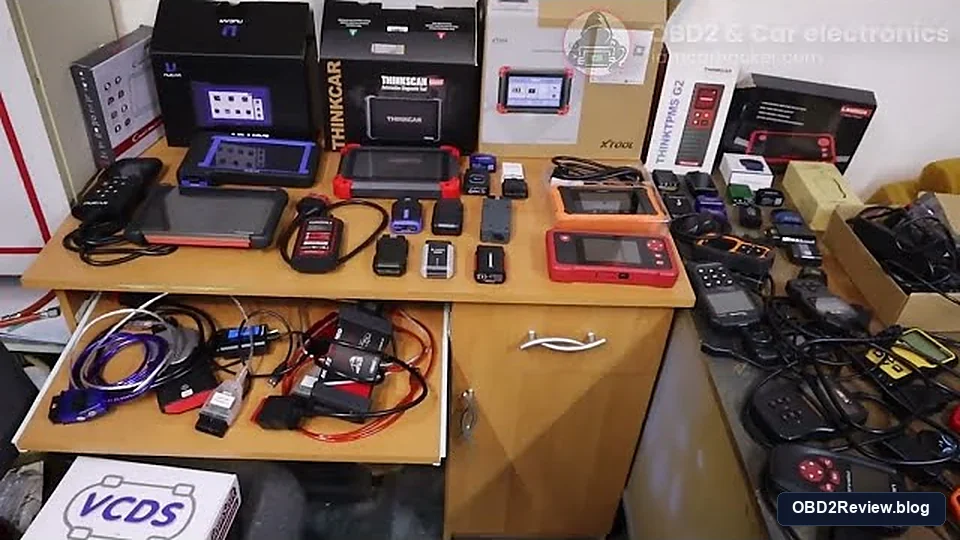
Conversely, testing via our best obd2 scanner options reveals that dedicated diagnostic tools integrate high-speed internal chipsets designed specifically for heavy automotive workloads, preventing operating system lag during deep live graphing sessions.
Technicians must evaluate whether their diagnostic routine requires raw processing muscle or streamlined mobility. Heavy module coding tasks heavily favor dedicated hardware solutions over standard wireless adapters.
Standalone diagnostic scanners utilize dedicated ARM processors and onboard memory arrays to execute complex manufacturer-specific polling loops without relying on external device hardware or struggling with wireless packet loss limitations.
Bluetooth dongles delegate processing tasks directly to your smartphone or tablet's mobile CPU, introducing potential latency bottlenecks during heavy data logging sessions or when streaming multiple live parameter IDs simultaneously across networks.
Bus traffic management requires robust hardware interfaces capable of handling high-speed CAN FD protocols and older legacy lines concurrently, a task managed via dedicated internal chipsets found in professional-grade standalone hardware units.
- External adapters rely entirely on host device Bluetooth stability.
- Standalone units feature integrated processors optimized for automotive protocols.
- Complex bi-directional controls demand dedicated internal computing resources.
Evaluating Processor Latency During Live Data Stream Analysis
Real-time sensor graphing requires minimal input latency to accurately capture intermittent engine misfires. Wireless transmission protocols can occasionally introduce micro-delays during high-speed data logging sessions.
Integrated diagnostic tablets eliminate wireless bottlenecks by processing raw PID data directly on-board. This direct hardware connection ensures flawless synchronization when monitoring multiple high-frequency engine sensors simultaneously.
- Bluetooth interference can disrupt high-speed live data graphing.
- Wired standalone architectures guarantee zero packet loss during logging.
Build Quality, Ruggedness, and Shop Floor Durability
Automotive repair environments present extreme hazards including falling tools, chemical spills, and accidental drops. A standalone diagnostic tablet typically features rubberized impact bumpers and reinforced polycarbonate chassis construction.
Pocket-sized wireless adapters utilize minimalist plastic enclosures designed for compact storage rather than heavy workshop abuse. Stepping on a loose wireless interface usually results in catastrophic internal circuit board damage.
Evaluating physical durability helps prevent costly mid-shift equipment failures in professional repair environments. Choosing the correct enclosure rating directly impacts long-term operational reliability.
Professional standalone scan tools feature reinforced polycarbonate enclosures with shock-absorbing rubber boots designed to survive repeated drops onto concrete floors and exposure to harsh automotive fluids within busy professional repair facilities.
Pocket-sized OBD2 dongles rely on compact plastic housings and exposed pins that can crack under heavy foot traffic or collect grease inside dark toolboxes, compromising their internal circuit boards and wireless antenna connections.
Environmental sealing ratings featured in our best professional obd2 scanner picks ensure that diagnostic tablets resist moisture intrusion and metallic dust buildup, avoiding severe workshop contamination hazards.
- Tablets feature drop-resistant industrial casings built for shop floors.
- Wireless adapters prioritize lightweight compact designs over impact armor.
- Chemical resistance protects internal components from harsh automotive fluids.
Thermal Management and Environmental Protection Standards
Extended diagnostic sessions under hot engine hoods generate substantial heat inside the diagnostic housing. Standalone units utilize efficient internal heat dissipation designs to prevent thermal throttling.
Compact wireless interfaces lack active cooling systems and rely purely on passive ambient airflow. Exposing these tiny units to extreme cabin temperatures can trigger automatic thermal shutdowns.
- Passive cooling limits continuous runtime in hot engine bays.
- Industrial housings protect against dust, oil, and moisture ingress.
Power Efficiency, Battery Management, and Electrical Footprint
Power delivery mechanics differ fundamentally, as budget adapters featured in our best budget obd2 scanner guide draw minimal parasitic current straight from the vehicle diagnostic port safely.
Dedicated diagnostic tablets rely on large internal lithium-ion battery packs requiring routine charging routines. Running out of battery power during a critical module programming sequence can brick vehicle computers.
Understanding power dependencies prevents unexpected downtime while performing extended diagnostic evaluations in the field. Mobile technicians must balance battery conservation with continuous operational readiness.
Diagnostic dongles draw operational current directly from the vehicle's OBD2 diagnostic link connector, creating a continuous parasitic drain that can deplete weak automotive batteries during extended overnight diagnostic troubleshooting or flashing sessions.
Standalone professional scanners incorporate internal rechargeable lithium-ion battery packs that isolate testing operations from fluctuating vehicle voltages and protect against unexpected power interruptions during critical control module programming procedures.
Low-voltage tolerance is critical when dealing with failing charging systems, making the independent power supply of a standalone unit essential for preventing corrupted data packets during sensitive electronic control module communication handshakes.
- Wireless adapters draw negligible power from the vehicle OBD2 port.
- Tablets require dedicated charging docks and internal battery maintenance.
- Low-voltage vehicle batteries can disrupt sensitive diagnostic tool operations.
Parasitic Drain Risks and Vehicle Battery Preservation
Leaving wireless adapters plugged into the diagnostic port overnight can drain weak vehicle batteries. Many modern adapters feature auto-sleep functions to mitigate excessive parasitic electrical draw.
Standalone units remain safely powered down in your tool chest until manually activated. This eliminates any risk of unexpected vehicle battery discharge during long-term storage periods.
- Always verify auto-sleep functions on permanently plugged wireless units.
- Standalone hardware eliminates parasitic battery drain concerns entirely.
Portability, Ergonomics, and Workspace Integration
Physical workspace ergonomics dictate how comfortably a technician interacts with diagnostic equipment all day. Pocket adapters slip effortlessly into a shirt pocket while remaining completely out of the way.
Large touchscreen tablets provide exceptional viewing angles and expansive user interfaces for reading complex codes. However, balancing a heavy tablet inside a cramped footwell requires specialized hanging hooks.
Choosing between pocket-sized convenience and expansive display real estate depends entirely on your daily physical workflow.
Wireless dongles offer unmatched portability by remaining permanently plugged into the under-dash port, allowing technicians to monitor live sensor metrics while road-testing vehicles without managing long cables inside the cabin.
Standalone diagnostic tools require physical cable tethering or secure staging areas near the steering column, yet their integrated touchscreens and physical buttons provide superior tactile feedback and glove-friendly operation in cold environments.
Workspace clutter reduction favors minimalist dongle designs, but professional environments often demand the unified diagnostic platform of a rugged tablet that consolidates wiring diagrams, repair manuals, and multimeters into one enclosure.
- Wireless dongles offer unmatched pocket-friendly storage and transport.
- Diagnostic tablets provide expansive screens for detailed wiring diagrams.
- Ergonomic hand straps reduce fatigue during extended troubleshooting sessions.
Screen Real Estate Versus Compact Field Mobility
Display size directly influences how quickly technicians can interpret multi-line diagnostic trouble codes. Tablets present comprehensive repair information without requiring endless scrolling through tiny mobile phone screens.
Mobile-based dongles leverage your existing smartphone screen technology for crisp, high-resolution graphics. This integration reduces overall equipment weight while utilizing hardware you already carry daily.
- Smartphones deliver retina-quality displays for diagnostic graphs.
- Tablets eliminate the distraction of incoming phone calls during work.
Software Updates, Subscriptions, and Long-Term Value
Vehicle software protocols evolve rapidly to incorporate new security gateways and proprietary manufacturer modules. A standalone scanner often utilizes annual software update subscriptions delivered via high-speed Wi-Fi.
Wireless adapters frequently pair with feature-rich mobile applications available through standard app stores. These apps often provide flexible subscription models or lifetime basic diagnostic tiers for users.
Evaluating software ecosystems ensures your diagnostic investment remains compatible with upcoming vehicle releases.
Standalone tools often utilize Wi-Fi modules to download comprehensive manufacturer software packages directly, ensuring technicians maintain access to the latest bidirectional controls and advanced calibration procedures for modern vehicle platforms.
Dongle-based applications rely heavily on smartphone operating system updates, which can occasionally break Bluetooth pairing protocols or introduce interface compatibility issues following major mobile software upgrades rolled out by platform vendors.
Long-term investment value depends heavily on licensing structures, where standalone hardware packages sometimes include multi-year update subscriptions, while budget-friendly adapters typically charge recurring fees for unlocking advanced diagnostic and reset functions.
- App-based dongles offer flexible subscription tiers and easy updates.
- Professional tablets require dedicated annual update packages for coverage.
- Manufacturer security gateways demand robust and current software revisions.
Navigating Manufacturer Security Gateways and Protocols
Modern vehicles utilize strict security gateways that block unauthorized diagnostic tool commands. Advanced standalone units integrate seamless AutoAuth credentials to bypass these manufacturer restrictions instantly.
App-based wireless tools rely on stable internet connections to authenticate through cloud servers. Poor workshop cellular coverage can occasionally interrupt secure gateway unlocking procedures.
- Seamless gateway authentication accelerates modern vehicle module access.
- Cloud-dependent tools require reliable workshop internet connectivity.
Ideal Workloads and Selecting Your Optimal Diagnostic Tool
Matching your equipment choice to specific daily tasks prevents frustration and optimizes financial investment. Roadside assistance technicians benefit immensely from the lightweight convenience of a wireless adapter.
Master technicians performing heavy module coding and specialized calibrations require the unyielding reliability of standalone systems. Assessing your exact repair scope guarantees maximum tool utility on the floor.
Investing in the correct diagnostic tier ultimately accelerates repair turnaround times across all vehicle makes.
DIY enthusiasts and mobile inspectors benefit most from low-profile OBD2 dongles that pair instantly with mobile diagnostic apps for reading generic fault codes, monitoring fuel trims, and clearing check engine lights efficiently.
Professional technicians working in busy repair bays require the uncompromised processing speed found in our best standalone obd2 scanner choices to diagnose intricate electrical faults and perform module coding tasks.
Matching tool architecture to your specific operational environment prevents diagnostic delays, ensuring your chosen hardware effectively handles the data bandwidth and physical durability demands of your daily automotive maintenance workload.
- Mobile mechanics thrive with ultra-portable wireless diagnostic dongles.
- Specialized repair shops need comprehensive standalone diagnostic tablets.
- Analyze your daily repair volume before purchasing diagnostic hardware.
Balancing Upfront Investment With Long-Term Shop Productivity
Initial hardware costs represent only one factor in total diagnostic equipment ownership expenses. Selecting robust tools that withstand daily shop abuse reduces replacement frequency over time.
Prioritizing operational speed and comprehensive coverage ensures your diagnostic investment pays dividends rapidly. Matching tool capabilities to vehicle complexity secures long-term workshop profitability.
- Durable hardware minimizes unexpected equipment replacement expenses.
- Comprehensive diagnostic coverage accelerates daily vehicle throughput.
Frequently Asked Questions
Can a wireless dongle perform advanced bi-directional active tests?
Advanced obd2 dongle units can execute basic bi-directional tests through specialized apps. However, professional standalone scanners remain superior for complex module coding tasks.
Do standalone scanners require constant internet connectivity to function?
Most standalone scanners operate core diagnostics offline without active internet connections. Wi-Fi connectivity is primarily required for downloading software updates and technical bulletins.
Why do some wireless adapters drain vehicle batteries overnight?
Leaving certain adapters plugged in maintains active CAN bus communication loops. Modern units feature auto-sleep modes to prevent unnecessary vehicle battery discharge.
Which diagnostic option offers lower long-term software update costs?
App-based dongles typically feature flexible subscriptions or free basic updates. Professional standalone tablets usually involve higher annual renewal fees for deep coverage.
Are standalone diagnostic tablets too fragile for rough shop environments?
Professional standalone units utilize ruggedized housings with reinforced rubber bumpers. They are engineered specifically to survive accidental drops on hard concrete floors.