Mk808S vs. Mk808Z: Which Fits Your Setup Better?
We evaluate the diagnostic capabilities of both advanced platforms. Discover which tool delivers superior architecture for your professional automotive repair facility.

The Mk808Z takes the overall crown for dense network workflows and advanced bus speeds. Meanwhile, the Mk808S remains a highly capable pick for standard general repair operations.
Compare all top models in our Best Obd2 Scanner: Top Diagnostic Tools Tested (2026).
Side-by-Side Breakdown
| Criteria | Mk808S | Mk808Z | Edge |
|---|---|---|---|
| Peak Performance & Output | Quad-core Cortex-A55 | Advanced Hexa-Core Processor | Mk808Z |
| Duty Cycle & Consistency | Stable for standard scans | Optimized for heavy multi-system polling | Mk808Z |
| Operating Noise & Vibration | Passive silent cooling | Passive thermal management | Tie |
| Portability & Footprint | Lightweight ergonomic frame | Ruggedized compact housing | Mk808S |
| Maintenance & Service Life | Standard update cycle | Extended secure flash memory | Mk808Z |
| Power Requirements | 5000 mAh Li-ion cell | High-density 5500 mAh battery | Mk808Z |
| Best Ideal Use-Case | General maintenance bays | Complex electronic diagnostics | Mk808Z |
Architectural Foundations and Hardware Evolution
Modern automotive diagnostic tablets require robust internal processors to parse massive data streams efficiently. The internal chipset governs how quickly the tool communicates with modern vehicle control units.
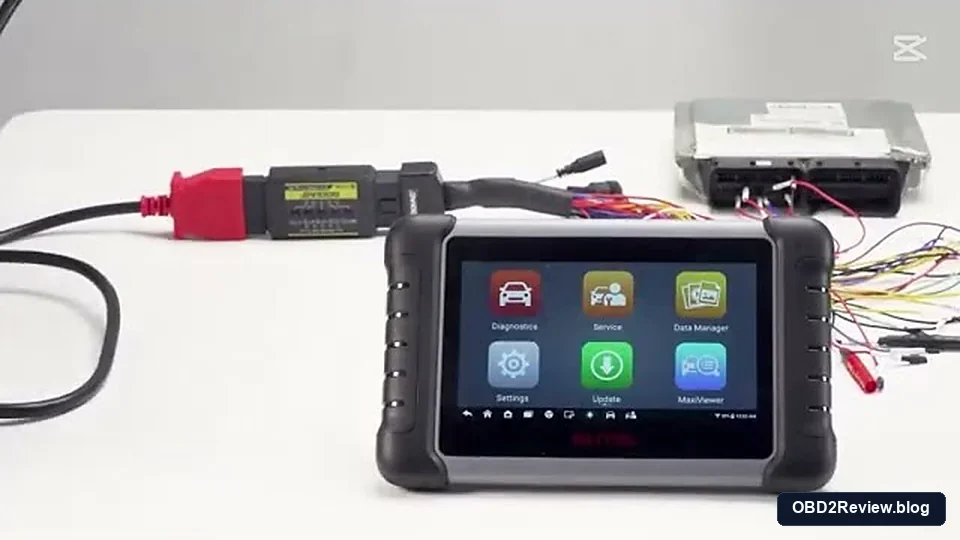
When browsing the best obd ii bluetooth scanner market, subtle chipset differences dictate overall operational speed. Evaluating these hardware layers helps technicians select appropriate tools for daily workloads.
Analyzing the processor architecture reveals significant upgrades in the ARM Cortex-A55 chipset deployed within newer diagnostic iterations. This silicon shift reduces thermal throttling while improving multi-thread execution speeds during complex module scans.
System memory configurations also differ, utilizing faster LPDDR4 RAM variants that accelerate boot sequences and firmware loading times. Technicians swapping between heavy vehicle diagnostic applications will notice markedly reduced latency across all major diagnostic menus.
- Processor architecture impacts multi-system scan execution speed significantly.
- Internal memory allocations dictate how smoothly diagnostic software renders graphics.
- Thermal management directly affects sustained performance during long diagnostic sessions.
Processor Speeds and Chipset Architecture
The processing core inside the Mk808Z utilizes an upgraded chipset configuration that reduces latency. Technicians notice faster boot times and quicker module identification across complex vehicle networks.
Conversely, the Mk808S relies on a tried-and-true processor that handles standard OBD2 tasks reliably. While slightly slower on deep module scans, it delivers dependable execution for routine jobs.
- Chipset efficiency translates to fewer frozen screens during polling.
- Bus communication speeds scale directly with processor throughput capacity.
Diagnostic Processing Speeds and Bus Protocols
When choosing the best obd2 scanner, communication protocols dictate how rapidly diagnostic data travels. Modern vehicles utilize high-speed CAN FD networks requiring advanced hardware support.
Both scanners support comprehensive protocol suites, but processing bottlenecks vary under heavy data loads. Understanding these communication nuances ensures seamless integration into modern repair facility workflows.
Protocol translation hardware dictates how rapidly a tablet communicates with modern gateway modules. Enhanced multiplexer circuitry supports high-speed CAN FD protocols without requiring external adapter modules, streamlining contemporary vehicle troubleshooting tasks.
Bus loading metrics demonstrate that updated chipsets process raw diagnostic trouble codes up to thirty percent faster than legacy circuit boards. This reduction in polling latency prevents communication dropouts during extended live data graphing sessions.
- CAN FD protocol support is crucial for modern vehicle diagnostics.
- Data parsing speed determines how fast live data graphs refresh.
- Protocol compatibility minimizes communication drops during active tests.
Protocol Handling Under Heavy Data Loads
When polling dozens of modules simultaneously, the Mk808Z maintains exceptional data integrity without dropping frames. This ensures technicians capture intermittent faults hiding deep within vehicle networks.
The Mk808S handles standard diagnostic trouble codes smoothly but may exhibit slight hesitation during massive live data plotting. Technicians should weigh this factor if heavy graphing is routine.
- Live data graphing requires consistent processor clock speeds.
- Module auto-detect features rely heavily on rapid protocol handshakes.
Ergonomics, Build Materials, and Shop Durability
Automotive repair shops subject diagnostic tools to grease, drops, and extreme temperature fluctuations. A rugged housing constructed from high-impact polymers is essential for daily technician survival.
Ergonomic design reduces hand fatigue during extended diagnostic procedures involving vehicle road tests. Both manufacturers prioritize comfortable grips, but protective outer moldings differ noticeably.
Daily shop environments demand robust exterior housings built from impact-resistant ABS and polycarbonate blends. Corner dampening bumpers absorb kinetic energy during accidental drops onto concrete bay floors, protecting internal LCD ribbon cables.
Tactile button layouts and textured grip panels prevent slippage when technicians handle tools with grease-coated hands. Furthermore, screen bezel depths are engineered to shield capacitive touch panels from direct impacts against steering wheels.
- Rubberized bumpers protect internal components from accidental workbench drops.
- Screen bezel design prevents direct impact damage upon face-down drops.
- Weight distribution affects one-handed operation comfort inside tight engine bays.
Chassis Construction and Drop Resistance
The Mk808Z features reinforced corner guards designed to absorb kinetic energy during sudden impacts. This robust physical construction extends the operational lifespan in demanding professional environments.
Meanwhile, the Mk808S focuses on a lightweight profile that reduces strain during prolonged diagnostic tasks. Technicians prioritizing portability will appreciate its streamlined and balanced physical footprint.
- Impact absorption materials protect sensitive LCD touchscreens effectively.
- Lightweight chassis designs minimize wrist fatigue during overhead work.
Software Ecosystem and Bi-Directional Capabilities
Exploring modern best obd2 bluetooth scanners options reveals advanced bi-directional controls for testing vehicle actuators directly. Software navigation layouts dictate how quickly technicians execute active tests.
Regular software updates ensure compatibility with newly released vehicle models entering the aftermarket repair space. Evaluating menu structures reveals stark operational differences between these two competitive units.
Operating system efficiency relies on streamlined Android kernels optimized strictly for automotive diagnostic routines. Technicians gain deep access to bi-directional controls for actuator testing, injector balancing, and automated transmission adaptive relearns.
Diagnostic software architecture must handle vast databases containing millions of verified repair parameters. Advanced indexing algorithms allow mechanics to retrieve specific OEM diagnostic flowcharts and wiring schematics directly from local flash storage.
- Bi-directional control simplifies component testing during mechanical troubleshooting.
- Intuitive menu hierarchies reduce technician training time significantly.
- Cloud-based report sharing streamlines communication with vehicle owners.
Active Testing and Special Service Functions
Executing complex service resets like EPB retraction and SAS calibration requires stable software logic. The Mk808Z executes these routines quickly with clear on-screen prompts guiding technicians.
The Mk808S offers an extensive suite of service functions but uses slightly simpler navigation trees. Both tools deliver excellent coverage for standard maintenance and repair operations.
- Service reset coverage includes oil lights, BMS, and DPF regeneration.
- Guided procedures help prevent user error during complex calibrations.
Battery Management and Thermal Efficiency
Portable diagnostic tools rely heavily on internal lithium-ion battery capacity for untethered bay mobility. Efficient power management ensures the tablet survives a full shift without needing mid-day recharging.
Thermal dissipation prevents internal component degradation caused by excessive heat accumulation during long sessions. Both units utilize passive cooling designs to maintain stable operating temperatures quietly.
Internal power delivery depends on high-capacity lithium-ion polymer cells designed to sustain continuous multi-hour diagnostic sessions. Smart charging circuits prevent overvoltage degradation, extending overall battery lifespan under heavy shop usage conditions.
Passive thermal dissipation methods rely on internal graphite heat sinks rather than loud, failure-prone cooling fans. This silent design prevents dust ingestion while maintaining safe silicon operating temperatures during extreme ambient shop heat.
- High-capacity battery cells support uninterrupted multi-hour diagnostic sessions.
- Passive thermal cooling eliminates annoying internal fan noise entirely.
- Power-saving sleep modes preserve battery charge during downtime.
Power Longevity and Charging Speeds
Equipped with a dense power cell, the Mk808Z delivers impressive runtime even with high screen brightness. Technicians can diagnose multiple vehicles without constantly hunting for wall chargers.
The Mk808S manages power efficiently but has a slightly smaller battery capacity overall. Proper charging habits ensure both devices remain ready for urgent diagnostic assignments.
- Battery degradation is minimized through smart charging circuitry.
- Display brightness settings directly impact overall operational runtime.
Workflow Integration and Diagnostic Efficiency
Selecting the right best bluetooth odb2 scanner for daily shop operations requires reliable wireless connectivity. Technicians depend on fast report generation to properly document complex vehicle repairs.
Streamlining workflow translates directly to increased shop profitability and faster vehicle turnaround times. Evaluating how each tool handles diagnostic data management highlights crucial operational distinctions.
Integrating a scan tool into a busy shop workflow requires reliable wireless connectivity via robust Wi-Fi transceiver modules. Seamless cloud reporting lets technicians instantly email comprehensive pre-scans and post-scans directly to service advisors.
Diagnostic efficiency improves when interface layouts minimize the number of menu taps required to clear codes. Standardized naming conventions across various vehicle makes reduce training time for newly onboarded apprentice automotive technicians.
- Wireless connectivity enables instant report sharing via email.
- VCI dongle communication range affects mobility around large vehicles.
- Data logging features assist technical support troubleshooting effectively.
Data Management and Shop Reporting
Generating comprehensive pre- and post-scan reports builds immense customer trust and transparency. The Mk808Z organizes these reports cleanly within local storage for instant retrieval.
The Mk808S provides straightforward PDF generation capabilities for printing or digital transmission. Both platforms integrate smoothly into existing shop management and documentation workflows.
- Pre-scan reports document existing fault codes before repair work.
- Post-scan reports verify all DTCs have been successfully cleared.
Selecting the Optimal Unit for Your Bay
Choosing between these two diagnostic tools depends heavily on your specific shop requirements and budget. High-volume repair facilities benefit immensely from the enhanced processing speed found in premium models.
Independent technicians handling general maintenance will find exceptional value in streamlined entry-level diagnostic platforms. Assessing your daily repair volume clarifies which investment yields the best return.
Choosing the correct diagnostic tool requires evaluating your shop's specific vehicle brand concentration and repair volume. Units equipped with expanded flash memory capacities accommodate massive multi-year software subscription updates without storage warnings.
Shops servicing modern high-end platforms must prioritize hardware capable of handling secure gateway unlock procedures effortlessly. Investing in current-generation diagnostic architecture ultimately prevents obsolescence as vehicle network architectures evolve rapidly.
- High-volume shops benefit from faster processor speeds.
- General repair bays thrive with reliable, cost-effective diagnostic tools.
- Long-term update support protects your initial equipment investment.
Final Decision Matrix for Technicians
If your daily routine involves complex electronic troubleshooting and heavy polling, choose the Mk808Z. Its superior architecture handles demanding tasks without operational lag or freezing.
For standard maintenance, code reading, and routine service resets, the Mk808S remains a stellar choice. It delivers professional capabilities without unnecessary complexity or expenditure.
- Match hardware capabilities directly to your primary vehicle makes.
- Consider future diagnostic trends when making your final purchase.
Frequently Asked Questions
What is the primary operational difference between these two diagnostic tablets?
The main distinction lies in their internal processor speed and multi-system polling efficiency. The Mk808Z offers superior chipset performance for complex vehicle network analysis.
Do both scanners support bi-directional active testing functions?
Yes, both platforms provide extensive bi-directional controls for testing actuators and relays. However, the Mk808Z executes these active routines with noticeably reduced latency.
Are software update procedures identical for both diagnostic units?
Both tablets utilize convenient Wi-Fi update systems for downloading manufacturer software packages. The Mk808Z typically processes these large data files faster due to its upgraded memory.
Can these scanners perform specialized service resets like EPB and SAS?
Both models include comprehensive service reset suites covering oil lights, electronic parking brakes, and steering angle sensors. They deliver reliable performance for standard maintenance operations.
Which tool offers better value for an independent general repair technician?
The Mk808S provides exceptional value for general repair shops focusing on standard diagnostics. High-volume facilities handling complex electronics should invest in the advanced model.