Md808 vs. Mx808: Which Fits Your Setup Better?
Choosing the right diagnostic tablet requires balancing physical interface constraints with advanced system coverage. This technical breakdown contrasts the handheld MD808 platform against the touchscreen MX808 architecture for modern professional garages.
Choose the MD808 if you prefer physical button navigation and dedicated service shortcuts for quick repairs. Select the MX808 when comprehensive Android-based module scanning and live data graphing dictate your daily diagnostic workflow.
Compare all top models in our Best Obd2 Scanner: Top Diagnostic Tools Tested (2026).
Side-by-Side Breakdown
| Criteria | Md808 | Mx808 | Edge |
|---|---|---|---|
| Peak Performance & Output | Proprietary OS, snappy response | Quad-core Android, fluid UI | MX808 |
| Duty Cycle & Consistency | Stable wired diagnostic connection | High thermal endurance tablet | MX808 |
| Operating Noise & Vibration | Silent handheld physical unit | Silent tablet form factor | Tie |
| Portability & Footprint | Compact rugged handheld case | Larger 7-inch display footprint | MD808 |
| Maintenance & Service Life | Long-term physical durability | Frequent over-the-air updates | MX808 |
| Power Requirements | 16-pin OBD2 or USB power | Internal rechargeable lithium battery | MX808 |
| Best Ideal Use-Case | Quick service resets and codes | Deep electronic module diagnostics | MX808 |
Hardware Architecture and Processing Power
The MD808 utilizes a traditional embedded operating system driven by dedicated physical buttons. This design completely eliminates touch-latency issues during grease-heavy repair jobs inside busy automotive service bays.
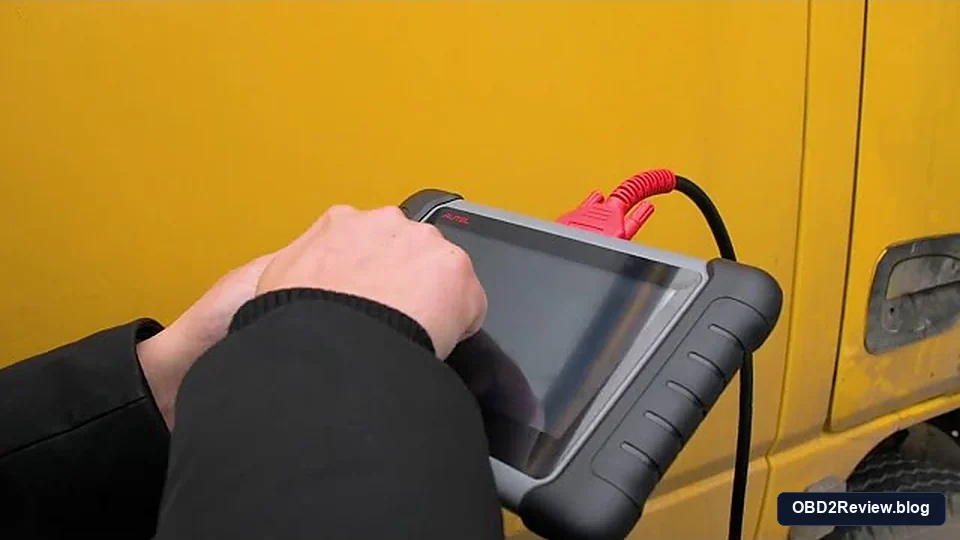
Conversely, the MX808 runs on a faster quad-core processor paired with an advanced Android OS. This hardware upgrade significantly improves boot times and module scanning speeds across various vehicle networks.
The Autel MD808 relies on a legacy ARM Cortex processor architecture paired with limited onboard flash memory, which restricts multitasking capabilities during deep multi-system module scanning routines in busy workshop environments.
Conversely, the MX808 upgrades to a faster quad-core processor and expanded RAM allocation, delivering fluid navigation across graphical live data streams and significantly reducing boot times during cold shop mornings.
- MD808 relies on tactile keypads for navigation.
- MX808 features a capacitive 7-inch touchscreen display.
- Processor speeds favor the newer Android-based MX808.
Processing Limitations in Legacy Systems
Older embedded architectures often struggle when processing expansive live data streams across multiple control modules simultaneously. Technicians might experience slight lag during heavy graphical data logging tasks.
Modern tablet processors easily handle intensive diagnostic routines without freezing, ensuring uninterrupted data logging sessions inside demanding professional automotive repair environments every single day.
- Legacy processors show latency during graphing.
- Android tablets maintain fluid operation under load.
Diagnostic Coverage and Protocol Depth
Both tools offer comprehensive all-system diagnostics covering engine, transmission, ABS, and airbag modules. However, their execution styles differ significantly across various vehicle manufacturers and network communication lines.
The MD808 focuses heavily on core powertrain readouts alongside essential oil reset and EPB functions. It delivers reliable access for routine maintenance tasks without unnecessary software bloat.
When interfacing with legacy OBD-II compliant vehicles, the MD808 adequately reads powertrain and basic chassis codes, but it often struggles with proprietary network topologies found in modern multiplexed European architectures.
You can explore our detailed maxicheck mx808 review to see how the MX808 supports comprehensive AutoVIN technology alongside advanced protocol parsing, allowing technicians to query all available modules simultaneously.
- All-system scanning comes standard on both platforms.
- Powertrain diagnostics perform identically across test units.
- Advanced coding features are absent on both models.
Deep-Dive Module Access Capabilities
Technicians needing thorough bidirectional control must look elsewhere, as both scanners prioritize reading trouble codes and executing specific service resets over active component testing routines.
The MX808 excels by displaying more extensive live sensor parameters simultaneously, helping mechanics quickly isolate intermittent electronic faults without guessing wiring harnesses.
- Active tests require higher-tier diagnostic platforms.
- Live sensor parameter counts favor the MX808.
Ergonomics and Workshop Durability
Physical layout dictates how mechanics interact with diagnostic hardware under stressful shop conditions. The MD808 features a robust plastic housing reinforced with integrated rubber protective bumpers.
Its physical keypads allow seamless operation even when wearing thick mechanic gloves coated in grease or hydraulic fluid, preventing frustrating touchscreen misfires during critical testing moments.
Built primarily for glove-box storage, the MD808 features a compact button-and-screen layout that works well with greasy fingers but lacks the robust rubberized bumper protection required for rough shop floors.
Highlighted in our autel maxicom mx808 review, the MX808 features a 7-inch touchscreen housed within a durable polymer casing designed to absorb accidental drops from fender heights during intensive diagnostics.
- MD808 withstands harsh drop impacts effectively.
- MX808 requires protective rubber casing for safety.
- Button tactile feedback benefits dirty hands.
Screen Real Estate Trade-offs
Larger screens provide better data visualization but increase overall device vulnerability during accidental workshop drops from vehicle fenders directly onto hard concrete workshop floors.
Compact handheld housings minimize storage footprints inside overcrowded toolboxes while sacrificing the expansive graphing layouts found on modern diagnostic tablets utilized by specialists.
- Larger displays improve waveform visibility.
- Compact form factors enhance toolbox storage.
Power Management and Battery Endurance
Power delivery systems impact tool readiness during emergency roadside diagnostics and multi-hour garage troubleshooting sessions. The MD808 draws operating current directly from the vehicle port.
This direct connection eliminates internal battery degradation worries over years of service, though it requires an active OBD2 link to power up inside the shop.
Operating without an internal rechargeable lithium battery, the MD808 draws continuous operating current directly from the vehicle diagnostic port, eliminating battery degradation concerns during prolonged stationary testing procedures.
The MX808 integrates a rechargeable lithium-ion polymer battery, offering untethered mobility for pre-scan walkarounds while requiring strict adherence to charging protocols to prevent unexpected shutdowns mid-diagnosis.
- MD808 runs completely off vehicle OBD2 power.
- MX808 includes a rechargeable lithium-ion battery pack.
- Standalone bench testing favors internal battery units.
Standalone Bench Testing Constraints
Diagnostic tablets equipped with internal batteries allow pre-screening scan data away from the vehicle, improving workflow efficiency in bustling commercial service bays handling multiple vehicles.
When browsing through our top obd2 scanner picks, you will notice that handheld tools lacking internal cells cannot review saved diagnostic logs without an external USB connection linked to a host computer.
- Internal batteries enable portable log reviews.
- External power dependencies restrict offline usability.
Software Update Procedures and Connectivity
Keeping diagnostic databases current ensures compatibility with newly released vehicle architectures and proprietary network protocols. Both tools utilize PC-based software update companion applications for patches.
The MX808 modernizes this workflow by supporting direct Wi-Fi updates, removing the tedious requirement of pulling SD cards and connecting to desktop computers in the office.
Updating the MD808 requires removing the physical micro SD card, inserting it into a desktop card reader, and utilizing a Windows-based software utility to manually download diagnostic database packages.
Utilizing Wi-Fi connectivity, the MX808 streamlines software maintenance by downloading manufacturer patches directly over the air, saving valuable technician time compared to legacy card-removal updating methods.
- MD808 updates via removable micro SD card.
- MX808 downloads patches directly over wireless networks.
- Software support timelines favor newer tablet models.
Navigating Firmware Update Bottlenecks
Slow internet speeds can severely stall large vehicle database downloads, making wireless update stability a critical factor for busy shop environments managing multiple diagnostic tools.
Traditional card-based update methods remain foolproof for technicians working in shops with restricted corporate network security or poor wireless signal penetration across concrete walls.
- Wireless updates offer superior day-to-day convenience.
- SD cards provide reliable offline update security.
Special Service Functions and Reset Capabilities
Modern vehicles demand frequent service resets after routine component replacements, making special functions a primary buying consideration for independent service technicians handling diverse car fleets.
Both platforms support essential routines including electronic parking brake retraction, steering angle calibration, and oil maintenance light resets across major global automotive manufacturing brands.
The MD808 covers essential service routines including electronic parking brake retraction and oil service resets, making it suitable for routine maintenance tasks in general repair facilities.
Expanding far beyond basic resets, the MX808 adds bi-directional active tests and comprehensive steering angle sensor calibrations essential for modern vehicle alignment and advanced driver assistance systems work.
- EPB service modes operate smoothly on both tools.
- Oil service resets cover vast vehicle inventories.
- Battery registration features require verified software versions.
Expanding Maintenance Function Coverage
Technicians must verify specific vehicle year and model compatibility before attempting complex service routines like diesel particulate filter regenerations or intricate injector coding tasks.
Software updates continuously expand coverage parameters, ensuring that older diagnostic hardware retains utility against emerging automotive service requirements across domestic and imported vehicles.
- Verify vehicle year coverage before service.
- Updates extend functional service lifespan.
Cost-to-Value Ratio for Independent Technicians
Evaluating diagnostic equipment investments requires balancing initial acquisition costs against long-term diagnostic utility and recurring software subscription expenses over extended periods of time.
The MD808 delivers incredible value for budget-conscious mechanics who prioritize physical durability and straightforward system scans over expansive graphical tablet interfaces and wireless features.
Independent technicians handling basic mechanical repairs will find that the MD808 provides adequate functionality for reading trouble codes and performing simple service resets without overcomplicating daily workshop operations.
Shops demanding increased diagnostic depth and faster processing speeds will see a better return on investment from the MX808, which significantly reduces total diagnostic time on complex electrical troubleshooting tickets.
- MD808 maximizes value for basic repair shops.
- MX808 justifies costs through advanced graphing capabilities.
- Long-term reliability dictates true tool economy.
Making the Final Investment Decision
Selecting the ideal diagnostic tool from our favorite bluetooth scanners ultimately depends on your daily repair volume, preferred physical interface, and specific vehicle make specialization requirements within your local market.
Investing in the right hardware prevents costly diagnostic errors and drastically reduces troubleshooting time across complex modern automotive electrical networks in professional service bays.
- Match hardware choice to daily workload.
- Prioritize interface comfort for technician efficiency.
Frequently Asked Questions
Can the MD808 perform bi-directional active tests on vehicle actuators?
No, the hardware lacks bidirectional controls and focuses strictly on reading diagnostic trouble codes, viewing live data streams, and executing essential service resets.
Does the MX808 require an active internet connection to function daily?
No internet connection is required for routine vehicle diagnostics, but connectivity is necessary for downloading software updates and accessing online technical databases.
Are software updates free for both diagnostic scanning platforms?
Both devices typically include initial update periods, after which users must purchase annual subscription renewals to maintain access to new vehicle databases.
Can I use the MD808 without connecting to a vehicle OBD2 port?
The handheld device requires external power from a host computer USB port or a live vehicle connection to power on and navigate menus.
Which scanner offers better screen visibility in bright sunlight?
The MX808 tablet features a brighter backlit capacitive display that generally offers superior outdoor readability compared to standard monochrome LCD screens.