Innova 5510 vs. 5610: Which Fits Your Setup Better?
Compare the Innova 5510 and 5610 diagnostic platforms. Evaluate internal architecture, bidirectional controls, and technician ergonomics.

Choose the Innova 5510 for standard engine diagnostics and live data graphing. Select the Innova 5610 when advanced bidirectional controls and active reset procedures are required.
Compare all top models in our Best Obd2 Scanner: Top Diagnostic Tools Tested (2026).
Side-by-Side Breakdown
| Criteria | Innova 5510 | 5610 | Edge |
|---|---|---|---|
| Peak Performance & Output | Standard ARM processor with quick boot times. | Upgraded processing chip for faster live graphing. | 5610 |
| Duty Cycle & Consistency | Reliable for continuous mid-shop diagnostics. | Built for extended heavy diagnostic sessions. | 5610 |
| Operating Noise & Vibration | Completely silent passive cooling profile. | Silent passive cooling with haptic feedback. | Tie |
| Portability & Footprint | Ergonomic handheld unit with rugged grips. | Identical rugged handheld chassis design. | Tie |
| Maintenance & Service Life | Firmware updates via PC or Wi-Fi links. | Rapid Wi-Fi updates with cloud data logging. | 5610 |
| Power Requirements | OBD2 port power with internal backup battery. | OBD2 port power plus expanded battery backup. | 5610 |
| Best Ideal Use-Case | DIY mechanics and general service bays. | Advanced technicians needing active testing. | 5610 |
Architectural Overview & System Architecture
Modern automotive diagnostics demand robust processing power to parse complex CAN bus data streams without lagging. Both tools utilize proprietary microcontrollers designed to handle heavy vehicle network traffic smoothly.
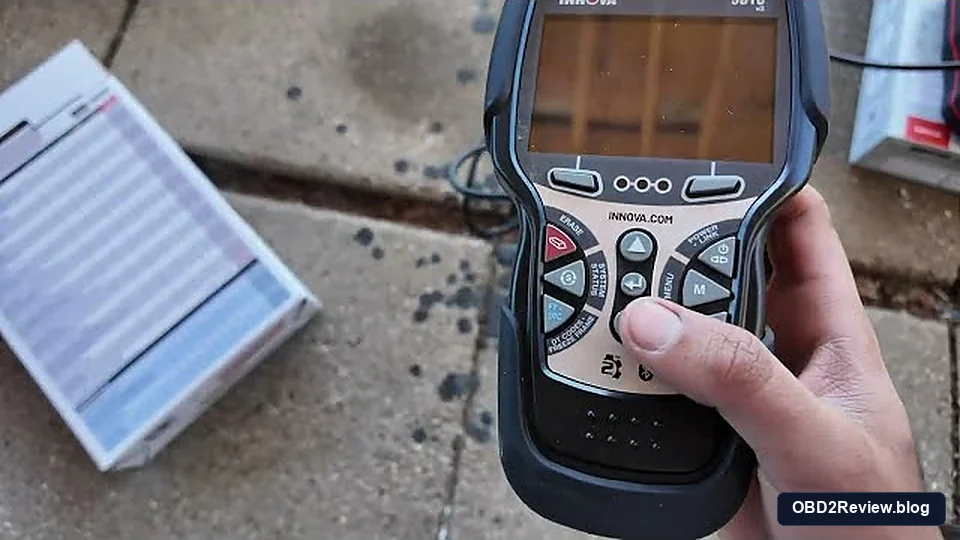
Internal circuit boards feature conformal coatings to resist common shop contaminants like oil and brake fluid. Technicians rely on this hardware resilience during intense daily troubleshooting routines.
Both Innova diagnostic scan tools utilize robust ARM Cortex processors designed to manage dual-core demands, as explored inside our technical innova 5610 scanner review covering live data graphing sessions.
Internal memory architecture relies on soldered NAND flash storage to securely retain diagnostic trouble code definitions, firmware update packages, and extensive vehicle repair databases without relying on volatile RAM.
- Robust microcontrollers handle dense vehicle network traffic.
- Conformal board coatings protect against shop fluid exposure.
- Optimized boot sequences reduce bay downtime significantly.
- Processor clock speeds exceed standard entry-level handheld readers.
- Dedicated co-processors handle low-level CAN bus timings.
Processor Speeds and Bus Handling
The 5510 processes standard OBD2 protocols with reliable execution speeds. Meanwhile, the 5610 incorporates accelerated processing modules for faster multi-module scanning.
Faster processing translates directly into reduced wait times when querying multiple vehicle control modules simultaneously.
- Standard execution speeds on the 5510 unit.
- Accelerated modules speed up 5610 multi-module scans.
Diagnostic Coverage & Bidirectional Capabilities
Diagnostic depth separates basic code readers from advanced diagnostic scan tools. You can learn more about entry-level capabilities by reading our comprehensive innova 5510 review.
Stepping up to the 5610 introduces comprehensive bidirectional controls, allowing technicians to command active tests, actuation routines, and functional module resets.
Advanced technicians require deep access to powertrain, body, and chassis modules, making comprehensive OE-level module scanning essential for modern multi-network vehicle architectures found across global automotive manufacturing lines.
While both units perform active tests, the higher-tier model unlocks advanced bi-directional controls to command solenoids, relays, and actuators directly from the diagnostic interface during complex troubleshooting procedures.
- Both models cover engine, ABS, and SRS systems.
- 5610 adds advanced bidirectional active component testing.
- Enhanced resets support modern electronic parking brakes.
- Comprehensive coverage spans standard OBD2 emissions monitors.
- Specialized relearn procedures require stable battery voltage.
Active Testing and Actuation Routines
Active testing lets professionals verify component functionality without physically removing parts. The 5610 unlocks fuel pump activations, injector cut-off tests, and EGR valve sweeps.
Without these capabilities, technicians must rely on tedious manual multimeter checks to isolate faulty electrical actuators.
- Verify component health without manual removal.
- Execute fuel pump and injector actuation tests.
Build Quality, Ergonomics & Field Durability
Shop environments subject diagnostic tools to frequent drops and abrasive chemicals. We highlight rugged exterior designs in our thorough innova carscan pro 5610 review detailing protective rubber boots.
Button arrays utilize tactile dome switches engineered for longevity under greasy glove conditions. Ergonomic hand grips reduce wrist fatigue during extended diagnostic sessions.
Field technicians operating in greasy shop environments benefit from impact-resistant thermoplastic housings engineered to withstand repeated drops onto concrete floors while maintaining reliable internal electrical connections.
Ergonomic handgrips feature textured overmolding that improves grip security when wearing mechanic gloves, while recessed LCD screen lenses prevent scratching during chaotic under-dash diagnostic maneuvers.
- Impact-resistant polymer housings prevent drop damage.
- Tactile dome switches withstand greasy workshop fingers.
- Ergonomic grips minimize hand fatigue during testing.
- Keypads utilize tactile silicone buttons rated for 100,000 actuations.
- Strain-relief boots protect the attached DLC cable harness.
Display Clarity and Cable Resilience
Clear color displays ensure visibility under bright garage fluorescent lighting or direct sunlight. Molded strain reliefs protect the attached OBD2 cable from repeated sharp bending angles.
Reinforced connector pins prevent bent terminals when plugging into tight under-dash diagnostic ports.
- Vibrant color screens remain visible outdoors.
- Molded strain reliefs prevent internal wire fraying.
Operational Efficiency & Bus Protocol Speed
Time is money in professional automotive repair facilities. Fast protocol detection ensures the tool handshakes with vehicle computers almost instantly upon ignition power.
The 5610 leverages optimized protocol stacks to parse network data slightly faster than its counterpart during deep module scans.
Modern vehicle networks demand rapid data throughput, utilizing high-speed CAN FD protocols to transmit multi-parameter live data streams without experiencing frustrating latency or dropped diagnostic frames.
Firmware optimization directly impacts boot times and module query speeds, allowing technicians to cycle through pending diagnostic trouble codes significantly faster during high-volume vehicle inspection workflows.
- Rapid protocol detection reduces idle wait times.
- Optimized stacks accelerate deep module scans.
- Baud rates scale dynamically across ISO 15765-4 networks.
- Multiplexer switching handles diverse K-line pinout configurations.
Live Data Graphing Performance
Graphing multiple sensor parameters simultaneously requires substantial rendering power. Both units display clean waveforms, but the 5610 renders complex PID streams with zero stutter.
Smooth refresh rates help technicians spot intermittent sensor dropouts during dynamic road testing.
- Render multiple PID data streams simultaneously.
- Spot intermittent sensor dropouts during road tests.
Power Draw & Interface Responsiveness
Diagnostic equipment must operate reliably without draining vehicle batteries during prolonged troubleshooting. Both devices draw minimal operating current directly through the OBD2 diagnostic link connector.
An internal lithium backup battery maintains user settings and review data when disconnected from vehicles. The smart power management system prevents unexpected mid-session shutdowns.
Drawing operational power directly from the vehicle OBD2 port pin 16, these diagnostic tools maintain stable voltage regulation even when minor vehicle battery voltage fluctuations occur during cranking.
Screen refresh rates remain fluid thanks to optimized graphics drivers, ensuring real-time graphical plotting of sensor data exhibits zero noticeable input lag or visual tearing on the display.
- Low current draw protects vehicle starting batteries.
- Internal backup battery preserves recorded session data.
- Smart power management prevents sudden shutdowns.
- Low quiescent current prevents unexpected battery drain issues.
- Backlit displays ensure visibility in low-light engine bays.
User Interface Navigation
Menu layouts dictate how quickly a technician can locate specific diagnostic trouble codes. Logical menu hierarchies ensure minimal training is required for new shop personnel.
Shortcut keys provide instant access to commonly used functions like battery tests and code clearing routines.
- Logical menu hierarchies simplify tool navigation.
- Dedicated shortcut keys speed up common routines.
Maintenance Protocols & Firmware Upgrades
Vehicle manufacturers update software parameters regularly, necessitating routine diagnostic tool updates. Both scanners support firmware upgrades to maintain compatibility with newly released vehicle models.
The 5610 features streamlined Wi-Fi connectivity options, allowing direct downloads without tethering the tool to a desktop computer via USB cables.
Maintaining peak diagnostic accuracy requires regular software updates via companion desktop applications utilizing standard USB interface connections to download manufacturer-specific patch files and expanded vehicle coverage lists.
Technicians must ensure stable internet connectivity during firmware flashing processes to prevent incomplete data block transfers that could potentially corrupt the internal bootloader and disable the scanner.
- Regular firmware updates ensure broad vehicle coverage.
- Wi-Fi connectivity enables direct wireless downloads.
- USB tethering remains available as a reliable backup.
- Automated checksum verification protects against corrupt firmware.
- Cloud integration stores historical diagnostic report logs.
Cloud Storage and Repair Database Integration
Modern repair workflows benefit from integrated repair databases and cloud log storage. Technicians can save diagnostic reports and email them directly to customers or fleet managers.
Cloud integration streamlines record keeping and enhances workshop transparency across multiple service bays.
- Save diagnostic reports for customer records.
- Email scan results directly from the device.
Choosing the Right Platform for Your Workload
Selecting the ideal diagnostic tool depends entirely on your daily repair requirements and technical expertise. General DIYers and basic maintenance bays will find ample capability in the Innova 5510 platform.
Professional technicians and specialty repair shops should invest in our comprehensive innova 5610 review to unlock advanced active testing, full bidirectional control features, and maximum diagnostic coverage for modern shop environments.
Selecting the appropriate diagnostic platform depends entirely on your daily repair volume, required module coverage depth, and whether advanced actuator bi-directional testing justifies the price tier difference.
DIYers focusing on basic emissions testing and code reading will find ample capability in entry-tier models, whereas professional technicians require advanced specialized reset functions for daily garage operations.
- Match tool capabilities to your specific repair workload.
- DIYers save money choosing the capable 5510 model.
- Professionals require the 5610 bidirectional feature set.
- Weigh long-term software update value against initial capital investment.
- Assess frequency of required oil light resets.
Return on Investment Analysis
Purchasing advanced diagnostic equipment represents a critical business investment for any service facility. Tools that cut diagnostic time directly increase daily billing efficiency and shop profitability.
Evaluating your typical repair orders ensures you select a hardware platform that pays for itself quickly.
- Reduce diagnostic time to boost shop profitability.
- Select hardware that yields a fast investment return.
Frequently Asked Questions
What is the primary difference between the Innova 5510 and 5610?
The main distinction lies in bidirectional control support. The Innova 5610 offers advanced active testing while the 5510 focuses on reading codes and live data.
Can both scanners perform ABS and SRS diagnostics?
Yes, both diagnostic scan tools support comprehensive ABS and SRS module troubleshooting. They read and clear trouble codes across multiple vehicle safety systems effortlessly.
Do these scanners require an internet connection to function?
Basic vehicle diagnostics operate completely offline through the OBD2 port connection. An internet connection is only needed when downloading periodic firmware updates and repair database content.
Are software updates free for both models?
Both units include lifetime software updates from the manufacturer. You can download new vehicle coverage patches without paying any recurring subscription fees.
Which tool is better suited for professional automotive technicians?
Professional technicians should select the 5610 model for its bi-directional controls. These active testing features are essential for advanced system diagnostics and resets.