Generic Obd2 vs. Enhanced Obd2: Which Diagnostic Setup Fits Your Workshop Better?
Standard generic scanners offer baseline emissions data, while enhanced diagnostic tools deliver deep manufacturer-specific module access for advanced automotive troubleshooting tasks.
Choose generic tools for basic emissions readiness, but enhanced diagnostic systems win for comprehensive module coverage and active bi-directional testing.
Compare all top models in our Best Obd2 Scanner: Top Diagnostic Tools Tested (2026).
Side-by-Side Breakdown
| Criteria | Generic Obd2 | Enhanced Obd2 | Edge |
|---|---|---|---|
| Peak Performance & Output | Basic parameter IDs | Full bus data stream | Enhanced Obd2 |
| Duty Cycle & Consistency | High stability | High stability under load | Enhanced Obd2 |
| Operating Noise & Vibration | Silent handheld device | Silent handheld device | Tie |
| Portability & Footprint | Compact pocket size | Rugged tablet format | Generic Obd2 |
| Maintenance & Service Life | Long passive lifespan | Regular software updates required | Generic Obd2 |
| Power Requirements | Low port parasitic draw | Higher active processor draw | Generic Obd2 |
| Best Ideal Use-Case | Quick emissions checks | Deep multi-system repair | Enhanced Obd2 |
Fundamental Protocol Architecture and Standards Compliance
Generic diagnostic tools rely strictly on mandatory federal emissions standards established by regulatory agencies. Every compliant vehicle must respond to these standardized parameter identification queries without exception.
Engine control units process these basic requests using universal PID formatting. This design ensures that any low-cost adapter can read fundamental engine codes universally.
Standardized protocols limit data depth to powertrain emissions. Technicians miss out on body, chassis, and network communication codes when relying solely on these basic rules.
Models found in our best budget obd2 scanner guide strictly mandate SAE J1979 emission parameters across standard networks. Enhanced protocols bypass these federal mandates to query proprietary registers.
Vehicle architectures utilize multi-master CAN bus topology operating at standard 500 kbps rates for powertrain modules. Enhanced scanners parse non-standard sub-addresses that generic tools completely ignore during scanning routines.
Compliance frameworks like ISO 15031 define emissions data links, whereas manufacturer-specific implementations leverage ISO 14230 or KWP2000 extensions for deep module communication across distinct physical data lines.
- Mandatory federal emissions compliance across all brands
- Universal PID formatting for basic sensor monitoring
- Strict limitations regarding non-powertrain module access
Standardized ISO and SAE Protocol Layers
Communication layers follow rigid ISO and SAE formatting rules. This standardization guarantees basic interoperability across diverse global automotive manufacturing lines.
Engineers utilize these baseline parameters to confirm basic readiness monitor statuses during routine state emissions inspections.
- Rigid ISO and SAE formatting rules
- Guaranteed baseline interoperability globally
Powertrain Coverage and Diagnostic Trouble Code Depth
Generic scanners retrieve basic P-codes related exclusively to emissions and powertrain performance. They fail to interpret specific manufacturer sub-codes required for deep troubleshooting.
Enhanced diagnostic equipment accesses proprietary manufacturer fault codes across all onboard computer networks. This capability reveals hidden faults within ABS, SRS, and transmission modules.
Advanced technicians require this granular visibility to pinpoint intermittent sensor failures and internal module faults accurately during complex diagnostic procedures.
When shopping for a reliable tool, comparing options from the best obd2 scanner choices helps technicians identify standard powertrain fault codes mandated by federal regulations without missing vital vehicle module communications.
Enhanced scanners access manufacturer-specific U-codes and B-codes alongside extended powertrain DTCs that track turbocharger boost deviations, variable valve timing anomalies, and high-pressure fuel rail pressures.
Technicians diagnosing intermittent misfires rely heavily on enhanced freeze-frame data capturing camshaft phase angles and combustion chamber pressures rather than basic engine load and coolant temperature metrics.
- Retrieval of basic emissions P-codes
- Access to proprietary manufacturer fault codes
- Granular visibility into intermittent sensor failures
Unlocking Manufacturer-Specific DTC Libraries
Proprietary databases expand diagnostic possibilities by translating complex hexadecimal responses into actionable repair steps. Generic tools simply display unknown code definitions.
Comprehensive code libraries drastically reduce diagnostic guesswork in professional repair environments.
- Proprietary databases translate hexadecimal responses
- Comprehensive libraries reduce diagnostic guesswork
Bidirectional Controls and Active System Testing Capabilities
Standard generic scanners function strictly as passive listening devices. They cannot command actuators, override sensors, or initiate manual system self-tests.
Enhanced systems introduce powerful bidirectional control features enabling direct component actuation. Technicians can cycle fuel injectors, bleed ABS brakes, and test cooling fans remotely.
Active testing transforms standard diagnostics from a guessing game into a precise, verifiable verification process for modern complex vehicle architectures.
Generic OBD2 systems remain strictly listen-only interfaces incapable of transmitting actuator override commands to vehicle control modules due to strict federal emissions safety standardization rules.
Enhanced diagnostic platforms execute active bi-directional routines including EVAP purge solenoid testing, fuel injector balancing, and automated electronic parking brake retraction sequences for safe pad replacement procedures.
Executing bidirectional commands requires robust handshake protocols to prevent catastrophic component damage caused by out-of-range sensor voltage injections or improper actuator cycling during active diagnostic sessions.
- Passive listening versus active component commanding
- Ability to cycle fuel injectors and ABS pumps
- Precise verification workflows for complex repairs
Executing Onboard Actuator Tests Safely
Actuator testing requires specialized software permissions to prevent unintended mechanical damage. Enhanced tools incorporate safety interlocks during these rigorous testing phases.
Operators must follow strict procedural guidelines when commanding high-current vehicle actuators remotely.
- Specialized software permissions for safety
- Strict procedural guidelines for actuators
Hardware Interface Design and Data Refresh Latency
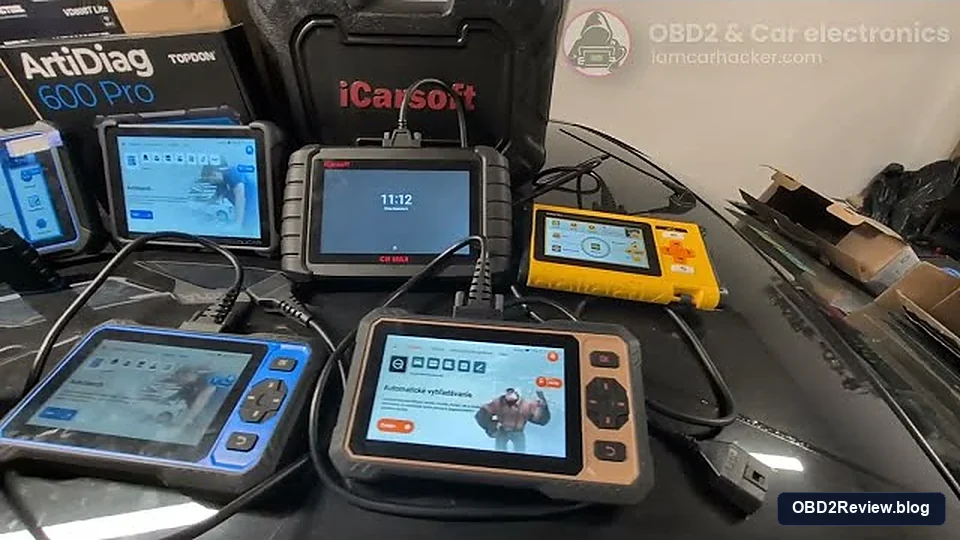
Many basic automotive applications rely on the best obd2 bluetooth scanners to prioritize ultra-compact designs and wireless connectivity, ensuring internal processors handle limited data streams without experiencing significant thermal throttling.
Enhanced diagnostic platforms utilize robust processing hardware equipped with dedicated touchscreens and wired connections to minimize data refresh latency during live graphing.
Faster refresh rates ensure that erratic sensor voltage drops appear clearly on screen without digital filtering artifacts.
Basic hardware dongles utilize low-cost microcontrollers with limited RAM, resulting in high data refresh latency when streaming multiple live parameters simultaneously over wireless interfaces.
Professional enhanced interfaces incorporate dedicated ARM Cortex processors and dual-processor architectures to handle high-speed multi-channel data acquisition without dropping critical packet frames on the bus.
Physical OBD2 port wear can introduce high electrical resistance, requiring gold-plated pins and ruggedized connector housings to maintain stable power delivery and uninterrupted serial communication streams.
- Ultra-compact wireless Bluetooth dongle designs
- Robust processing hardware with dedicated touchscreens
- Minimized data refresh latency for live graphing
Evaluating Bus Refresh Rates and Sampling Speeds
High-speed CAN buses demand fast sampling rates to capture transient electrical faults. Enhanced scanners process multiple parameter IDs simultaneously without lagging.
Standard tools often bottleneck when tracking high-frequency sensor inputs concurrently.
- High-speed CAN bus sampling demands
- Simultaneous multi-parameter tracking capabilities
Software Ecosystem Compatibility and Update Workflows
Generic devices work seamlessly with dozens of third-party mobile diagnostic applications. Users enjoy plug-and-play simplicity without dealing with mandatory yearly subscription renewals.
Enhanced tools rely on proprietary software ecosystems requiring frequent database updates to maintain compatibility with newly released vehicle architectures.
Subscription models fund ongoing engineering efforts to decode newly introduced manufacturer security gateways and proprietary communication protocols.
Generic applications rely on universal smartphone apps utilizing generic ELM327 command interpreters for basic parameter monitoring and simple code clearing tasks without manufacturer depth.
Enhanced diagnostic suites require frequent software subscriptions to download proprietary firmware flash files and updated module coding databases for newly released vehicle architectures annually.
Workshop software environments demand secure cloud connectivity to verify calibration identification numbers against factory databases while flashing updated control module operational parameters safely.
- Seamless third-party mobile app compatibility
- Proprietary software ecosystems with frequent updates
- Subscription models funding security gateway decoding
Navigating Manufacturer Security Gateways
Modern vehicles feature encrypted security gateways that block unauthorized diagnostic access. Enhanced scanners integrate authorized OEM authentication credentials directly into their software.
Generic tools frequently stall when encountering these modern cybersecurity barriers.
- Encrypted security gateway barrier management
- Authorized OEM authentication credential integration
Ergonomics, Portability, and Workshop Durability Standards
Pocket-sized generic adapters fit easily into vehicle glove boxes for instant roadside emergency checks. Their minimalist construction keeps weight to an absolute minimum.
Enhanced diagnostic units feature ruggedized rubberized enclosures built to withstand severe workshop environments, grease drops, and accidental concrete impacts.
Ergonomic handle designs reduce wrist fatigue during extended multi-hour diagnostic troubleshooting sessions inside cramped vehicle cabins.
Entry-level generic readers prioritize pocket-sized portability with minimal drop protection, utilizing thin plastic enclosures vulnerable to harsh automotive shop environments and fluid contamination.
Premium units featured in our best professional obd2 scanner review showcase impact-resistant rubberized boots and IP-rated ingress protection designed to survive accidental drops onto concrete during active workshop diagnostics.
Ergonomic considerations dictate screen brightness levels exceeding 800 nits readability under direct sunlight alongside physical keypad layouts operable while wearing thick mechanic gloves.
- Pocket-sized adapters for glove box storage
- Ruggedized rubberized enclosures for workshop durability
- Ergonomic handle designs reducing wrist fatigue
Impact Resistance and Drop Testing Metrics
Workshop equipment must survive harsh physical conditions daily. Enhanced tablets use reinforced internal frames to protect sensitive optical glass and circuit boards.
Basic dongles rely on simple plastic shells that crack easily under heavy loads.
- Reinforced internal frames for drop protection
- Impact-resistant exterior plastic shell designs
Total Cost of Ownership and Long-Term Diagnostic Value
Generic tools represent an exceptionally low upfront investment with virtually zero ongoing maintenance costs. They provide tremendous value for basic DIY car owners.
Enhanced systems demand a substantial financial commitment driven by initial hardware costs and recurring software update subscriptions.
Professional technicians quickly offset these higher expenses by solving complex multi-system diagnostic problems efficiently within flat-rate labor time.
While generic tools offer minimal upfront investment, their inability to diagnose non-powertrain faults often leads to costly misdiagnosis errors and unnecessary replacement of expensive components.
Enhanced diagnostic platforms demand substantial initial capital outlay paired with ongoing subscription fees, yet they drastically reduce labor time by pinpointing exact component failures instantly.
Evaluating long-term diagnostic value requires balancing tool acquisition expenses against billable shop hours saved through advanced module programming capabilities and comprehensive system coverage.
- Extremely low upfront investment for basic users
- Substantial financial commitment for professional tools
- High efficiency offsetting professional tool expenses
Calculating Return on Investment for Technicians
Time saved during complex module coding directly boosts shop profitability. Enhanced tools pay for themselves rapidly through accurate first-time fixes.
DIY users rarely utilize advanced features enough to justify recurring subscription fees.
- Direct boost to shop profitability via speed
- Justifying subscription fees through heavy usage
Frequently Asked Questions
Can a generic OBD2 scanner read ABS and airbag codes?
No, generic scanners are restricted to mandatory powertrain emissions data. You need an enhanced diagnostic tool to access ABS and SRS systems.
Do enhanced scanners require ongoing internet subscriptions?
Most advanced diagnostic units require annual subscriptions to maintain vehicle coverage databases. These fees fund access to new security gateway decryption protocols.
Are wireless generic dongles safe to leave plugged in?
Quality generic adapters feature low sleep currents to prevent battery drain. However, cheap unbranded dongles can create parasitic draws over long periods.
What is bidirectional control in automotive diagnostics?
Bidirectional control allows the scanner to send commands to vehicle modules. This lets technicians actively test system actuators like fuel pumps and relays.
Which tool type is better for basic emissions testing?
Generic OBD2 scanners excel at reading readiness monitors quickly. They provide the fastest workflow for state emissions inspections without unnecessary complexity.