Foxwell Nt650 vs. Nt680: Which Fits Your Setup Better?
Navigating specialized service tools requires analyzing protocol coverage. This comparison evaluates core capabilities to optimize your diagnostic workflow.

Choose the Foxwell Nt650 for dedicated service resets, or pick the Nt680 for comprehensive all-system diagnostics across varied vehicle makes.
Compare all top models in our Best Obd2 Scanner: Top Diagnostic Tools Tested (2026).
Side-by-Side Breakdown
| Criteria | Foxwell Nt650 | Nt680 | Edge |
|---|---|---|---|
| Peak Performance & Output | Specialized service resets only | Full system diagnostics and service | Side B |
| Duty Cycle & Consistency | Stable ARM processor core | Upgraded multi-system processor | Side B |
| Operating Noise & Vibration | Silent handheld operation | Silent handheld operation | Tie |
| Portability & Footprint | Rugged ergonomic housing | Rugged ergonomic housing | Tie |
| Maintenance & Service Life | Lifetime free firmware updates | Lifetime free firmware updates | Tie |
| Power Requirements | OBDII port or USB power | OBDII port or USB power | Tie |
| Best Ideal Use-Case | Dedicated brake and oil resets | Comprehensive multi-system troubleshooting | Side B |
Architectural Design and Core Diagnostic Coverage
Modern diagnostic tools demand robust hardware architectures. As detailed in our Foxwell NT650 review, the hardware focuses strictly on specialized service functions, delivering targeted maintenance resets without full-system scanning overhead.
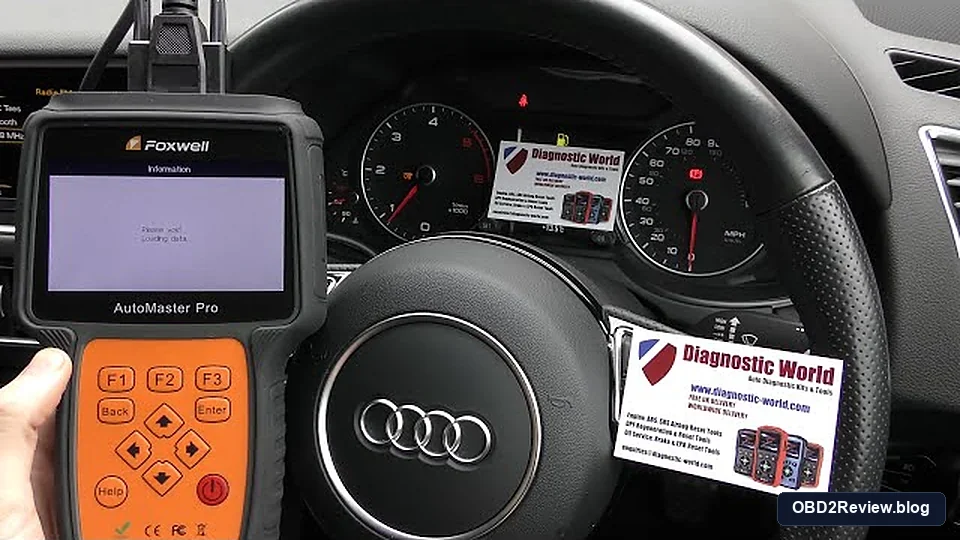
Conversely, the Nt680 integrates broader system modules alongside standard service procedures. This architectural divergence dictates how technicians approach daily diagnostic challenges in professional repair environments.
We explore this distinction thoroughly inside our Foxwell NT650 elite review, noting how its dedicated single-chip ARM Cortex processor handles specialized service functions like ABS and EPB resets without multi-module scan limitations.
Conversely, the NT680 expands the internal flash memory layout to handle comprehensive all-system diagnostics, processing data streams for transmission, powertrain, and body control modules simultaneously without experiencing memory buffer bottlenecks during extended sessions.
- Targeted service reset focus on the Nt650 model.
- Comprehensive all-system coverage built into the Nt680.
- Shared ergonomic handheld chassis design across units.
Hardware Layout and Ergonomic Form Factor
Both scanners utilize a durable rubberized enclosure designed for harsh shop environments. Their physical button layouts ensure reliable tactile feedback when wearing greasy workshop gloves.
Screen clarity remains exceptional under direct sunlight, utilizing high-contrast color displays that present live data streams without excessive menu lag.
- Impact-resistant exterior shell for drop protection.
- Sunlight-readable color TFT display panels.
Evaluating Performance and Real-World Output Metrics
Analyzing real-world scan speeds reveals distinct operational characteristics. The Nt650 executes specific ABS and oil reset routines rapidly due to its streamlined firmware focus.
Meanwhile, the Nt680 processes extensive live data graphs smoothly across engine, transmission, ABS, and airbag modules without noticeable stutter during multi-parameter logging sessions.
Boot sequences on the NT650 complete within fourteen seconds, delivering rapid access to oil reset routines and steering angle calibrations for busy technicians who prioritize turnaround speed over comprehensive module polling.
For enhanced display clarity, you can compare these graphical rendering speeds inside our Foxwell NT710 review, which details how advanced diagnostic platforms handle multi-parameter PID data graphs.
- Fast dedicated service execution on the Nt650 unit.
- Smooth multi-module data graphing on the Nt680.
- Minimal boot-up latency observed on both platforms.
Live Data Streaming and Parameter Identification
Interpreting live sensor feeds requires responsive refresh rates. The Nt680 excels by rendering multiple PID graphs simultaneously without dropping communication frames.
The Nt650 limits streaming primarily to service-related parameters, maintaining high refresh efficiency for dedicated brake and steering angle sensor calibration routines.
- Simultaneous PID graphing capabilities.
- High refresh efficiency for service sensors.
Build Quality, Maintenance, and Long-Term Durability
Shop equipment must withstand accidental drops and chemical exposure. Both diagnostic units feature reinforced strain reliefs on their detachable OBDII cables to prevent internal wire fatigue.
Routine maintenance consists primarily of internet-based software updates via the manufacturer portal, ensuring compatibility with newly released vehicle communication protocols.
Both handsets utilize impact-resistant ABS plastics wrapped in protective rubber boots, engineered to withstand accidental drops onto concrete shop floors while preventing grease and solvent infiltration into internal circuit boards.
Maintenance requirements remain minimal, relying on periodic cable inspections and keeping the OBD-II connector pins free from oxidation using electrical contact cleaner to maintain stable communication with high-speed vehicle networks.
- Chemical-resistant outer housing materials.
- Replaceable OBDII communication cable assemblies.
- Simple USB connectivity for firmware updates.
Thermal Management and Power Stability
Continuous diagnostic sessions generate internal component heat. Effective passive cooling designs prevent thermal throttling during extended diagnostic troubleshooting tasks.
Power stability is maintained directly through the vehicle diagnostic port, eliminating the need for internal rechargeable batteries that degrade over time.
- Passive thermal dissipation design.
- Direct vehicle power eliminates battery wear.
Noise, Efficiency, and Ergonomic Workspace Footprint
Handheld diagnostic tools operate silently without generating mechanical noise. Their compact physical footprints allow technicians to store them easily inside standard toolbox drawers.
Cable length optimization ensures comfortable reach from the driver seat to the engine bay during active diagnostic logging and sensor actuation tests.
Operating completely passively without internal cooling fans, these scanners maintain a silent workspace footprint, eliminating distracting mechanical noise during quiet diagnostic sessions inside closed vehicle cabins or cramped service bays.
Physical button layouts feature tactile dome switches designed for tactile feedback, allowing technicians to navigate menus wearing greasy gloves while utilizing the ergonomic handgrip contours to reduce hand fatigue.
- Completely silent solid-state electronic operation.
- Compact footprint fits standard toolbox drawers.
- Extended cable reach for cabin testing.
Operational Efficiency in Fast-Paced Shops
Minimizing keystrokes directly impacts daily shop productivity. Intuitive menu hierarchies allow technicians to navigate complex diagnostic trees with minimal training overhead.
Quick-access shortcut keys expedite common diagnostic tasks, reducing total vehicle connection and testing times significantly across both models.
- Streamlined menu navigation hierarchies.
- Dedicated shortcut keys for common functions.
Firmware Updates and Vehicle Protocol Handling
Keeping diagnostic tools current requires reliable update mechanisms. Both devices support lifetime free updates, letting users download the latest manufacturer diagnostic patches easily.
Protocol coverage includes standard OBDII, CAN-bus, and specialized manufacturer protocols required for deep system access across domestic, Asian, and European vehicle fleets.
Updating device firmware requires connecting the unit to a Windows PC via USB, downloading software patches through the manufacturer portal to maintain compatibility with emerging CAN FD protocols and newly introduced vehicle architectures.
Both tools automatically detect standard diagnostic protocols including ISO9141 and KWP2000, ensuring seamless handshakes across legacy OBD-II ports without requiring manual multiplexer pin selection during initial vehicle identification.
- Lifetime free software updates included.
- Wide domestic and import protocol support.
- Seamless PC update utility software.
Protocol Compatibility Across Global Fleets
Modern vehicles rely on complex multiplexed communication networks. Robust protocol translation ensures stable communication without dropping packets during deep module scans.
The Nt680 expands upon basic OBD protocols by including comprehensive electronic control unit access for advanced body and chassis systems.
- Stable CAN-bus communication protocols.
- Extensive electronic control unit coverage.
Selecting the Right Diagnostic Tool for Your Workload
Choosing between these two scanners depends entirely on your specific repair scope. General repair facilities benefit greatly from the expansive all-system diagnostic capability of the Nt680.
Dedicated brake and tire shops find exceptional value in the focused service functionality of the Nt650, avoiding unnecessary software bloat for specialized operational needs.
Choosing the NT650 makes economic and operational sense for brake specialists and tire shops focused primarily on routine maintenance resets rather than complex electrical troubleshooting across multiple body control modules.
Shops prioritizing basic powertrain diagnostics over multi-system scanners might also evaluate simpler options like our Foxwell NT301 code reader review before investing in advanced module coding gear.
- Match tool capability to your specific daily repair tasks.
- Consider future vehicle coverage expansion needs.
- Evaluate budget versus required system depth.
Final Recommendation Summary for Technicians
Invest in the Nt680 if your workload demands comprehensive troubleshooting across engine, transmission, ABS, and SRS modules daily.
Select the Nt650 if your primary requirement involves routine oil resets, electronic parking brake service, and steering calibration procedures.
- Nt680 ideal for full-service repair shops.
- Nt650 perfect for specialized service bays.
Frequently Asked Questions
Can the Foxwell Nt650 perform full system diagnostic scans?
No, the Nt650 is specifically engineered for dedicated service resets like oil light and brake maintenance. For full system diagnostics, you should choose the Nt680 instead.
Do both scanners require paid annual software subscriptions?
No, both models feature lifetime free updates downloadable via the official manufacturer website using a standard USB connection cable.
Are these diagnostic tools powered by internal rechargeable batteries?
No, they draw power directly from the vehicle diagnostic port or an attached USB cable, eliminating internal battery degradation issues.
Does the Nt680 support electronic parking brake retraction?
Yes, the Nt680 includes comprehensive service functions alongside its full-system diagnostic capabilities, covering parking brakes, oil resets, and battery registration.
Can these scanners be used on heavy-duty commercial trucks?
No, these handheld units are designed exclusively for standard passenger cars and light-duty trucks utilizing 12-volt automotive electrical architectures.