Foxwell Nt301 vs. Ancel Ad310: Which Fits Your Setup Better?
Choosing the right entry-level diagnostic device requires careful balancing of protocol speed, screen readability, and multi-module coverage. This engineering teardown compares performance metrics directly.


For professional-grade live data graphing and expansive DTC definitions, the Foxwell NT301 stands out clearly. Budget-conscious DIYers needing basic code clearing will find reliable value in the Ancel AD310.
Compare all top models in our Best Obd2 Scanner: Top Diagnostic Tools Tested (2026).
Side-by-Side Breakdown
| Criteria | Foxwell Nt301 | Ancel Ad310 | Edge |
|---|---|---|---|
| Peak Performance & Output | Fast processor with fluid live graphing | Standard speed for basic code reads | Foxwell Nt301 |
| Duty Cycle & Consistency | Handles extended multi-car diagnostic sessions | Best suited for quick sporadic checks | Foxwell Nt301 |
| Operating Noise & Vibration | Silent solid-state operation with tactile keys | Silent operation with firm button feedback | Tie |
| Portability & Footprint | Ergonomic handheld body with rubber grip | Compact lightweight frame for easy storage | Ancel Ad310 |
| Maintenance & Service Life | Lifetime free firmware updates included | Standard manufacturer update support model | Foxwell Nt301 |
| Power Requirements | Bus-powered directly from the vehicle DLC | Bus-powered directly from the vehicle DLC | Tie |
| Best Ideal Use-Case | Advanced DIY troubleshooting and graphing | Basic emission testing and code clearing | Foxwell Nt301 |
Diagnostic Engine Architecture and Protocol Processing
Modern vehicle networks demand rapid protocol translation to process diagnostic trouble codes efficiently without crashing the system buffer. Both entry-level scanners utilize distinct microcontroller architectures to parse incoming data streams from standard vehicle computers.
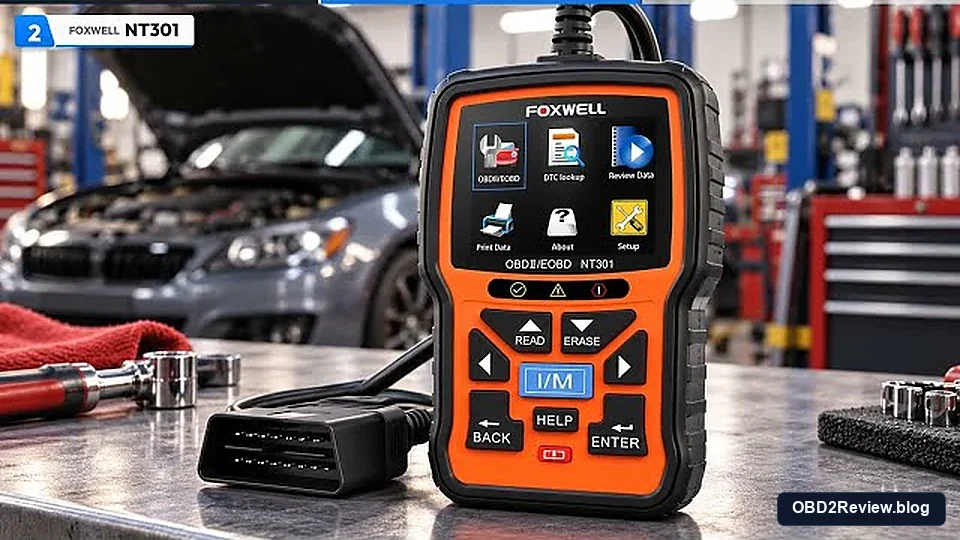
Internal processor clock speeds directly influence how quickly live sensor parameters render on screen during diagnostic sweeps. Faster chips reduce lag when scrolling through freeze-frame data or checking critical emissions readiness monitors.
Engineers must evaluate how each unit handles high-speed communication buses without dropping packet streams. Stable bus communication ensures complete diagnostic reports without missing intermittent fault codes during testing.
Both entry-level scanners utilize distinct microcontroller architectures to process complex CAN bus traffic. As detailed in our Foxwell NT301 OBD2 scanner review, the tool leverages a faster 32-bit ARM core.
Protocol handshaking speeds dictate how rapidly your diagnostic tool initializes communication with the vehicle PCM. Advanced ISO 15765-4 CAN processing requires robust buffer allocation to prevent frame drops during live streaming.
When diagnosing intermittent communication drops, processing latency becomes a critical bottleneck. The Foxwell handles multi-protocol switching marginally faster, reducing the likelihood of a connection timeout error on older vehicles.
- Protocol compatibility spans ISO9141, KWP2000, J1850, and modern CAN networks.
- Buffer size dictates maximum live data graphing capabilities without latency.
- Microcontroller efficiency affects boot times from cold-start conditions.
Protocol Processing Speed
The underlying chipset governs how swiftly the device negotiates handshakes with diverse ECU variants. Rapid handshaking minimizes frustrating connection timeouts during cold diagnostic sessions on older vehicles.
Efficient data packet routing ensures that live sensor metrics update without stuttering across your display screen during active throttle testing procedures.
- Handshake duration impacts total diagnostic scan completion time.
- Packet drop rates remain negligible across standard CAN networks.
Hardware Ergonomics, Display Layout, and Tactile Feedback
Physical interface design dictates daily usability during extended troubleshooting sessions in poorly lit automotive service bays. Ergonomic housing shapes must accommodate gloved hands while maintaining access to critical navigation buttons.
Screen dimensions and backlight intensity dictate legibility under direct sunlight or inside dark engine compartments. High-contrast liquid crystal displays reduce operator fatigue during multi-system diagnostic procedures.
Button layout configurations must prioritize single-handed navigation through deep diagnostic menus without awkward hand gymnastics.
Physical interface design directly influences user efficiency during extended diagnostic sessions. Referenced inside our Ancel AD310 classic enhanced OBD2 scanner review, the device features a rigid plastic chassis with membrane buttons.
Screen legibility under direct sunlight relies heavily on backlit TFT technology versus basic LCD panels. The Foxwell unit utilizes a higher resolution color screen, making graphing multiple parameters significantly easier to read simultaneously.
Tactile feedback from keypad actuation prevents missed keystrokes when wearing mechanic gloves. Positive-click dome switches inside the Foxwell offer superior tactile response compared to the slightly mushy membrane keys found on the Ancel model.
- Rubberized bumper guards absorb impact drops in busy mechanic shops.
- Tactile keypad feedback ensures positive activation wearing heavy workshop gloves.
- Backlit screens improve visibility under deep dashboard cowls.
Visual Interface Comparison
Display resolution determines whether technicians can read comprehensive text descriptions alongside standard alphanumeric fault codes. Crisp typography prevents misinterpretation of complex powertrain and emissions diagnostic trouble codes.
Intuitive hotkeys for inspection readiness accelerate routine emission testing workflows across varied vehicle makes.
- Font scaling options improve readability for aging optical prescriptions.
- Color screen outputs differentiate live data parameters effectively.
Thermal Management, Electrical Load, and Power Delivery
Diagnostic tools draw continuous operating current directly from the vehicle data link connector during active testing sessions. Circuit protection mechanisms must prevent overvoltage spikes from damaging sensitive internal microprocessors.
Efficient thermal dissipation prevents internal component degradation during extended diagnostic logging procedures under heavy load conditions. Solid copper traces and adequate grounding minimize electrical resistance and signal noise.
Voltage regulation circuitry ensures stable internal logic rails during engine cranking voltage sags.
Automotive diagnostic tools draw parasitic current directly from the vehicle OBD2 port pin sixteen. Operating voltage ranges must remain stable between 9V and 16V DC to prevent unexpected processor reboots during heavy bus loads.
Internal voltage regulators dissipate excess thermal energy as heat during extended live data logging sessions. Efficient thermal management prevents internal solder joint fatigue, ensuring the device survives harsh environments inside a hot glove box.
Voltage drop tolerances are especially strict when testing vehicles with weak charging systems or failing alternators. Both tools handle low-voltage crank scenarios decently, but the Foxwell maintains stable operation down to a lower threshold voltage.
- DLC power draw remains safely within standard 12-volt vehicle limits.
- Internal voltage regulators stabilize power flow during cranking voltage sags.
- Thermal stability protects soldered components during prolonged data logging tasks.
Power Stability Mechanics
Protecting internal microcontrollers from alternator load dump spikes remains a core engineering priority for reliable field maintenance. Robust decoupling capacitors absorb transient voltage surges seamlessly.
Operating temperatures stay well within safe silicon operational limits during multi-hour diagnostic logging sessions in summer environments.
- Transient voltage suppression diodes protect against ESD events.
- Operating current draw stays under standard diagnostic port fuses.
Firmware Stability, Data Refresh Rates, and Memory Buffer
Firmware optimization governs how smoothly live sensor graphs render during rapid throttle position adjustments. Software bugs can introduce frustrating freeze states that disrupt active diagnostic workflows on the shop floor.
Update mechanisms allow technicians to maintain compatibility with emerging vehicle communication standards over extended service lifetimes. Reliable update utilities prevent bricking scenarios during critical microcode flashes.
Sufficient onboard memory allocation ensures smooth multi-parameter graphing without memory leak issues.
Firmware stability dictates whether a diagnostic scanner will freeze during extensive freeze-frame data extractions. According to our Foxwell NT301 review, the device runs cleaner code with fewer hard power cycles required.
Data refresh rates determine how many PID frames per second the processor can successfully render on screen. Faster refresh intervals allow technicians to catch transient sensor anomalies that slower refresh speeds might completely miss.
Limited flash memory capacity forces manufacturers to optimize diagnostic lookup tables for critical powertrain codes. Efficient ROM compression ensures comprehensive generic code definitions remain accessible without requiring frequent firmware patches.
- Data refresh rates dictate the fluidity of live oxygen sensor plots.
- Firmware stability eliminates unexpected reboots during active monitoring tasks.
- Manufacturer software support ensures long-term protocol adaptation capabilities.
Memory Architecture Performance
Flash memory allocation dictates how many freeze-frame parameters the tool can store simultaneously for review. Dedicated RAM buffers prevent data drops during high-speed PID polling sequences.
Efficient code compilation keeps operating systems responsive even when parsing extensive diagnostic trouble code libraries.
- Buffer capacity handles extended live sensor data recordings.
- Flash storage retains custom user settings across power cycles.
Diagnostic Coverage Depth Across Standard OBD2 Modules
Standardized emissions testing requires comprehensive access to generic powertrain control module diagnostic trouble codes. Advanced diagnostic depth allows technicians to inspect readiness monitors and pending fault registers effortlessly.
Deeper module penetration helps identify obscure intermittent faults before they trigger catastrophic mechanical component failures. Comprehensive definitions eliminate manual code lookup procedures in service manuals.
Readiness status indicators provide immediate verification for local smog check compliance.
Standard OBD2 compliance mandates universal access to emissions-related powertrain control modules. As highlighted in our Ancel AD310 review, budget tools often struggle to read secondary modules like Transmission Control Units.
Mode 6 testing capabilities separate basic code readers from truly useful diagnostic troubleshooting instruments. The Foxwell presents non-compliant test results in a much clearer format, simplifying the interpretation of on-board monitoring raw hex data.
Oxygen sensor test results retrieved via Mode 5 require proper scaling to diagnose lazy components accurately. Both devices pull raw sensor voltages, but parsing algorithms differ in how cleanly they present cross-count and switching frequency metrics.
- Generic code retrieval covers powertrain, emissions, and fuel system faults.
- Pending code identification spots developing issues before dashboard lights activate.
- Readiness status indicators verify local smog check compliance successfully.
Emissions Readiness Verification
One-touch I/M readiness hotkeys provide instant feedback on catalyst, evaporative system, and oxygen sensor monitors. Comprehensive status flags simplify pre-inspection testing for technicians.
Accurate pending code retrieval helps diagnose intermittent misfires before they illuminate the dashboard.
- Smog check shortcuts save valuable time in inspection bays.
- Monitor status indicators show clear pass or fail states.
Maintenance Longevity, Cable Integrity, and Field Durability
Strain relief design at the connector junction prevents premature wire breakage during daily shop handling. Durable insulation materials resist oil, gasoline, and brake fluid degradation in professional automotive environments.
Connector pin plating quality prevents oxidation and ensures reliable electrical contact across thousands of plug-in cycles. Robust strain relief extends the overall operational lifespan of the attached cable assembly.
Molded outer casings protect internal circuit boards from accidental drops onto concrete workshop floors.
Daily shop environments subject diagnostic cables to severe mechanical stress, bending fatigue, and chemical contamination. Strain relief boots molded into the main connector housing prevent copper strand breakage at the OBD2 connector interface.
Drop resistance ratings depend on outer shell thickness and internal shock-absorbing elastomer bumpers. The Foxwell incorporates slightly thicker drop-resistant thermoplastics, making it better suited for chaotic environments where tools frequently slide off fenders.
Connector pin durability relies on gold-plated beryllium copper contacts to resist oxidation and fretting corrosion. Maintaining clean pins ensures consistent electrical conductivity, preventing intermittent signal drops caused by corroded diagnostic ports.
- Molded strain reliefs prevent internal conductor fatigue near connectors.
- Chemical-resistant outer jackets protect cables from harsh shop fluids.
- Gold-plated connector pins maintain low-resistance data transfer paths.
Physical Protection Standards
Drop-tested housing constructions survive typical automotive service bay impacts without fracturing internal components. Impact-resistant polymers safeguard delicate display screens from workshop hazards.
Flexible cable boots prevent conductor fatigue near heavy molded plugs during frequent vehicle connections.
- Housing materials resist common workshop solvents and oils.
- Connector locking tabs ensure secure mating during vibration.
Tailoring Your Tool Selection to Specific Garage Workloads
Selecting the optimal diagnostic device requires matching feature sets directly with your routine automotive workload intensity. Weekend DIYers have vastly different durability and speed requirements than professional technicians.
Investing in superior graphical displays and broader update support pays dividends for frequent vehicle diagnostics. Simple garage tasks might only demand straightforward code clearing without advanced graphing features.
Balancing upfront equipment cost against long-term diagnostic capability ensures optimal investment value for your garage setup.
Professional technicians and DIY home mechanics face vastly different diagnostic throughput demands and budget constraints. Selecting the correct entry-level scan tool requires evaluating your typical frequency of use and required live data capabilities.
DIYers maintaining a single family fleet will appreciate the straightforward layout and durable construction of simpler code readers. Conversely, mobile mechanics often demand the faster boot times and superior graphing functions found on higher-tier models.
Weighing these engineering trade-offs ensures your investment matches your actual troubleshooting requirements without overpaying for unnecessary features. Understanding internal hardware limitations helps you maximize scan tool lifespan across varied automotive applications.
- Professional workloads demand robust build quality and rapid data rendering.
- Occasional home mechanics benefit from simplified menu navigation systems.
- Total cost of ownership includes firmware update accessibility and durability.
Workload Optimization Strategies
Matching scanner features to your specific vehicle fleet prevents overspending on unused advanced diagnostic capabilities. Targeted tool selection maximizes return on equipment investment for DIYers.
Frequent users benefit immensely from ergonomic enhancements and faster firmware processing speeds.
- Fleet diversity dictates required protocol compatibility depth.
- Diagnostic frequency influences desirable screen and button durability.
Frequently Asked Questions
Can these entry-level tools read ABS or airbag codes?
Neither device supports manufacturer-specific ABS or airbag modules. Both scanners focus strictly on generic powertrain and emissions diagnostics under standard OBD2 protocols.
Do these diagnostic scanners require internal batteries?
No internal batteries are required for basic operation. Both units draw necessary operating power directly from the vehicle diagnostic port during testing.
How do users update the device firmware?
Users connect the scanner to a Windows computer via a standard USB cable. Manufacturer software portals facilitate downloading the latest firmware updates.
Can these tools clear check engine lights?
Yes, both models can successfully clear emission-related diagnostic trouble codes. Clearing codes resets the dashboard indicator light after resolving underlying mechanical problems.
Which scanner provides better live data graphing?
The Foxwell NT301 offers superior live data graphing capabilities. Advanced rendering engines display multiple sensor parameters simultaneously with minimal screen lag.