Ecu Coding vs. Ecu Programming: Which Fits Your Setup Better?
Mastering modern vehicle modules requires understanding the exact boundary between configuration adjustments and low-level firmware flashing. Choosing the right method prevents costly module corruption.


For daily custom feature activation and hardware retrofits, ECU coding is vastly superior. For replacing blank control units or updating base firmware, ECU programming is mandatory.
Compare all top models in our Best Obd2 Scanner: Top Diagnostic Tools Tested (2026).
Side-by-Side Breakdown
| Criteria | Ecu Coding | Ecu Programming | Edge |
|---|---|---|---|
| Peak Performance & Output | Modifies internal parameters & options | Flashes entire binary firmware files | ECU Programming |
| Duty Cycle & Consistency | Extremely fast execution & low risk | Demands stable voltage & uninterrupted data | ECU Coding |
| Operating Noise & Vibration | Silent diagnostic operation | Cooling fans active during long flashes | ECU Coding |
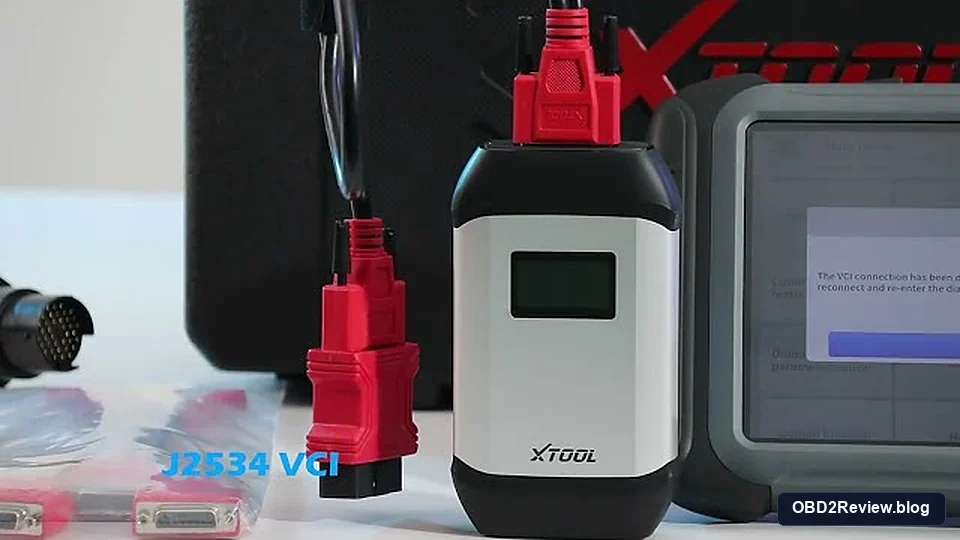
| Portability & Footprint | Supported by basic mid-tier scan tools | Requires robust J2534 pass-thru hardware | ECU Coding |
| Maintenance & Service Life | Low overhead and minimal risk | High reliance on continuous battery power | ECU Coding |
| Power Requirements | Standard vehicle ignition power | Strict requirement for external power supply | ECU Coding |
| Best Ideal Use-Case | Activating hidden features & retrofits | Installing brand new unprogrammed modules | ECU Programming |
Fundamental Architecture and Operating Definitions
Modern vehicle architecture relies heavily on complex computerized control modules that dictate everything from fuel injection timing to infotainment options. Technicians must understand how these systems process incoming diagnostic instructions.
Configuration adjustments alter existing software flags stored within non-volatile memory chips. These modifications enable factory features or adapt replacement sensors without rewriting the underlying operating system code.
Low-level firmware deployment involves erasing entire memory sectors and writing entirely new binary files onto the microcontroller. This intensive process governs the fundamental operating logic of the target module.
Modern vehicles rely on distributed network architectures where leveraging the best ecu coding tools alters configuration parameters, while programming replaces the complete flash memory across multiple microcontrollers safely.
Engineers must understand that parameter adjustments happen within EEPROM sectors, whereas full software flashes rewrite the primary microprocessor flash sectors using strict bootloader protocols over standard diagnostic communication lines.
Knowing these distinct memory boundaries prevents catastrophic bus saturation errors and ensures technicians select the correct diagnostic tool profiles before initiating any invasive vehicle module updates in the shop.
- Coding changes operational parameters within established software limits.
- Programming replaces core operational firmware and bootloader sectors completely.
- Both procedures require reliable communication protocols like CAN-FD or DoIP.
Memory Structures in Automotive Modules
EEPROM and flash memory components handle different types of data storage inside modern vehicle control units. Coding typically interacts with volatile parameter blocks rather than deep flash sectors.
Understanding memory mapping helps technicians avoid bricking sensitive modules during complex diagnostic procedures or routine module replacement tasks.
- EEPROM holds adaptable configuration strings and calibration offsets.
- Flash memory stores heavy executable code and primary operating systems.
Performance Output and Real-World Diagnostic Capabilities
Evaluating diagnostic equipment performance requires looking closely at how rapidly tools can transmit data packets across high-speed networks. Advanced scan tools handle these data streams with remarkable precision.
Parameter configuration yields immediate operational feedback across dashboard displays and accessory modules. Technicians can instantly verify whether their custom adjustments successfully altered vehicle behavior.
Firmware deployment workflows demand rigorous verification stages to ensure every checksum matches manufacturer specifications. Any data corruption during this phase will render the target module completely inoperable.
Executing precise variant coding unlocks dormant factory features and optimizes sensor calibration arrays, yielding immediate improvements in throttle response curves and transmission shift points without altering core fuel tables.
Conversely, deep ECU programming introduces entirely new base operating code that addresses chronic driveability anomalies, while top key programming scanner choices update the overarching powertrain management logic across all connected modules.
Technicians diagnosing complex intermittent faults must evaluate live data parameters carefully to determine whether a minor variable reset or a complete software revision will resolve the underlying vehicular operational failure.
- Feature activation provides instant confirmation via dashboard indicators.
- Firmware updates require meticulous checksum verification before execution.
- High-speed pass-thru devices drastically reduce total operation time.
Executing Complex Adaptation Routines
Adaptation procedures bridge the gap between basic parameter changes and deep firmware flashing. These tasks ensure newly installed mechanical components communicate properly with existing control units.
Professional scan tools automate these calibration sequences to maintain strict adherence to OEM engineering standards and tolerances.
- Steering angle resets require precise parameter adjustments.
- Transmission quick-learn routines demand stable diagnostic links.
Build Quality, Maintenance, and Hardware Durability
Professional diagnostic hardware must endure harsh workshop environments filled with grease, dropping hazards, and extreme temperature fluctuations. Heavy-duty rubberized housings protect sensitive internal circuit boards effectively.
Maintenance routines for advanced programming interfaces involve keeping connector pins clean and updating interface firmware regularly. Neglecting these maintenance tasks often leads to dropped communication sessions.
Durable interface cables with reinforced strain reliefs prevent intermittent connection faults during lengthy software deployment sessions where data stability is absolutely critical.
Diagnostic interfaces used for extensive flash programming require robust internal thermal management, including aluminum heat sinks to prevent processor throttling during prolonged data transfers exceeding thirty minutes of continuous operation.
Maintenance protocols dictate that OBD2 connector pins undergo regular cleaning with electrical contact cleaner to maintain low resistance paths necessary for high-speed CAN FD communication streams without dropping packets.
Industrial-grade programming hardware withstands accidental bay drops and chemical exposure, ensuring long-term reliability in demanding automotive workshop environments where equipment faces daily physical abuse and harsh fluid contact.
- Impact-resistant chassis protect internal multiplexer chips from drops.
- Regular firmware updates ensure compatibility with evolving vehicle protocols.
- Secure locking connectors prevent accidental cable disconnections.
Interface Connector Longevity
OBD2 diagnostic ports undergo significant physical wear from daily plugging cycles, making our top obd2 scanner picks essential for shops. High-quality interface cables feature gold-plated pins to resist oxidation.
Inspect your diagnostic cables monthly for frayed insulation or bent pins to guarantee flawless data transmission during critical programming events.
- Gold-plated connector pins prevent harmful oxidation buildup.
- Sturdy strain reliefs eliminate internal wire fatigue over time.
Footprint, Portability, and Power Requirements
Shop mobility directly influences workshop efficiency, making top bluetooth obd2 scanner options popular for quick parameter adjustments. However, deep firmware tasks often require stable tethered laptop setups.
Electrical power stability remains the single most important factor during any low-level module flashing procedure. Voltage drops below strict thresholds will permanently corrupt internal module memory sectors.
Using dedicated power supplies ensures battery voltage stays locked at stable levels throughout extended data transfer windows, protecting expensive vehicle computers from damage.
Flash programming sessions demand an uninterruptible external power supply, often requiring a stable 13.5V support unit to prevent voltage drops that corrupt microcontroller memory sectors during deep write cycles.
While basic coding interfaces remain compact enough for pocket storage, comprehensive programming setups require heavy-duty cabling, stable laptop interfaces, and dedicated Ethernet passthrough adapters to handle massive data throughputs safely.
Mobile technicians must balance bench footprint constraints against power delivery needs, ensuring field service vehicles carry sufficient battery backup systems for lengthy module flashing procedures away from the shop.
- Handheld tablets offer exceptional mobility for quick parameter changes.
- External power supplies are mandatory for safe firmware flashing.
- Compact interface dongles fit easily inside standard technician toolboxes.
Managing Workshop Power Supplies
Automotive battery maintainers must deliver clean amperage to support vehicle electronics during prolonged diagnostic sessions. Standard consumer trickle chargers cannot supply enough current during flashing.
Professional power units prevent unexpected voltage sags when cooling fans and fuel pumps activate automatically during module reprogramming tasks.
- Maintainers must deliver at least 50 amps for safe flashing.
- Clean output voltage prevents data packet loss on the bus.
Risk Assessment and Failure Mode Analysis
Every advanced diagnostic operation carries inherent risks that technicians must mitigate through careful preparation and adherence to safety guidelines. Understanding potential failure modes prevents costly mistakes.
Parameter adjustments feature low risk profiles because mistakes can typically be reversed by restoring original backup files. Most modern scan tools automatically save previous configurations beforehand.
Firmware flashing carries severe failure risks if communication drops or power fails midway through the write cycle. Recovering a bricked module often requires bench programming or replacement.
The primary risk during ECU programming is a dropped session or power sag, which creates a bricked module requiring bench recovery via direct BDM connections or complete hardware replacement.
Coding errors carry lower catastrophic risk, typically resulting in inactive comfort features or non-functional instrument cluster indicators that clear instantly once original variant strings are correctly restored by the technician.
Rigorous pre-flash checks and checksum validations mitigate these dangerous failure modes, safeguarding expensive powertrain components against permanent corruption during complex software updates and manufacturer service bulletin applications.
- Configuration changes are easily reversible via automated system backups.
- Interrupted firmware flashes result in permanently bricked control units.
- Proper safety protocols eliminate most common workshop failure scenarios.
Mitigating Communication Drops
Wireless diagnostic adapters introduce potential interference risks that can disrupt long firmware transmission sessions. Wired USB or ethernet connections remain the safest choice for heavy flashing.
Isolating the vehicle network from unnecessary background traffic ensures maximum bandwidth availability for critical data packets.
- Wired connections eliminate wireless interference during data writes.
- Turning off accessory electronics reduces unnecessary bus traffic.
Economic Value and Technical Workload Fit
Equipping a professional automotive workshop requires balancing tool acquisition costs against the specific demands of your everyday repair workload. Investing in the right technology maximizes profitability.
Shops focusing on general service and accessory retrofits will benefit immensely from advanced parameter modification capabilities. These tools deliver fast turnaround times for common customer requests.
Specialized electrical repair facilities must invest in robust J2534 hardware and OEM subscriptions to handle complex module replacements and deep firmware updates efficiently.
Investing in advanced programming capabilities yields high shop profitability for specialty operations, while basic coding tools provide fast return on investment for general repair facilities handling routine module adaptations.
Shops must evaluate their typical vehicle mix, as European luxury cars demand frequent module coding, whereas domestic trucks often require deeper powertrain flashing to resolve stubborn drivability service bulletins.
Matching equipment acquisition costs to realistic technician skill levels prevents underutilized capital expenditure and ensures the workshop remains competitive across evolving vehicle service categories.
- Parameter tools offer fast return on investment for general repair shops.
- Programming equipment unlocks high-margin module replacement jobs.
- Matching tool capabilities to your workload prevents wasted capital.
Calculating Return on Investment
Analyzing job frequency helps determine whether advanced programming capabilities justify the ongoing subscription expenses. High-volume shops recover these equipment costs rapidly.
Outsourcing module programming to mobile specialists remains a viable alternative for independent shops with low demand for deep firmware services.
- Track monthly module replacement volume to justify tool purchases.
- Compare subscription costs against potential outsourcing fees.
Future-Proofing Modern Vehicle Networks
Automotive electronic architectures are evolving rapidly with the introduction of Ethernet-based protocols and cloud-connected vehicle gateways. Staying current requires adaptable diagnostic hardware architectures.
Modern security gateways demand authenticated diagnostic tools that can seamlessly bypass manufacturer restrictions without compromising vehicle network integrity or triggering security alarms.
Future diagnostic systems must support over-the-air update management alongside traditional wired flashing methods to service upcoming electric and autonomous vehicle platforms effectively.
Next-generation vehicle architectures rely heavily on DoIP protocols and secure gateway modules, requiring diagnostic equipment capable of handling high-speed Ethernet routing for both coding and programming tasks.
Technicians must prioritize hardware featuring cloud subscription support and modular software updates to stay compatible with emerging over-the-air vehicle architectures and encrypted manufacturer security certificates.
Preparing the workshop for these digital shifts guarantees long-term operational viability, protecting diagnostic investments against rapid technological obsolescence in an increasingly software-defined automotive marketplace.
- Ethernet protocols replace legacy CAN networks for faster data rates.
- Security gateway compliance is essential for modern vehicle access.
- Adaptable hardware platforms protect long-term shop investments.
Adopting DoIP and CAN-FD Standards
Diagnostics over Internet Protocol enables lightning-fast data transfers required for modern infotainment and ADAS module flashing. Technicians must upgrade their interfaces to support these protocols.
CAN-FD increases payload capacity significantly over traditional CAN buses, making advanced parameter adjustments smoother and much more reliable.
- DoIP handles massive firmware files efficiently via ethernet.
- CAN-FD provides higher bandwidth for busy vehicle networks.
Frequently Asked Questions
What is the primary difference between ECU coding and programming?
Coding modifies existing configuration parameters and enables factory features within stored software limits. Programming completely replaces the underlying operating firmware and binary code on the microcontroller.
Can ECU coding damage my vehicle control modules?
Parameter adjustments carry a very low risk of permanent damage because previous configurations are usually backed up. Most tools allow you to restore original settings instantly if an error occurs.
Do I need an external power supply for ECU programming?
Yes, maintaining stable voltage during firmware flashes is critical to prevent data corruption. Voltage drops below specific thresholds will permanently brick sensitive vehicle control units.
What hardware is required to perform advanced ECU programming?
Technicians need a compliant J2534 pass-thru device, a stable laptop connection, and manufacturer software subscriptions. Basic OBD2 code readers cannot handle deep firmware flashing procedures.
How often should diagnostic interface firmware be updated?
You should check for interface updates monthly to ensure full protocol compatibility. Regular updates prevent communication drops during critical vehicle coding and programming tasks.