Doip vs Can Obd2 Diagnostics: Which Protocol Fits Your Setup
Modern automotive networks demand extreme bandwidth for flash programming. DoIP leverages Ethernet speed while CAN remains the reliable legacy workhorse for basic powertrain diagnostics.
Choose DoIP for lightning-fast module flashes on modern European luxury architectures. Select CAN diagnostics for universal baseline compatibility across older OBD2 vehicle fleets.
Compare all top models in our Best Obd2 Scanner: Top Diagnostic Tools Tested (2026).
Side-by-Side Breakdown
| Criteria | Doip | Can Obd2 Diagnostics | Edge |
|---|---|---|---|
| Peak Performance & Output | High-speed gigabit data transfer | Standard 500 kbps bus speed | Doip |
| Duty Cycle & Consistency | Handles massive diagnostic data streams | Reliable for basic PID polling | Doip |
| Operating Noise & Vibration | Silent digital packet transmission | Silent electrical signaling | Tie |
| Portability & Footprint | Requires robust interface adapters | Universal handheld scanner friendly | Can Obd2 Diagnostics |
| Maintenance & Service Life | Demands modern Ethernet infrastructure | Simple two-wire twisted pair | Can Obd2 Diagnostics |
| Power Requirements | Standard vehicle battery power | Low parasitic draw from port | Can Obd2 Diagnostics |
| Best Ideal Use-Case | Programming luxury vehicle modules | General emission and fault scanning | Doip |
Fundamental Architecture and Protocol Taxonomy
Diagnostic protocols form the core taxonomic category of modern automotive communication systems. Technicians must understand how underlying network frameworks dictate overall workshop efficiency during complex troubleshooting routines.
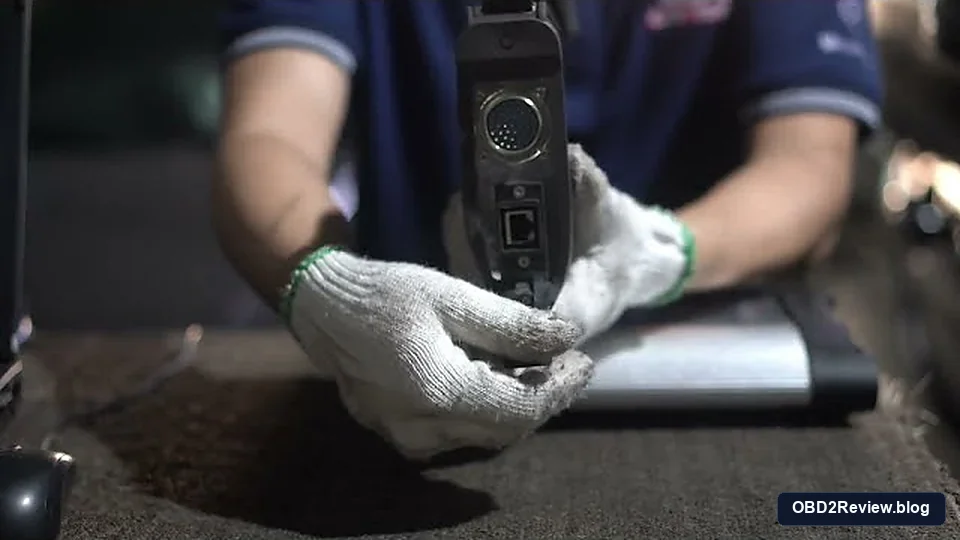
Traditional networks rely on broadcast messaging across shared physical buses. Advanced Ethernet layers establish dedicated point-to-point communication channels for high-density data exchanges.
ISO 13400 defines DoIP operating over Ethernet networks, while knowing if an obd2 scanner can clear airbag lights relies on proper differential voltage signaling across twisted wire pairs.
Traditional Controller Area Network architecture uses broadcast communication frames with arbitration IDs. Conversely, Diagnostic over Internet Protocol utilizes client-server socket connections to route high-volume traffic directly to specific electronic control units.
- Taxonomic shift from broadcast buses to switched Ethernet
- Protocol categorization based on bandwidth demands
- Standardized interface requirements for modern workshops
- Ethernet encapsulation protocols
- Differential signaling mechanics
Core Structural Differences
Network topology dictates how control units share critical sensor inputs. Structural integrity depends heavily on fault-tolerant wiring harnesses and properly terminated communication nodes.
- Node routing efficiency
- Termination resistor placement
Architectural Subsets
Examining architectural differences helps technicians diagnose physical layer faults faster. Understanding how data moves across buses dictates troubleshooting efficiency in modern automotive repair environments.
- Bus topology mapping
Throughput Bandwidth and Data Transfer Speeds
Data throughput limits dictate whether a technician can flash an entire vehicle module in minutes. DoIP provides gigabit speeds necessary for massive software updates on luxury platforms.
Standard CAN connections operate at much lower baud rates, restricting them to real-time parameter monitoring. CAN buses simply lack the physical bandwidth required for massive firmware payloads.
Standard CAN networks typically operate at 500 kbps, while CAN FD pushes limits up to 8 Mbps. However, DoIP delivers base Ethernet speeds starting at 100 Mbps, easily outstripping legacy serial bus limitations significantly.
High bandwidth capacity prevents bottlenecks during complex sessions, making the best obd2 scanner for transmission diagnostics essential for bypassing baud rate restrictions common in older vehicle architectures.
- Ethernet broadband vastly outperforms legacy serial buses
- Firmware flashing times drop from hours to minutes
- Real-time parameter ID polling remains efficient on CAN
- Bandwidth comparison metrics
- Latency reduction benefits
Bandwidth Bottleneck Analysis
Network congestion occurs when multiple modules flood the communication channel simultaneously. High-speed Ethernet architectures easily bypass traditional latency bottlenecks found in older vehicles.
- Channel saturation metrics
- Latency reduction strategies
Data Rate Constraints
Throughput benchmarks dictate how quickly diagnostic software can scan vehicle networks. High-speed data transfer remains essential for heavy diagnostic workloads found in contemporary luxury vehicles.
- Serial versus Ethernet throughput
Physical Layer Harness Infrastructure and Routing
Physical network routing resembles intricate garden node pathways where signal degradation threatens data integrity. Technicians must inspect physical cabling for impedance mismatches and physical wire damage.
Shielded twisted-pair cables protect sensitive signals from electromagnetic interference inside the engine bay. Proper physical layer maintenance prevents intermittent connection drops during critical diagnostic sessions.
Analyzing whether a can obd2 scanner can drain car battery reserves matters, but CAN needs a dedicated twisted pair on pins six and fourteen, while DoIP relies on standard Cat 5e cabling for signal integrity.
Shielding requirements differ vastly between the two protocols to prevent electromagnetic interference. Technicians must inspect harness integrity for impedance mismatches, ensuring 120-ohm termination resistance on CAN networks remains stable during testing procedures.
- Complex node routing requires meticulous wiring inspection
- Electromagnetic shielding protects high-frequency Ethernet signals
- Impedance matching prevents catastrophic data packet reflections
- Harness routing constraints
- Impedance matching rules
Cabling and Connector Integrity
Pin oxidation and connector wear introduce high resistance into communication loops. Regular cleaning of diagnostic ports ensures optimal signal transmission across all protocol types.
- Pin tension verification
- Corrosion prevention methods
Harness Infrastructure
Physical wiring integrity directly influences communication stability across all onboard modules. Technicians must maintain strict adherence to routing guidelines to prevent intermittent signal dropouts.
- Shielding and twisted pairs
Error Handling and Packet Loss Diagnostics
Network pests like corrupted data frames and packet drops ruin diagnostic sessions. Identifying protocol anomalies requires specialized monitoring tools that track error frames on active communication lines.
Error handling routines automatically retransmit lost data packets to maintain session stability. Technicians must isolate faulty nodes that spam the network with error flags.
CAN protocol employs robust hardware-level error detection mechanisms, including cyclic redundancy checks and active error flags. If a node fails, it enters a bus-off state to protect network communication integrity from corrupted data frames.
DoIP relies on TCP/IP error recovery features like automatic packet retransmission and acknowledgment receipts. Network engineers monitor packet loss using specialized diagnostic software to isolate gateway routing failures across complex Ethernet subnets.
- Isolating corrupted data frames prevents total bus lockup
- Automatic retransmission protocols secure data integrity
- Node isolation techniques protect healthy network segments
- Hardware error flags
- TCP packet recovery
Troubleshooting Bus Off States
Severe physical layer faults can trigger bus-off states, raising questions about whether a can obd2 tool can detect bad transmission issues. Restoring communication requires clearing short circuits and resetting transceiver error counters.
- Transceiver reset procedures
- Short circuit isolation
Error Isolation
Isolating communication faults requires understanding both hardware and software error states. Proper diagnostic procedures ensure rapid fault isolation during complex troubleshooting scenarios.
- Bus-off state handling
Workshop Infrastructure and Diagnostic Bay Setup
Modern diagnostic bays resemble advanced electronic laboratories requiring robust power supplies. Clean energy infrastructure prevents voltage sags that can corrupt sensitive control module flashing procedures.
Equipping service bays with high-speed network drops ensures seamless cloud-based diagnostic integration. Technicians benefit immensely from organized workspace layouts dedicated to rapid vehicle triage.
Upgrading a workshop for DoIP compatibility requires deploying high-speed Ethernet switches alongside traditional OBD2 interfaces. Technicians must configure network interfaces to support ISO 13400 activation lines before establishing stable communications with modern vehicles.
Legacy diagnostic bays built exclusively for CAN bus architectures often struggle with multiplexing high-speed Ethernet traffic. Investing in robust network infrastructure ensures seamless routing for flash programming operations without dropping active diagnostic sessions.
- Stable power supplies prevent catastrophic flashing failures
- High-speed network drops accelerate cloud diagnostics
- Ergonomic cable management reduces equipment wear and tear
- Switch hardware upgrades
- Activation line configuration
Bay Power Management
Uninterruptible power supplies protect vehicle electronics from sudden grid fluctuations during long coding sessions. Maintaining steady battery voltage is paramount for successful module programming.
- Grid fluctuation protection
- Battery voltage stabilization
Bay Integration
Modernizing service bays prevents communication bottlenecks during routine diagnostic procedures. Proper infrastructure investments support future protocol requirements without requiring constant hardware overhauls.
- Switch deployment strategies
Firmware Flashing and Module Programming
Module programming demands absolute data accuracy and high-speed transmission channels. DoIP excels in this domain by transferring massive calibration files without timing out.
Older architectures struggle with large firmware files, often requiring compressed patches or slow multi-part uploads. CAN protocols remain better suited for reading basic diagnostic trouble codes.
Flashing large powertrain control modules over legacy CAN lines can take hours due to strict bandwidth caps. DoIP reduces flash times drastically, allowing technicians to upload gigabyte-scale calibration files in mere minutes without risking timeouts.
Module programming demands uninterrupted power supply units to prevent bricking expensive electronic control units during long transfers. Voltage stabilization tools must maintain 13.5 volts minimum throughout the entire Ethernet flashing routine to ensure safety.
- Massive calibration files require Ethernet speeds
- Legacy architectures experience frequent programming timeouts
- Basic trouble code retrieval remains efficient on CAN
- Flash time reductions
- Voltage stabilization needs
Calibration File Handling
Validating checksums before writing data prevents bricked control units during flashing. Technicians should always verify software version compatibility with factory engineering servers.
- Checksum validation steps
- Server compatibility checks
Programming Protocols
Programming modern control modules requires reliable power supplies and fast network connections. Maintaining stable voltage prevents catastrophic module failures during lengthy software update procedures.
- Calibration file transfers
Future-Proofing and Protocol Evolution Bulletins
Latest industry bulletins highlight the rapid transition toward Ethernet-based vehicle networks. Staying updated on protocol evolution ensures your workshop invests in longevity rather than obsolete hardware.
Automotive manufacturers continue phasing out legacy serial buses in favor of zonal architectures. Technicians must adapt their diagnostic arsenals to meet these upcoming electrical engineering standards.
Modern vehicle architectures increasingly rely on Ethernet backbones to handle autonomous driving sensor suites and infotainment data. Diagnostic tools must support DoIP protocols to interface with next-generation electronic platforms effectively and reliably.
While CAN protocols remain vital for low-speed sensor communication, their diagnostic relevance is slowly shifting downward. Maintaining proficiency in both serial and Ethernet diagnostics guarantees readiness for evolving automotive network standards globally.
- Industry bulletins confirm a shift toward Ethernet
- Zonal architectures replace traditional wiring harnesses
- Workshops must upgrade hardware to stay competitive
- Ethernet backbone integration
- Sensor suite scaling
Adapting to Zonal Architectures
Zonal gateways aggregate data from multiple local subnets before routing to the central computer. Understanding this layout is crucial for efficient multi-system troubleshooting.
- Gateway aggregation logic
- Subnet isolation principles
Protocol Trajectory
Automotive networks continue evolving toward high-speed Ethernet and zonal architectures. Technicians must embrace these changes to maintain diagnostic competency in upcoming vehicle models.
- Zonal architecture shifts
Frequently Asked Questions
What is the primary difference between DoIP and standard CAN diagnostics?
Diagnostic over Internet Protocol utilizes high-speed Ethernet for massive data transfers, whereas traditional Controller Area Network links rely on slower serial messaging buses for basic parameter monitoring and trouble code retrieval.
Can older OBD2 scanners communicate with DoIP enabled vehicles?
Legacy scan tools lack the necessary Ethernet physical layers and software stacks required to parse DoIP packets. Upgraded adapters or specialized interface modules are mandatory for modern luxury vehicle communication.
Why is Ethernet speed crucial for modern automotive module programming?
Modern vehicle control units contain massive software calibration files that require gigabit bandwidth. Ethernet speeds prevent frustrating programming timeouts and reduce flashing durations from hours down to mere minutes.
Does DoIP completely replace traditional CAN bus communication networks?
DoIP does not entirely replace CAN networks because simpler sensor nodes still utilize low-speed buses. Hybrid architectures combine both technologies to optimize cost, weight, and data transmission efficiency.
What workshop equipment upgrades are needed for supporting DoIP diagnostics?
Workshops need VCI adapters equipped with Ethernet transceivers, stable power supplies, and high-speed internet connections. Reliable infrastructure ensures seamless communication with cloud-based manufacturer flashing servers during repairs.