Crp123X vs. Crp129X: Which Fits Your Setup Better?
Choosing between diagnostic handhelds requires analyzing protocol depth and reset features. This technical review evaluates the Launch CRP123X against the CRP129X to clarify their engineering differences.

The CRP123X excels for basic powertrain diagnostics and budget-conscious technicians. Meanwhile, the CRP129X stands as the definitive winner for multi-system service resets and advanced maintenance requirements.
Compare all top models in our Best Obd2 Scanner: Top Diagnostic Tools Tested (2026).
Side-by-Side Breakdown
| Criteria | Crp123X | Crp129X | Edge |
|---|---|---|---|
| Peak Performance & Output | Quad-core processor, fast boot | Identical quad-core hardware speed | Tie |
| Duty Cycle & Consistency | Standard 4-system diagnostics | Enhanced full-system capability | Crp129X |
| Operating Noise & Vibration | Silent passive cooling design | Silent passive cooling chassis | Tie |
| Portability & Footprint | Compact 5.0-inch rugged housing | Identical 5.0-inch rugged housing | Tie |
| Maintenance & Service Life | Basic oil and SAS resets | Full suite of 8+ service resets | Crp129X |
| Power Requirements | OBDII port and USB charging | OBDII port and USB charging | Tie |
| Best Ideal Use-Case | DIYers needing engine and transmission scans | Technicians requiring comprehensive service resets | Crp129X |
Diagnostic Architecture and Core Processing Hardware
Modern diagnostic tools rely heavily on robust internal processing units to handle complex vehicle communication streams. Both scanning tools utilize comparable quad-core processors that ensure rapid boot times and fluid screen transitions.
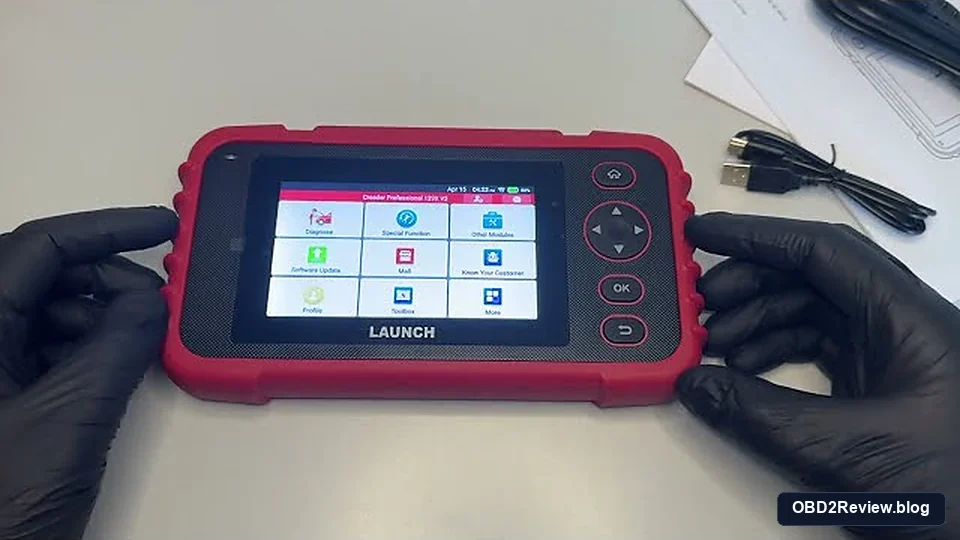
Operating system stability directly impacts daily workshop efficiency when cycling through multiple vehicle makes. The underlying software architecture on both units minimizes lag during live data graphing and DTC retrieval phases.
Inside these diagnostic units, ARM Cortex processors handle complex data streams with minimal latency. Engineers optimized the internal clock speeds to ensure rapid boot times and stable communication across legacy and modern vehicle networks.
The hardware architecture relies on embedded Android operating systems tailored specifically for automotive diagnostics. This framework provides seamless touchscreen responsiveness while managing background memory allocation during multi-system module scans and live graphing sessions.
- Identical quad-core processing speed across both handheld units
- Responsive touchscreen interfaces with high tactile sensitivity
- Stable operating firmware designed for rapid diagnostic cycles
Processor Efficiency and Memory Allocation
Internal RAM allocation determines how smoothly a scanner handles extensive live data streams. Read our detailed launch crp129x review to understand how both devices feature sufficient memory to prevent buffer overruns during prolonged diagnostic sessions.
Firmware updates download smoothly via built-in Wi-Fi modules without requiring external PC connections. This standalone capability streamlines maintenance routines for busy independent automotive technicians.
- Sufficient internal memory prevents data throttling
- Seamless Wi-Fi connectivity for wireless software updates
Comprehensive System Coverage and Protocol Depth
Protocol compatibility dictates whether a scanner communicates with legacy vehicle networks and modern CAN buses. Our comprehensive crp123x review details how this tool focuses heavily on four primary core modules including engine and transmission.
Expanding beyond basic powertrains, the CRP129X delivers deeper access across auxiliary control units. This broader diagnostic reach allows technicians to pinpoint complex electrical faults spanning multiple chassis computers.
Technicians evaluating protocol depth must look beyond basic powertrain modules. The CRP129X expands significantly into chassis and body networks, reading specific diagnostic trouble codes from ABS, SRS, transmission, and engine controllers simultaneously without lag.
Both tools support all ten OBD2 modes, yet the deeper software layers allow technicians to access manufacturer-specific data streams. Utilizing CAN FD and DoIP protocols ensures future-proof connectivity when diagnosing complex electrical architectures in modern imports.
- Core four-system coverage standard on the entry model
- Expanded module access integrated into the higher variant
- Full support for OBDII protocols across diverse global fleets
Network Protocol Handling and Bus Communication
Vehicle communication depends on accurate translation of high-speed CAN and K-Line data packets. Both tools maintain stable connection integrity when interrogating stubborn electronic control units.
Interpreting manufacturer-specific diagnostic trouble codes requires robust internal protocol libraries. These integrated databases ensure accurate code definitions without requiring constant manual lookups.
- Reliable CAN bus packet translation
- Extensive built-in manufacturer code libraries
Ergonomic Layout, Physical Footprint, and Build Quality
Workshop environments demand durable diagnostic equipment capable of withstanding accidental drops and grease exposure. Both scanners feature robust rubberized bumpers protecting a 5.0-inch high-resolution touchscreen display.
Physical button layouts complement the touchscreen interface, enabling gloved operation during cold weather conditions. The molded grip contours reduce hand fatigue during extended diagnostic troubleshooting tasks.
Workshop environments demand rugged physical construction capable of withstanding accidental drops and chemical exposure. Featuring impact-resistant rubberized housing, these scanners protect internal circuit boards while maintaining a comfortable, fatigue-reducing grip during long diagnostic sessions.
The tactile button arrays complement the multi-point capacitive touchscreens nicely. Mechanics wearing greasy workshop gloves can easily navigate menu prompts using physical shortcut keys, ensuring uninterrupted workflow when wet or dirty hands compromise touchscreen accuracy.
- Impact-resistant rubberized outer housing for drop protection
- Combined touchscreen and physical button control layout
- Ergonomic handle contours designed for single-handed operation
Display Clarity and Environmental Durability
Screen visibility under direct sunlight remains a critical factor for outdoor diagnostic testing procedures. The back-lit LCD panels maintain high contrast levels even in brightly lit service bays.
Sealed button membranes prevent moisture and oil ingress from damaging sensitive internal circuit boards. This careful engineering guarantees long-term reliability in harsh automotive workshop conditions.
- High contrast display suitable for bright sunlight
- Sealed control panels resistant to workshop fluids
Service Reset Capabilities and Advanced Maintenance Functions
Service reset functionality represents the primary engineering divergence between these two diagnostic tools. The CRP123X limits reset functions to essential oil life and electronic steering angle calibrations.
Stepping up to the CRP129X unlocks a comprehensive suite including electronic parking brakes and battery registration. These extra resets eliminate the need for secondary reset tools during routine maintenance.
Routine maintenance procedures require precise electronic resets to clear service intervals successfully. The CRP129X distinguishes itself by incorporating advanced functions like Electronic Parking Brake retraction and steering angle sensor calibration directly into the software matrix.
Performing complex battery registration and diesel particulate filter regeneration demands specialized bidirectional communication routines. While the CRP123X handles fundamental oil and throttle resets, professional technicians require the expanded service suite found on higher-tier units.
- Basic maintenance resets included on the entry model
- Comprehensive multi-service reset suite on the advanced unit
- Essential electronic parking brake and battery matching
Evaluating Specific Reset Protocols for Daily Service
Performing brake pad replacements on modern vehicles requires retracting electronic rear calipers safely. The advanced unit handles this specific routine effortlessly through dedicated software menus.
Oil service light resets require communicating directly with instrument cluster control modules. Both handhelds execute these standard reset procedures quickly without throwing residual communication errors.
- Safe electronic caliper retraction for brake service
- Rapid instrument cluster oil light clearing routines
Power Delivery, Battery Efficiency, and Interface Speed
Diagnostic tools draw operating power directly from the vehicle diagnostic link connector during testing sessions. An internal rechargeable lithium battery maintains system power during offline report reviews and software updates.
Power management circuits optimize energy consumption to prevent premature battery depletion during long diagnostic jobs. Fast-charging protocols via USB ports ensure quick turnaround between service bay appointments.
Diagnostic tools draw power primarily through the vehicle data link connector during active testing. Incorporating internal lithium-ion battery packs allows technicians to review saved diagnostic reports away from the vehicle without losing data.
Processing speed directly impacts how quickly live data PIDs refresh on screen. Optimized firmware prevents frame dropping during graphical plotting, ensuring mechanics can instantly spot intermittent sensor dropouts and erratic voltage fluctuations without system stutter.
- Dual power architecture via DLC port and internal battery
- Energy-efficient management circuits for prolonged standby
- Reliable USB charging capability for workshop readiness
Data Refresh Rates and Live Graphing Performance
Real-time sensor graphing requires rapid data refresh rates to catch intermittent powertrain anomalies. Both diagnostic units render live parameter IDs smoothly without noticeable screen stutter.
Merging multiple sensor data streams helps technicians correlate related mechanical and electrical failures. The interface allows custom PID selection for focused diagnostic troubleshooting.
- Smooth real-time parameter ID graphing performance
- Customizable multi-stream sensor data merging options
Real-World Diagnostic Throughput and Workshop Suitability
Efficiency in a professional service bay relies on minimizing the time spent navigating complex software menus. Both tools feature intuitive home screens that organize diagnostic functions logically for fast access.
Generating and sharing vehicle health reports via email streamlines communication with vehicle owners. This digital documentation capability enhances transparency and builds trust during repair consultations.
Workshop efficiency relies on minimizing the time spent navigating redundant diagnostic menu structures. Utilizing Wi-Fi software update capabilities keeps vehicle databases current, eliminating the tedious requirement of transferring files via external desktop computers.
Busy service bays demand tools that transition smoothly between different vehicle makes and models. Evaluating options from our best obd2 scanner guide helps ensure reliable port pin retention prevents accidental disconnections across engine bays.
- Logical menu structures minimizing navigation time
- Digital vehicle health report generation and sharing
- Streamlined diagnostic workflows for busy service technicians
Data Logging and Historical Record Management
Saving diagnostic logs allows technicians to review past fault codes and sensor readings later. Internal storage capacity easily accommodates thousands of diagnostic session records without slowing down.
Exporting saved files to external computers assists with in-depth technical analysis and archiving. This robust data management supports professional record-keeping standards in modern repair facilities.
- Generous internal storage for diagnostic session logs
- Simple file export procedures for advanced analysis
Selecting the Optimal OBD2 Terminal for Your Fleet
Choosing the correct diagnostic scanner depends entirely on your specific automotive service requirements. Consulting our bluetooth obd2 scanner rankings helps DIY enthusiasts working primarily on basic engine diagnostics find ample capability.
Professional technicians handling diverse maintenance tasks will quickly recover the higher equipment investment. The expanded reset functions of the advanced variant deliver unmatched utility in daily service operations.
Choosing the correct diagnostic hardware requires balancing current repair demands against future fleet expansion. Shops servicing modern vehicles benefit immensely from selecting units with comprehensive electronic service resets rather than basic powertrain-only code readers.
Investing in robust diagnostic equipment ultimately reduces diagnostic guesswork and turnaround times. Evaluating your specific maintenance workflow requirements ensures you purchase a tool offering the ideal balance of affordability and advanced engineering depth.
- Match tool capabilities to your specific repair scope
- Consider future vehicle maintenance requirements before buying
- Evaluate return on investment for professional service bays
Final Technical Considerations Before Purchase
Reviewing vehicle make coverage lists ensures compatibility with your target automotive fleets. Both units offer lifetime free software updates, maximizing long-term value for equipment owners.
Balancing upfront equipment costs against required service functions ensures optimal resource allocation for your shop. Investing in the right diagnostic terminal accelerates workflow efficiency across every repair job.
- Verify specific vehicle make coverage requirements
- Leverage lifetime free software update policies
Frequently Asked Questions
What is the primary difference between these two diagnostic tools?
The main technical distinction lies in their service reset capabilities. The advanced model includes a comprehensive suite of maintenance reset functions while the base unit focuses strictly on core systems.
Can both scanners perform full system diagnostic scans on vehicles?
The advanced variant accesses all available electronic modules across the vehicle network. Conversely, the base model restricts its primary diagnostic focus to four major vehicle systems like powertrain and ABS.
Do these diagnostic tools require ongoing software update subscriptions?
Both models include lifetime free software updates delivered via built-in Wi-Fi connections. This policy ensures your diagnostic database remains current without recurring annual fees.
Are these handheld scanners suitable for professional automotive repair shops?
Professional technicians benefit greatly from the expanded service resets on the advanced model. However, the base unit serves well as a secondary tool for quick powertrain checks.
How do these scanners receive their operating power during testing?
They draw operational power directly from the vehicle diagnostic port. An internal rechargeable battery also supports offline data review and wireless software update sessions.