Canbus vs. Obd2: Which Fits Your Setup Better?
Understanding vehicle communication protocols requires separating physical diagnostic connectors from underlying network architectures. This guide contrasts universal diagnostic interfaces with high-speed internal bus messaging.

For general powertrain diagnostics, OBD2 provides immediate universal access. For complex module-to-module networking and live telemetry, CAN bus delivers superior data throughput.
Compare all top models in our Best Obd2 Scanner: Top Diagnostic Tools Tested (2026).
Side-by-Side Breakdown
| Criteria | Canbus | Obd2 | Edge |
|---|---|---|---|
| Peak Performance & Output | High-speed differential serial bus | Universal interface protocol layers | Canbus |
| Duty Cycle & Consistency | Continuous real-time multi-node transmission | Intermittent scanning and emissions reads | Canbus |
| Operating Noise & Vibration | Robust twisted-pair noise rejection | Passive physical port immunity | Canbus |
| Portability & Footprint | Integrated wiring harness and transceivers | Single standardized 16-pin cabin connector | Obd2 |
| Maintenance & Service Life | High terminal integrity against vibration | Pin wear from frequent cable insertions | Canbus |
| Power Requirements | Standardized 12V bus power distribution | Low standby power via battery terminal 16 | Obd2 |
| Best Ideal Use-Case | Advanced network troubleshooting and flashing | Basic code reading and emissions testing | Canbus |
Fundamental Architecture and Protocol Definitions
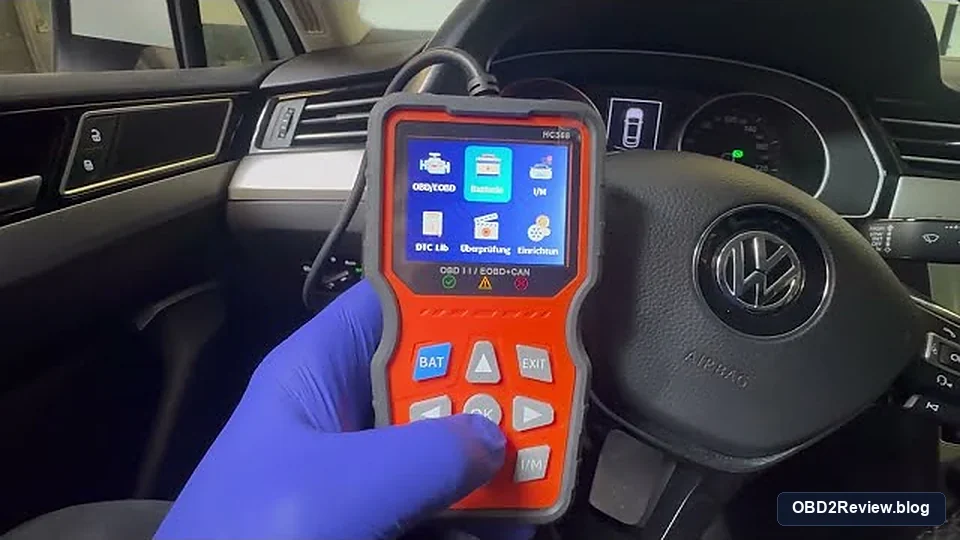
OBD2 establishes a mandatory regulatory framework for vehicle emissions compliance. Pairing your smartphone with a reliable best obd2 bluetooth scanner provides instant access via the standardized 16-pin dashboard connector.
CAN bus operates as the underlying nervous system for modern automotive electronics. It uses differential signaling across twisted wire pairs to transmit data reliably.
Modern vehicle networks rely on ISO 15765-4 standards to govern data exchange across distributed electronic control units. This robust framework dictates message framing, flow control, and precise arbitration rules within the physical medium.
In contrast, the broader diagnostic link layer standardizes emission parameters and generic trouble codes. Technicians must understand how raw bus traffic translates into standardized parameter IDs for accurate vehicle health assessments.
- Standardized physical interface ports
- Differential multi-node data transmission
- Regulatory compliance mandating access
Diagnostic Port Evolution
Early vehicle diagnostics relied entirely on proprietary manufacturer pins. Standardized connectors streamlined emissions testing across different automotive brands and global markets significantly.
- Elimination of proprietary adapters
- Universal scan tool compatibility
Performance and Real-World Output Analysis
Data transfer rates dictate how quickly scan tools refresh live sensor parameters. Finding the best obd2 scanner for your shop ensures zero latency during multi-parameter diagnostic streaming.
High-speed differential networks bypass slow diagnostic polling limits entirely. Message priority arbitration ensures critical engine telemetry transmits instantly without bus collision delays.
High-speed bus implementations achieve 500 kbps throughput, enabling near-instantaneous parameter updates during dynamic road testing. Slower powertrain variations typically operate at 125 kbps to prioritize fault tolerance over raw speed.
Real-world latency directly impacts live data logging accuracy when tracking fast-switching actuators. Engineers evaluate packet delivery ratios to ensure critical diagnostic tools do not miss intermittent sensor anomalies during heavy acceleration runs.
- Query-response latency limitations
- Arbitration-based message priority
- Real-time parameter streaming speeds
Live Telemetry and Refresh Rates
Technicians monitoring live sensor graphs require high update frequencies. Protocol bandwidth constraints directly impact the smoothness and accuracy of displayed diagnostic waveforms.
- Parameter update frequencies
- Oscilloscope-level waveform accuracy
Build Quality, Maintenance, and Durability Metrics
Physical connection points endure substantial mechanical stress during daily shop use. Choosing a reliable best budget obd2 scanner guarantees robust pins that resist bending and oxidation over time.
Internal network wiring demands exceptional resistance to harsh under-hood environments. Twisted-pair shielding protects sensitive serial communication lines from intense electromagnetic interference generated by ignition coils.
Harness connectors require robust gold-plated pins to prevent fretting corrosion across thousands of mating cycles. Technicians inspect terminal tension regularly to avoid intermittent circuit resistance that corrupts sensitive sensor reference voltages.
Under-dash interfaces endure harsh physical abuse from repetitive tool insertions and accidental impacts. Selecting scan tools with reinforced strain relief protects internal printed circuit boards from mechanical fatigue during daily shop usage.
- Mechanical pin wear resistance
- Electromagnetic shielding integrity
Harness Integrity and Connector Wear
Frequent plug insertions wear out receptacle spring contacts inside vehicle ports. Replacement port installation requires careful depinning and soldering to restore reliable physical connectivity.
- Receptacle spring tension loss
- Terminal replacement procedures
Noise, Efficiency, and Electrical Footprint
Automotive electrical systems contain massive amounts of high-frequency electrical noise. Differential voltage signaling effectively cancels out common-mode interference across long vehicle wire harnesses.
Energy efficiency remains critical for preventing parasitic battery drain during key-off states. Low-power sleep modes allow modern networks to wake up instantly upon command.
Differential signaling utilizes twisted-pair wiring to effectively cancel out electromagnetic interference generated by ignition coils and alternators. This physical layout ensures signal integrity remains pristine inside noisy engine compartments.
Parasitic drain is minimized through low-power sleep modes that automatically deactivate transceiver chips when the vehicle ignition turns off. Proper quiescent current management prevents premature battery depletion during long-term storage periods.
- Common-mode noise rejection
- Parasitic power consumption management
Electromagnetic Interference Mitigation
Alternators and ignition systems generate severe electrical transients inside engine bays. Robust physical layer designs prevent data corruption during heavy electrical accessory loads.
- Transient voltage suppression
- Signal integrity preservation
Diagnostic Capabilities and Network Integration
Basic code readers interface primarily with emissions-related powertrain control modules. Upgrading to a best professional obd2 scanner allows seamless gateway access across complex multiplexed vehicle networks.
Advanced diagnostic routines involve bi-directional controls and module flashing procedures. High data throughput makes complex module programming sessions safer and significantly faster overall.
Modern gateway modules manage multiplexed communication streams to route diagnostic requests between body, chassis, and powertrain domains securely. This architecture isolates critical safety systems from unauthorized external scan tool intrusions.
Advanced troubleshooting requires monitoring live PID streams simultaneously across multiple sub-networks without introducing bus congestion errors. Technicians rely on structured filtering to isolate specific subsystem faults quickly.
- Powertrain module isolation
- Bi-directional control execution
Multi-Module Communication Routing
Modern vehicles host dozens of interconnected electronic control units simultaneously. Gateway modules manage traffic between distinct sub-networks to maintain orderly data flow.
- Electronic control unit proliferation
- Gateway traffic management
Hardware Interfacing and Physical Constraints
Interface hardware must translate standardized diagnostic commands into specific network messages. Protocol translation chips bridge the gap between legacy diagnostic tools and modern vehicle architectures.
Physical packaging constraints limit where engineers can route diagnostic wiring harnesses. Compact connector designs fit securely beneath cramped dashboards without interfering with driver operation.
The standard SAE J1962 connector defines exact pinout configurations for power, ground, and communication lines across all modern vehicles. Technicians must verify pin integrity whenever communication drops occur unexpectedly during diagnostic procedures.
Physical space limitations beneath the dashboard demand compact adapter profiles to prevent accidental knee strikes during vehicle operation. Ergonomic hardware design significantly improves safety and usability for daily professional technicians.
- Protocol translation hardware
- Dashboard packaging constraints
Transceiver Design and Bus Loading
Network transceivers dictate how many nodes can connect to a shared bus. Proper bus termination prevents signal reflections that cause intermittent communication dropouts.
- Transceiver node capacity
- Impedance matching termination
Which Option Fits Your Specific Diagnostic Workload
Choosing the right diagnostic approach depends heavily on your daily service tasks. General repair shops needing fast emissions checks rely heavily on straightforward port access.
Specialized electrical technicians require deep protocol understanding to troubleshoot intermittent network faults. Advanced oscilloscope diagnostics combined with protocol decoding solve complex multiplexing failures efficiently.
Selecting the appropriate interface depends heavily on whether your daily workload involves deep module programming or basic emissions readiness checks. High-bandwidth communication protocols are mandatory for flashing module software reliably.
General repair shops benefit from versatile multi-protocol tools supporting universal vehicle coverage across domestic and import fleets. Matching equipment capability to everyday diagnostic demands ensures optimal shop efficiency and return on investment.
- General emissions testing needs
- Advanced multiplexed network troubleshooting
Tailoring Your Tooling Investment
Investing in diagnostic equipment requires evaluating current vehicle fleet demographics. Multi-protocol support tools ensure compatibility with both older legacy systems and modern high-speed architectures.
- Fleet demographic evaluation
- Multi-protocol tool selection
Frequently Asked Questions
What is the main difference between these two diagnostic methods?
OBD2 serves as the standardized regulatory physical connector and foundational diagnostic protocol mandated strictly for vehicle emissions compliance across diverse global automotive markets.
In contrast, CAN bus represents the high-speed internal serial network architecture that links multiple electronic control modules together for seamless real-time vehicle communication and diagnostic telemetry data transfer.
Can I use a standard scanner on advanced high-speed vehicle networks?
Basic legacy scan tools communicate using slow parameter identification requests but cannot access modern high-speed multiplexed networks without specialized protocol support integrated directly into the handheld hardware.
Advanced multi-protocol diagnostic scanners require comprehensive software integration to query high-speed internal vehicle buses successfully during complex automotive electrical troubleshooting service procedures.
Why is high-speed network transmission critical for modern repair work?
Modern vehicles utilize dozens of interconnected computers that must share live sensor data instantly to maintain vital vehicle safety systems and optimal powertrain operational efficiency today.
High-speed network transmission prevents communication bottlenecks during heavy data streaming and ensures rapid execution of bi-directional electronic module programming commands across networks.
How do physical port limitations affect daily shop maintenance?
Frequent diagnostic plug insertions cause severe mechanical wear on receptacle spring pins inside the vehicle dashboard connector, leading to intermittent communication failures during active service procedures.
Proper terminal maintenance and replacement procedures help prevent frustrating diagnostic dropouts and ensure reliable physical electrical continuity.
What role does differential signaling play in automotive networks?
Modern automotive engine bays generate massive amounts of electromagnetic interference that can easily corrupt sensitive electronic data signals traveling along traditional vehicle wiring harnesses every single day.
Differential voltage signaling cancels out this common-mode electrical noise effectively by transmitting complementary inverted signals across twisted wire pairs seamlessly.