Can Fd vs. Standard Can Obd2: Which Protocol Fits Your Diagnostic Setup?
Understanding the shift from legacy networks to high-speed data buses requires analyzing bandwidth caps. Modern diagnostic workflows demand protocols that handle dense vehicle modules without bottlenecking communication.
CAN FD dominates modern multi-module platforms through rapid data transmission rates. Standard CAN OBD2 remains reliable for legacy vehicles lacking high-density network requirements.
Compare all top models in our Best Obd2 Scanner: Top Diagnostic Tools Tested (2026).
Side-by-Side Breakdown
| Criteria | Can Fd | Standard Can Obd2 | Edge |
|---|---|---|---|
| Peak Performance & Output | Up to 8 Mbps data phase | Capped at 500 kbps | Can Fd |
| Duty Cycle & Consistency | High stability under heavy traffic | Prone to saturation on new ECUs | Can Fd |
| Operating Noise & Vibration | Superior signal integrity shielding | Standard twisted-pair immunity | Can Fd |
| Portability & Footprint | Requires modern interface hardware | Universal legacy scanner support | Standard Can Obd2 |
| Maintenance & Service Life | Built for future-proof multi-system updates | Limited by outdated baud rates | Can Fd |
| Power Requirements | Optimized active transceiver draw | Standard 12V parasitic load profile | Standard Can Obd2 |
| Best Ideal Use-Case | Late-model luxury and EV diagnostics | Pre-2020 standard powertrain scans | Can Fd |
Fundamental Protocol Architecture and Hardware Integration
Automotive communication networks rely on differential signaling to transmit data across robust physical layers. Evaluating hardware compatibility ensures your scan tool interfaces correctly with vehicle network gateways without signal degradation.
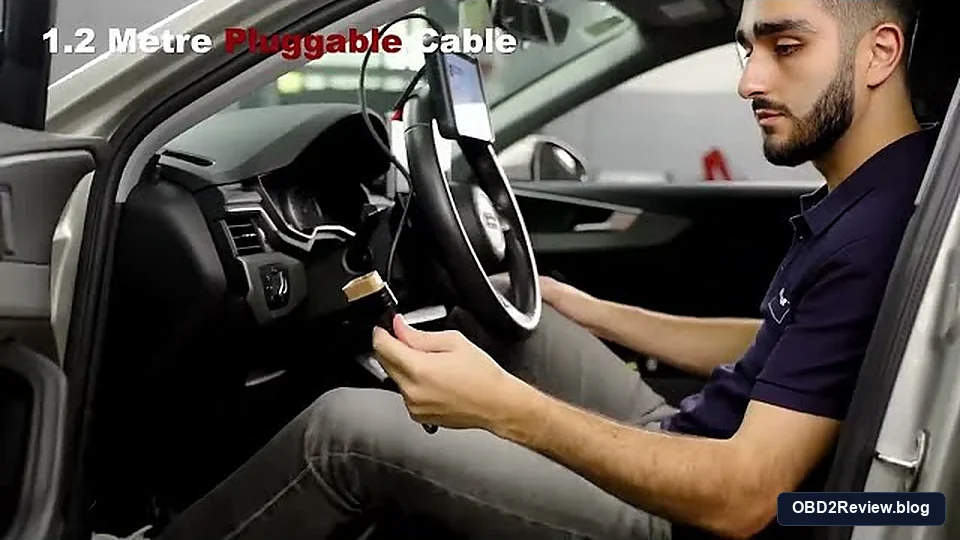
Legacy diagnostic tools were built around basic microcontrollers that struggle with modern data payloads. Upgrading your diagnostic bench requires understanding how physical transceiver chips handle varying voltage thresholds and arbitration phases.
Modern vehicle networks rely on physical transceiver changes to handle increased bit rates. When troubleshooting safety systems, you might need to check if your OBD2 scanner can clear airbag light codes reliably.
Integrating these modern diagnostic interfaces demands rigorous adherence to ISO 11898-1 standards. Technicians must verify termination resistance across the data bus to prevent critical signal reflections during high-speed data transmission cycles.
- Differential signaling reduces electromagnetic interference across long wire harnesses.
- Transceiver chips dictate maximum allowable baud rates during active module polling.
- Physical layer design impacts overall signal reflection and termination resistance.
Transceiver Chipsets and Physical Layer Design
Modern interface adapters incorporate specialized silicon to manage rapid voltage shifts safely. Technicians must verify that internal circuitry matches the exact electrical specs demanded by modern vehicle architectures.
Older interface designs often lack the internal buffering needed to process high-frequency packet streams cleanly. This hardware limitation leads to dropped frames and incomplete diagnostic session logs during deep module scans.
- Specialized silicon manages rapid voltage shifts without thermal overload.
- Internal buffering prevents dropped frames during intensive data logging.
Bandwidth Limitations and Data Transfer Speeds
Data throughput remains the primary differentiator when scanning complex electronic control units in contemporary vehicles. Traditional networks restrict payload sizes severely, creating frustrating bottlenecks during comprehensive system health checks.
Engineers designed advanced protocols specifically to bypass these historic data ceilings by varying clock speeds. Achieving faster flash programming depends entirely on utilizing a wider data phase and optimized packet structures.
Legacy networks bottleneck quickly when streaming multiple live parameters simultaneously. While traditional layouts top out at 500 kbps, flexible data-rate architectures scale dynamically up to 8 Mbps for rapid ECU flashing sequences.
This massive throughput expansion eliminates diagnostic lag during deep module sweeps. Advanced streaming also ensures you can utilize your scanner to detect bad transmission faults accurately before catastrophic failures happen.
- Traditional networks limit individual data frames to eight payload bytes.
- Advanced protocols expand individual frame payloads up to sixty-four bytes.
- Variable baud rates accelerate flash programming and software updates.
Payload Capacity and Transmission Efficiency
Expanding payload capacity drastically reduces the total number of frames required for module communication. This efficiency minimizes bus congestion and accelerates real-time parameter identification during active diagnostic testing.
Diagnostic efficiency translates directly into reduced shop cycle times and faster fault isolation. Technicians spend less time waiting for live data streams to refresh across congested vehicle networks.
- Larger payloads reduce total frame counts for complex diagnostic queries.
- Faster refresh rates improve live data stream accuracy and reliability.
Diagnostic Trouble Code (DTC) Retrieval and Module Scanning
Retrieving fault codes across multiple interconnected vehicle modules demands exceptional network prioritization and speed. When leaving tools plugged in overnight, technicians often wonder about scanner power draw and battery drain risks.
High-speed protocols streamline DTC extraction by utilizing advanced arbitration mechanisms to sort urgent messages. Technicians benefit from immediate fault identification across safety, powertrain, and infotainment networks simultaneously.
Deep module interrogation requires parsing expansive diagnostic trouble codes across numerous sub-networks. Advanced protocols accelerate this multi-ECU polling process, reducing full-system health check durations from several minutes down to seconds.
Mechanics benefit from instant access to extended freeze-frame data packages embedded within complex fault records. This rich engineering data pinpoints precise environmental conditions preceding component failure events.
- Simultaneous module polling prevents lengthy diagnostic wait times in shops.
- Advanced arbitration prioritizes critical safety codes over routine sensor data.
- Comprehensive health reports generate in seconds rather than several minutes.
Vehicle Compatibility and Backward Integration Challenges
Integrating new diagnostic equipment into existing shop infrastructure requires careful consideration of legacy support. Many advanced interface tools maintain backward compatibility to communicate reliably with older vehicle communication standards.
Technicians working on mixed fleets must ensure their primary scan tool transitions smoothly between protocols. Using a versatile interface prevents tool redundancy and keeps diagnostic bays operating at peak efficiency.
Retrofitting older vehicle architectures introduces severe protocol mismatch errors during routine diagnostic scans. Modern scan tools must gracefully downshift to legacy communication speeds when interacting with older ISO 15765-4 compliant modules.
Technicians frequently encounter gateway blockage issues when connecting advanced diagnostic hardware to protected vehicle networks. Proper security bypass cables ensure seamless protocol translation without triggering false dashboard warning lights.
- Backward compatibility ensures seamless communication with older vehicle platforms.
- Mixed fleet management requires versatile scan tools with dual-protocol support.
- Proper adapter selection prevents accidental damage to sensitive ECU pins.
Bus Load Management and Arbitration Phase Efficiency
Network saturation occurs when too many control units attempt to transmit data simultaneously over the bus. Efficient bus load management prevents communication dropouts during intensive bi-directional active testing procedures.
The arbitration phase determines which module gains immediate access to the shared communication lines. Optimizing this phase reduces latency and ensures critical diagnostic commands execute without frustrating transmission delays.
Network congestion degrades overall diagnostic reliability during intensive multi-channel data logging sessions. Maintaining strict priority structures during the arbitration phase prevents critical powertrain messages from colliding with routine diagnostic queries.
Flexible baud rate switching allows networks to optimize bus utilization dynamically under heavy traffic loads. This efficient bandwidth allocation keeps diagnostic response times exceptionally fast even on heavily loaded chassis networks.
- Network saturation causes intermittent communication dropouts during live testing.
- Optimized arbitration phases reduce latency for critical bi-directional commands.
- Robust error detection safeguards data integrity in noisy automotive environments.
Power Draw, Electrical Noise, and Physical Ergonomics
Diagnostic hardware must withstand harsh shop environments while maintaining stable electrical connections under load. A reliable connection is critical when using a diagnostic tool to reset limp mode safely after repairs.
Electrical noise generated by ignition systems and alternators can corrupt fragile data packets instantly. Quality scan tools incorporate internal signal filtering to maintain robust communication despite severe under-hood interference.
High-frequency data transmission increases susceptibility to electromagnetic interference inside crowded engine bays. Shielded cabling and robust twisted-pair geometry are essential engineering requirements for maintaining signal integrity under severe electrical noise.
Diagnostic adapters drawing power directly from the OBD2 port must manage thermal dissipation efficiently. Overheating scan tools risk data corruption and internal component failure during extended flash programming procedures.
- Gold-plated connector pins prevent oxidation and maintain low electrical resistance.
- Internal signal filtering protects data integrity from under-hood electrical noise.
- Ergonomic cable housing withstands frequent shop drops and fluid exposure.
Long-Term Service Life and Future-Proofing Diagnostics
Automotive electronic architectures evolve rapidly, making tool longevity a critical investment for professional technicians. Purchasing diagnostic equipment with modern protocol support protects your shop against premature obsolescence as vehicle complexity increases.
Future-proofing your diagnostic bench ensures compatibility with upcoming over-the-air update gateways and security protocols. Selecting capable hardware today saves significant capital expenditure down the road as industry standards shift.
Automotive architectures evolve rapidly, making protocol adaptability a mandatory requirement for professional service shops. Investing in dual-protocol hardware protects diagnostic equipment investments against premature obsolescence as vehicle manufacturers adopt advanced networking standards.
Firmware update capability ensures diagnostic tools remain compatible with emerging vehicle security gateways and communication protocols. Technicians should verify manufacturer update policies before committing to expensive long-term equipment upgrades.
- Modern protocol support prevents premature tool obsolescence in busy shops.
- Compatibility with secure gateways ensures access to protected vehicle modules.
- Strategic equipment investments lower long-term operating costs significantly.
Frequently Asked Questions
What is the primary difference between these two protocols?
The main difference lies in data transfer speed and payload capacity. CAN FD offers significantly higher bandwidth for modern vehicles.
Can older scan tools communicate with newer vehicle networks?
Older tools generally lack the physical transceiver hardware required for high-speed data. Legacy scanners will struggle on modern multi-module platforms.
Why do modern luxury cars require faster communication protocols?
Luxury vehicles feature dozens of interconnected computers managing advanced safety systems. High bandwidth protocols prevent severe network congestion during diagnostics.
Does upgrading diagnostic hardware improve shop workflow efficiency?
Faster scan times and reduced data bottlenecks directly improve daily shop productivity. Upgraded tools eliminate frustrating communication dropouts entirely.
Are dual-protocol interface adapters worth the investment?
Dual-protocol tools provide essential versatility for shops servicing mixed vehicle fleets. Versatile adapters ensure seamless coverage across all model years.