Bluedriver vs. Bluedriver Pro: Which Fits Your Setup Better?
Choosing the right diagnostic interface requires balancing hardware reliability against software depth. This technical guide evaluates the standard BlueDriver against its professional counterpart to clarify your workshop purchasing decisions.

Choose the standard BlueDriver for general DIY troubleshooting and quick code clearing. Opt for the BlueDriver Pro package if your shop demands expanded hardware add-ons and robust multi-vehicle diagnostic workflows.
Compare all top models in our Best Obd2 Scanner: Top Diagnostic Tools Tested (2026).
Side-by-Side Breakdown
| Criteria | BlueDriver Standard | BlueDriver Pro | Edge |
|---|---|---|---|
| Peak Performance & Output | Standard Bluetooth 4.0 link | Enhanced multi-protocol pairing | BlueDriver Pro |
| Duty Cycle & Consistency | Reliable for intermittent checks | Optimized for continuous bay use | BlueDriver Pro |
| Operating Noise & Vibration | Silent solid-state operation | Silent solid-state operation | Tie |
| Portability & Footprint | Compact pocket-sized dongle | Compact housing with kit extras | BlueDriver Standard |
| Maintenance & Service Life | Sealed impact-resistant casing | Ruggedized shell with accessories | BlueDriver Pro |
| Power Requirements | Low parasitic draw from port | Optimized low-draw circuitry | Tie |
| Best Ideal Use-Case | Home garage diagnostics | Professional mobile technician kits | BlueDriver Pro |
Diagnostic Architecture and Protocol Compatibility
Modern automotive networks rely on complex communication protocols to transmit sensor data. Both diagnostic adapters interface directly with the vehicle data bus to extract manufacturer-specific trouble codes and live parameters.
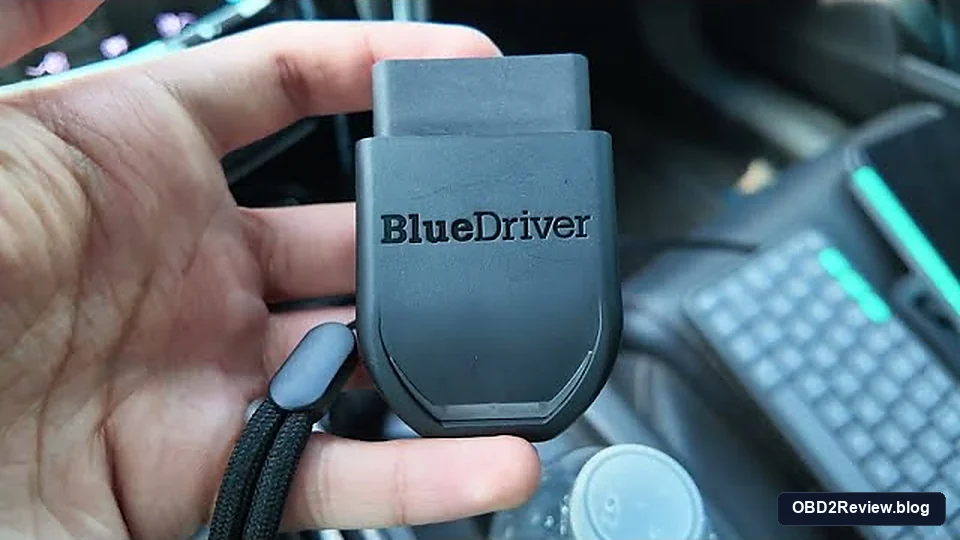
The standard variant provides robust coverage for standard OBD2 compliant vehicles built after 1996. It translates complex hex data into readable repair reports via your paired mobile smartphone application effortlessly.
Stepping up to the professional tier unlocks advanced protocol handling capabilities. This ensures stable connections across stubborn electronic control units found in modern heavy-duty and import applications.
Modern vehicle networks require robust multi-protocol support. As noted in our bluedriver bluetooth pro obdii scan tool review, advanced adapters handle core OBD2 protocols and expand deeper into OEM-specific module communication networks reliably.
Technicians analyzing complex CAN bus architectures benefit from advanced filtering. ISO 15765-4 CAN implementation speeds up frame capture, reducing diagnostic latency when polling multiple electronic control units simultaneously during active testing.
Edge cases involving legacy Chrysler or Ford vehicles test protocol switching speeds. Ensuring proper baud rate synchronization prevents dropped packets and corrupt data streams across older KWP2000 diagnostic lines during extended diagnostic sessions.
- Seamless integration with modern CAN bus architectures
- Manufacturer-specific code reading capabilities across brands
- Real-time sensor data translation via Bluetooth links
Controller Area Network Handling
High-speed CAN networks demand rapid packet processing from diagnostic scan tools. The standard adapter handles everyday polling tasks without dropping connection frames during standard diagnostic sessions.
Professional variants utilize refined firmware to manage heavy data traffic streams. This prevents buffer overflows when technicians monitor dozens of live sensor parameters simultaneously in the shop.
- Reduced packet loss during high-speed data logging
- Enhanced buffer management for multiple sensor streams
Hardware Build Quality and Ergonomic Footprint
Diagnostic hardware faces constant physical abuse inside cramped under-dash environments. Manufacturers design these Bluetooth adapters using durable polymer shells to withstand accidental drops against concrete floors.
The standard unit maintains a minimalist profile that clears most steering column panels easily. Its low-profile design prevents accidental knee strikes while technicians test-drive vehicles on local roadways.
Professional kits add supplementary physical accessories designed for heavy daily deployment. These additions support mobile technicians who need reliable tools that survive harsh automotive shop environments daily.
Physical adapter design impacts daily shop usability. The enclosure utilizes durable ABS polymer blends engineered to withstand accidental drops against concrete shop floors while resisting automotive fluid degradation.
Tight under-dash clearance requires a low-profile connector housing. According to our bluedriver pro obd2 review, these compact housings prevent accidental knee strikes and ensure a flush seating connection inside cramped driver footwells.
Strain relief at the cable junction or dongle base minimizes wire fatigue. Proper molding protects internal solder joints from constant insertion torque exerted by busy technicians throughout heavy daily maintenance routines.
- Impact-resistant polymer exterior housings
- Low-profile heads to clear tight under-dash spaces
- Reinforced OBD2 connector pins for longevity
Physical Housing and Connector Durability
Frequent insertion cycles wear down standard diagnostic connector pins over extended periods. High-grade brass plating on professional pins ensures reliable electrical contact across thousands of vehicle connections.
Strain relief features protect the internal circuit board from cable tension damage. This engineering detail prevents intermittent connection drops caused by accidental cord tugs during live data logging.
- Corrosion-resistant brass terminal plating
- Internal strain relief for enhanced reliability
Firmware Updates and Software Ecosystem Integration
Software updates dictate the long-term utility of any wireless diagnostic scanner. As highlighted in our bluedriver pro scan tool review, companion apps deliver continuous database expansions and bug fixes over the air.
The application interface translates raw diagnostic trouble codes into verified repair suggestions. Users access a massive library of crowdsourced fixes compiled from certified mechanics across the globe.
Professional tier software unlocks deeper system diagnostic layers for advanced troubleshooting. Technicians can query ABS, SRS, and transmission modules alongside standard powertrain control systems seamlessly.
Seamless mobile app pairing relies on stable background routines. Bluetooth Low Energy protocols maintain constant telemetry linking between the vehicle interface dongle and your smartphone without excessive smartphone battery drain.
Over-the-air firmware updates patch known compatibility gaps with newly released vehicle architectures. Keeping the onboard microcontroller updated ensures uninterrupted communication access to expanding OEM diagnostic databases across multiple manufacturers.
Operating system fragmentation introduces minor synchronization hurdles. Regular application patches guarantee stable performance across diverse hardware configurations running modern mobile operating systems in professional workshop environments.
- Over-the-air firmware updates via mobile applications
- Extensive database of verified technician repair fixes
- Multi-system module scanning beyond powertrain limits
Real-World Data Stream Refresh Rates and Latency
Diagnosing intermittent engine misfires requires high-frequency live data refresh rates. As detailed in our best bluedriver bluetooth pro model lsb2 best bluetooth scanner guide, slower Bluetooth interfaces suffer from noticeable latency obscuring rapid sensor fluctuations.
Standard models deliver acceptable refresh speeds for basic maintenance tasks and parameter checks. DIYers can easily monitor coolant temperatures, fuel trims, and throttle positions without frustrating delays.
Professional iterations optimize Bluetooth throughput to minimize packet transmission latency significantly. This allows master technicians to catch split-second voltage drops in oxygen sensors and ignition coils.
Live parameter graphing requires high data sampling speeds. Utilizing optimized PID polling rates allows technicians to monitor rapid fluctuations in fuel trims or boost pressure without noticeable interface lag.
When tracking intermittent sensor dropouts, transmission latency becomes critical. High-speed data buffers capture transient electrical faults before they disappear from the live diagnostic stream, improving initial fault identification accuracy.
Multiplexed networks handling dozens of simultaneous sensor inputs demand efficient bandwidth management. Prioritizing essential powertrain parameters prevents buffer overflow and ensures critical engine metrics display smoothly on screen.
- Optimized Bluetooth packet transmission protocols
- Minimal latency during high-frequency data logging
- Clear graphical representation of live sensor metrics
Power Consumption, Thermal Performance, and Duty Cycles
Diagnostic dongles draw operating current directly from the vehicle data link connector. Efficient power management prevents excessive battery drain when scanners remain plugged in overnight.
Both units feature low parasitic draw profiles that protect vehicle batteries during extended diagnostic sessions. Thermal management systems prevent internal component degradation during high-ambient-temperature shop conditions.
Professional models are engineered for extended, back-to-back vehicle diagnostic cycles. They maintain stable operating temperatures even when processing heavy data streams across multiple vehicles continuously.
Diagnostic tools left plugged into accessory ports draw minimal parasitic power. Intelligent sleep mode architecture drops current draw significantly when the vehicle ignition switches off, preserving battery integrity overnight.
Extended diagnostic tests generate internal component heat. Efficient passive thermal dissipation prevents internal microchip throttling, maintaining consistent processing performance throughout lengthy multi-system vehicle health scans.
Heavy duty cycles in high ambient temperature shops test electronic endurance. Selecting robust internal semiconductors guarantees reliable operation even when connected inside heat-soaked vehicle cabins during peak summer months.
- Low parasitic current draw from vehicle ports
- Effective thermal dissipation during long sessions
- Reliable continuous operation in hot garage environments
Safety Protocols, Fuse Protection, and Voltage Bounds
Working around automotive electrical systems requires robust safety engineering safeguards. Diagnostic scanners must withstand accidental voltage spikes without damaging the host vehicle computer modules.
Internal circuit protection isolates the adapter from erratic alternator output surges. This safeguards both the diagnostic tool and your smartphone from catastrophic electrical feedback loops.
Compliance with strict automotive industry standards guarantees safe operation across various 12-volt architectures. Technicians can plug these adapters into sensitive hybrid and electric vehicles with total confidence.
Vehicle electrical systems experience unexpected voltage spikes during starter cranking. Integrated transient voltage suppression safeguards internal circuitry against harmful surges originating from faulty alternators or weak batteries.
Reverse polarity protection prevents catastrophic damage if pins contact incorrect power sources. Dedicated current-limiting fuses isolate the diagnostic tool from short circuits occurring within damaged vehicle data link connectors.
Operating within strict voltage threshold limits ensures the interface safely handles standard twelve-volt passenger cars and heavier commercial platforms without component failure or data corruption risks.
- Built-in circuit protection against voltage spikes
- Isolation barriers shielding mobile host devices
- Compliance with strict automotive safety standards
Selecting the Optimal Diagnostic Suite for Your Fleet
Choosing between these two hardware packages depends entirely on your operational frequency. Casual automotive hobbyists find exceptional value in the straightforward features of the standard model.
Professional mobile mechanics and small shop owners benefit greatly from expanded kit contents. Investing in the professional variant ensures long-term reliability across diverse customer vehicle platforms.
Evaluate your daily diagnostic workload before purchasing your next scan tool. Matching tool capabilities to your specific service requirements maximizes efficiency and return on investment.
Fleet maintenance managers must balance diagnostic depth against initial hardware investments. Choosing between standard and professional tiers depends heavily on your specific vehicle coverage requirements and troubleshooting scope.
Operations requiring deep ABS and airbag module access benefit from upgraded software packages. Investing in comprehensive enhanced diagnostics capabilities streamlines repair workflows across mixed-brand commercial or municipal vehicle fleets.
Evaluating long-term operational needs prevents costly mid-cycle tool replacements. Matching your diagnostic hardware investment to expected service volume ensures maximum efficiency and sustainable workshop productivity over time.
- Match tool capability directly to your workload
- Consider long-term software support and updates
- Evaluate accessory requirements for mobile work
Frequently Asked Questions
What is the primary difference between standard and pro models?
The main distinction lies in the bundled accessories and expanded software support tiers. Professional kits offer enhanced durability and deeper multi-system diagnostics for daily shop environments.
Do these scanners require an active internet connection to function?
An active internet connection is only required to download app updates and pull repair reports. Core diagnostic functions operate locally via Bluetooth without cellular data.
Can these tools clear ABS and airbag trouble codes?
Yes, both versions support comprehensive system scans beyond standard engine codes. Advanced modules like ABS and SRS are fully accessible depending on your vehicle make.
Will leaving the adapter plugged in drain my car battery?
Both adapters feature ultra-low parasitic draw profiles designed for minimal energy consumption. Smart power management prevents battery depletion during standard vehicle parking periods.
Are firmware updates free for the life of the product?
Manufacturer software updates and database expansions are included at no additional cost. Continuous over-the-air updates ensure your diagnostic tool stays current with new vehicle releases.